
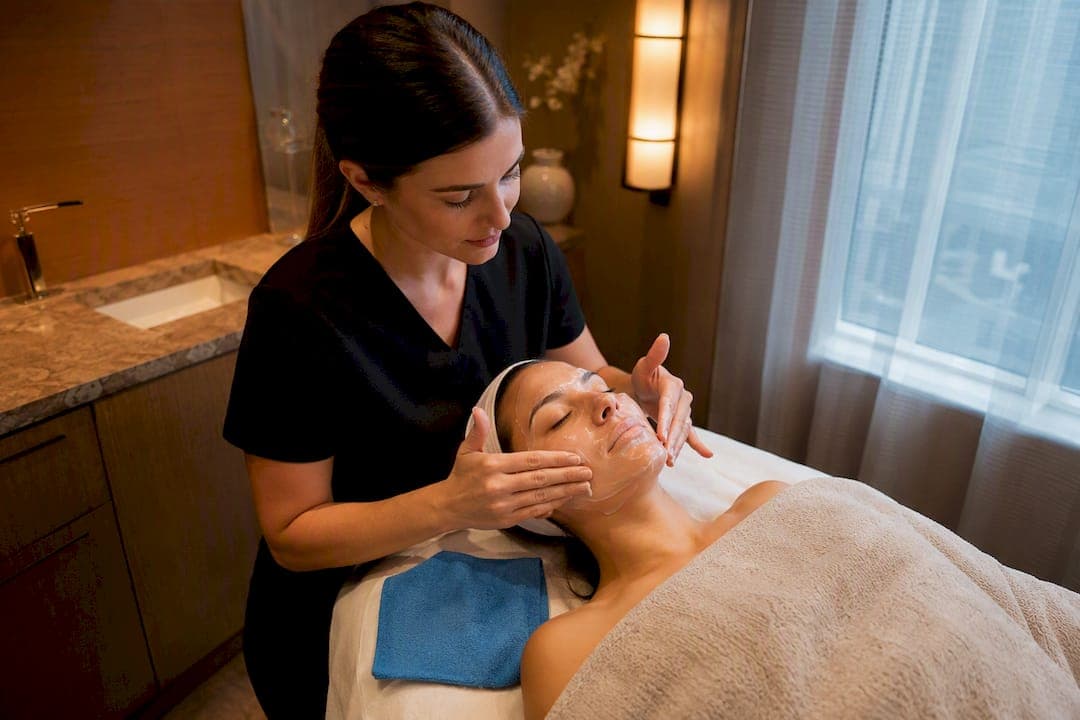
A sensible starting rule is every 4 to 6 weeks, timed to your skin's natural renewal cycle. That default shifts depending on what you're treating: acne courses often run tighter at first, deep peels and aggressive resurfacing need months between sessions, and sensitive or reactive skin usually does better stretched to 6 to 8 weeks. The right answer isn't one number. It's a starting point you adjust based on your skin type, the treatment's intensity, and how your face actually responds afterward.
TL;DR:
- Skin type influences the ideal facial frequency, with oily skin tolerating more frequent treatments every 3 to 4 weeks, while dry or sensitive skin benefits from 6 to 8 weeks.
- Intensive procedures such as deep peels or ablative lasers require months between sessions, and overdoing exfoliation or extractions can damage the skin barrier.
- Signs of over-treatment include persistent redness, increased dryness, or worsening pigmentation, prompting a longer break and focus on barrier repair.
- Between appointments, consistent use of gentle cleanser, sunscreen and avoiding actives immediately post-treatment enhances results and reduces irritation.
- Personalized scheduling based on skin response, medical conditions, and treatment type ensures safe, effective results rather than following generic timelines.
Table of Contents
- Facial Frequency at a Glance
- How Often Should You Get a Facial for Your Skin Type?
- Does Treatment Intensity Change How Often You Should Go?
- Signs You're Getting Facials Too Often
- What Should You Do Between Facial Appointments?
- Clinic-Led Care vs. Maintenance Facials: What's the Real Difference?
- Build a Facial Schedule That Actually Fits Your Skin
- Sources
- FAQ
Facial Frequency at a Glance
Before you book anything, match your main skin goal to a starting range. These are defaults, not prescriptions. Your esthetician or provider should adjust them based on how your skin actually behaves.
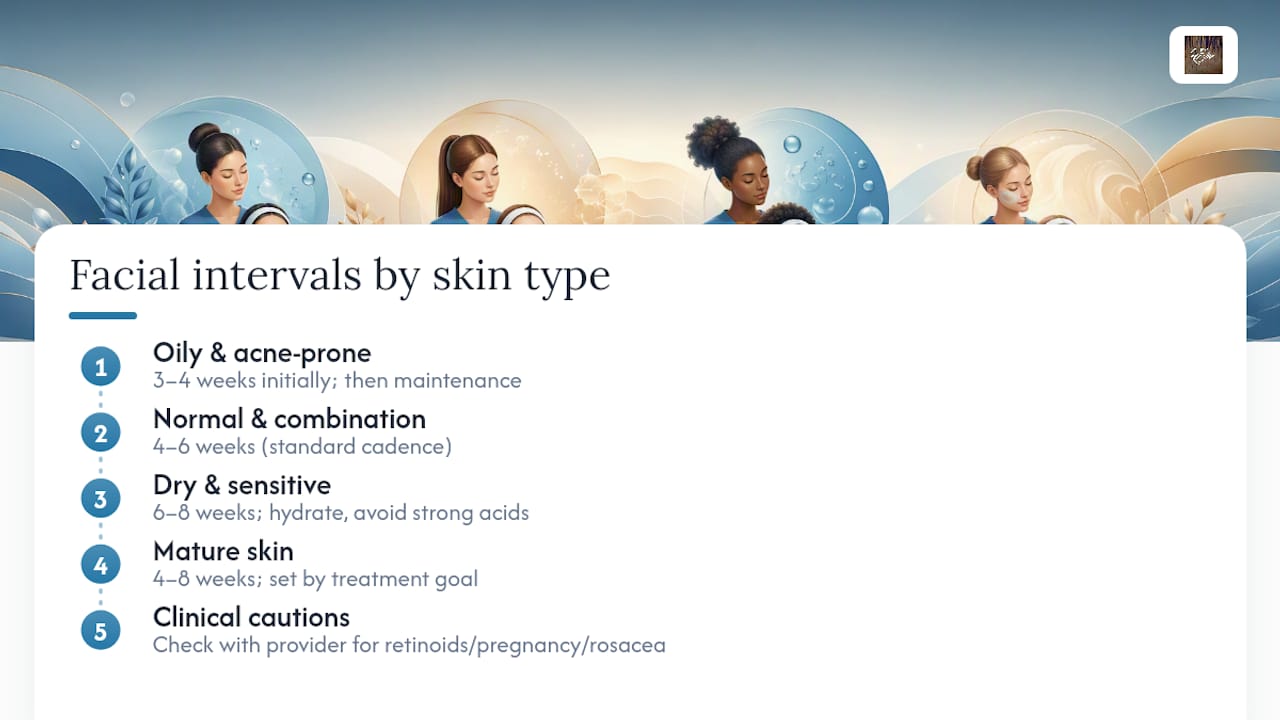
- Oily or acne-prone: Every 3 to 4 weeks during an active clearing phase, then space out once breakouts calm down.
- Normal or combination: Every 4 to 6 weeks. This matches the skin's natural renewal cycle and keeps products absorbing well.
- Dry or sensitive: Every 6 to 8 weeks, favoring calming treatments over exfoliation.
- Mature skin: Every 4 to 8 weeks depending on whether you're doing gentle maintenance or something more stimulating.
- Seasonal maintenance: Roughly monthly, tightened up before events or loosened during low-stress skin months.
- Intensive treatments (peels, microneedling, laser): Weeks to months apart, set entirely by the provider's recovery protocol.
If you're managing a diagnosed skin condition or taking prescription medication, run any of these ranges by a provider first. Layering treatments on top of medical care is where most scheduling mistakes happen.
How Often Should You Get a Facial for Your Skin Type?
Skin type changes the math more than almost any other factor, because it determines how fast your barrier recovers between sessions.
Oily and acne-prone skin tends to tolerate more frequent contact, at least initially. A short, targeted course every 3 to 4 weeks can help clear congestion, then you shift to standard maintenance once skin stabilizes. One caution worth repeating: a facial is not a substitute for medical treatment on inflamed, cystic acne. Extractions on active infection can spread bacteria and worsen scarring.
Normal and combination skin does well on the standard 4 to 6 week cadence, which lines up with how long it takes new skin cells to fully cycle to the surface.
Dry and sensitive skin needs more room, usually 6 to 8 weeks, and should lean toward hydrating, non-exfoliating treatments. Avoid strong acids or retinoids in the days immediately before or after an appointment. That combination is a common cause of unexpected redness and stinging.
Mature skin benefits from a 4 to 8 week range, chosen based on whether the goal is gentle hydration or more active collagen stimulation. Renewal slows with age, which is part of why intervals can stretch slightly longer without losing benefit.
If you're on isotretinoin or topical retinoids, pregnant, or managing rosacea, talk to your provider before committing to any schedule. These conditions change how your skin tolerates both product actives and physical manipulation.
Pro Tip: Keep a one-line note in your phone after each appointment: how your skin felt one day later, three days later, and a week later. That record makes it obvious when you're due for a change, instead of guessing.
Does Treatment Intensity Change How Often You Should Go?
Yes, more than skin type does in some cases. A hydrating facial and a medium-depth chemical peel are not the same category of procedure, even though both get called "facials."
- Hydrating facials and LED therapy: Low intensity, generally safe on a monthly schedule, and often used in short courses without much recovery downtime.
- Superficial peels and light resurfacing: Can be repeated at intervals determined by a professional, since they work on the outermost skin layer.
- Medium to deep peels, aggressive microneedling, and ablative lasers: Typically spaced months apart, with a defined recovery window built into the protocol.
- Extractions and mechanical exfoliation: Effective in moderation, but repeating them too often raises the risk of post-inflammatory hyperpigmentation, especially on darker skin tones.
Some goals call for a multi-session protocol: a defined series at set intervals, like biweekly treatments for six weeks to address pigmentation. Once that goal is met, you move to ongoing maintenance at a longer interval. Confusing a short-term protocol with a permanent schedule is one of the most common planning mistakes people make.
Signs You're Getting Facials Too Often
Your skin usually tells you before you notice it consciously. Watch for these signals between appointments:
- Chronic redness that doesn't fully calm down before your next visit.
- Stinging or tightness when you apply your normal moisturizer.
- Increased dryness or persistent flaking, especially if that wasn't a problem before.
- Worsening dark spots or uneven tone after repeated extractions or exfoliating treatments.
Overdoing exfoliation or active treatments can compromise the skin barrier and leave skin more reactive, not less. If you notice two or more of these signs, pause active treatments, switch to a barrier-repair facial focused on hydration, and extend your interval by at least two weeks. Track your skin's condition across your next two appointments before making another change. If pigmentation or inflammation worsens instead of improving, that's a signal to get dermatology input rather than adjusting the schedule yourself.
What Should You Do Between Facial Appointments?
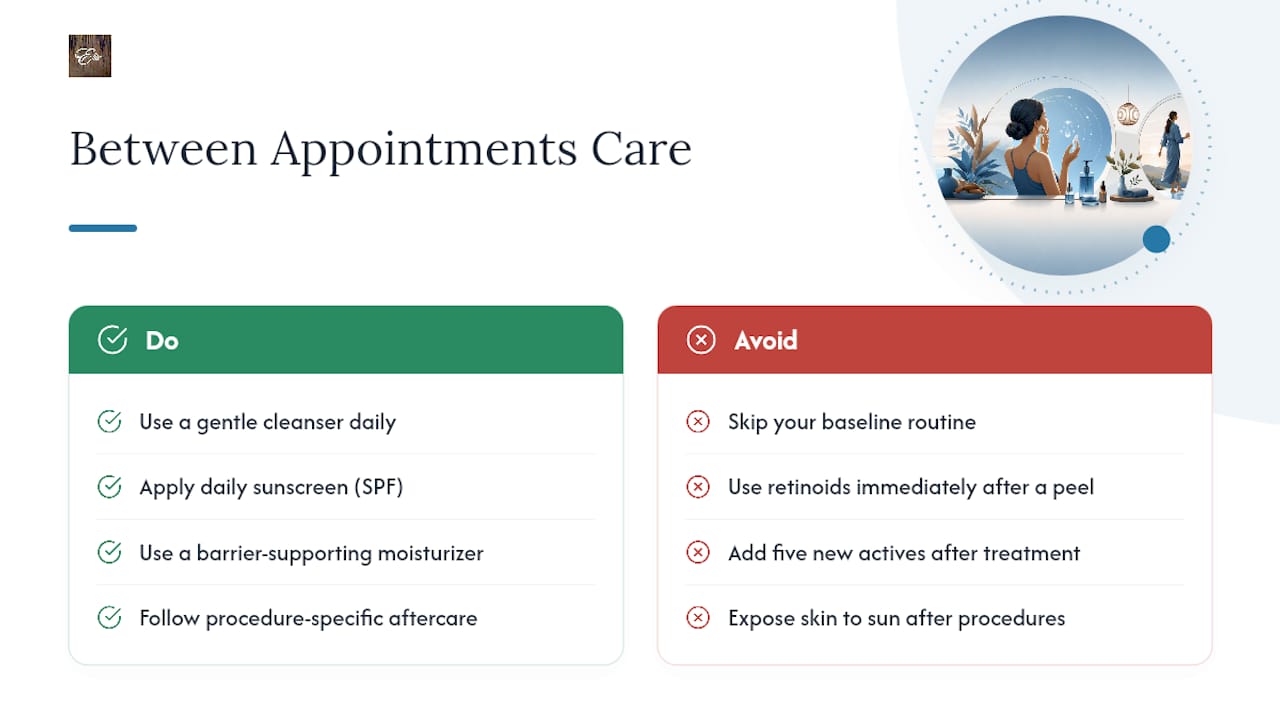
The gap between visits matters as much as the visits themselves. A gentle cleanser, daily sunscreen, and a barrier-supporting moisturizer from the baseline, and skipping any of them undercuts what you paid for in the chair.
Right after a procedure, follow the specific aftercare you're given rather than your normal routine. That might mean holding off on retinoids for several days after a peel, or avoiding sun exposure entirely for a week after microneedling. Aftercare instructions differ by treatment, and that variation is a major reason two people can have the same facial and see different results. Consistent home care between visits genuinely reduces how often you need professional intervention, which is good news if you're trying to stretch a budget or a schedule.
Pro Tip: If you're not sure what to buy for maintenance, ask your esthetician for two products max: one hydrator and one SPF. Adding five new actives right after a professional treatment is how irritation starts.
Clinic-Led Care vs. Maintenance Facials: What's the Real Difference?
People often use "facial" as one catchall term, but a monthly hydrating treatment and a medical-grade procedure sit at opposite ends of the spectrum. Standard maintenance facials refresh the skin's surface and feel good on a predictable cadence. Medical-grade treatments like RF microneedling or deeper peels work at a different tissue depth, and that changes both the risk profile and the timeline entirely.
In a clinic setting, spacing isn't guesswork. It's built around how a specific treatment strength interacts with your specific skin response, which is why the same person might get a HydraFacial monthly but need three months between microneedling sessions. Comparing HydraFacial versus a traditional facial makes the intensity gap obvious pretty quickly. The safest schedules come from providers who track your skin's actual recovery, not from a generic calendar rule.
— Sharon
Build a Facial Schedule That Actually Fits Your Skin
Scheduling frequency should be tailored around skin response rather than a generic calendar. Treatments such as HydraFacial maintenance, medical peels, RF microneedling, or LED therapy can be personalized and performed under medical supervision for optimal results.

A consultation walks through your skin type, goals, and any medications or conditions that affect timing, then maps out a realistic interval for each treatment you're considering. That's a very different starting point than picking a frequency off a chart. If you're ready to figure out what actually works for your skin, explore facials and peels or look into RF microneedling to see where it fits into a longer-term plan, then book a consultation to get a schedule built around you.
Sources
- How Often Should You Get a Facial? We Asked Dermatologists — Byrdie
- Skin cycle renewal science — Rationale (blog)
- How often should you get a facial? — Healthline
FAQ
Is Getting a Facial Every Month Worth It?
For most normal, combination, and oily skin types, monthly facials line up well with the skin's renewal cycle and support steady product absorption. Dry or sensitive skin often does better on a slightly longer 6 to 8 week gap.
Does a Facial Really Make a Difference?
Yes, particularly for circulation, hydration, and clearing surface buildup that daily skincare misses, though the size of the difference depends heavily on the treatment's intensity and how consistent you are with aftercare.
How Long Is a Facial Supposed to Last?
A standard maintenance facial's visible benefits typically last around 4 to 6 weeks before skin cycles back to its baseline, which is part of why that window became the default recommendation.
How Much Should You Tip for a $200 Facial?
Tipping norms vary by region and provider, but 15 to 20% of the service cost is a common range in the spa and salon industry, which would put a $200 facial at roughly $30 to $40.
How Often Should I Get Facials if I'm Doing Microneedling or Peels?
Intensive treatments like microneedling and medium to deep peels need months, not weeks, between sessions, since they work deeper into the skin and require a defined recovery window before repeating.