
For most people, once a month is the right HydraFacial frequency. That four-week baseline aligns with how your skin naturally renews itself, and it gives cumulative treatments time to build on each other. That said, your ideal schedule depends on what you're trying to fix, and a licensed provider should confirm the cadence before you commit to a plan.
Here's how the ranges break down:
- Maintenance (healthy skin, general glow): every 4–6 weeks
- Corrective/initial course (acne, congestion, pigmentation): every 1–3 weeks for the first 2–6 sessions, then step down
- Dry or sensitive skin / rosacea: every 6–8 weeks
- Intensive goals (provider-directed): as often as every 1–2 weeks
A consult at a medically supervised clinic like Elitelaserhair gives you a personalized plan based on your skin type, current topicals, and treatment history.
Key Takeaways
Monthly HydraFacial treatments spaced about once a month are commonly recommended, with corrective courses sometimes closer together and sensitive skin often requiring longer intervals.
| Point | Details |
|---|---|
| Baseline cadence | Every 4 weeks works for most skin types as a maintenance schedule. |
| Corrective course | Start at every 1–3 weeks for 2–6 sessions, then step down to monthly. |
| Sensitive skin interval | Dry or sensitive skin does better at every 6–8 weeks to protect the barrier. |
| Over-treatment red flags | Persistent redness, stinging, or increased breakouts signal you need to slow down. |
| Elitelaserhair | Offers medically supervised, customized HydraFacial plans in Stony Brook, NY, with membership pricing for consistent scheduling. |
Table of Contents
- What a HydraFacial actually does to your skin
- Why monthly treatments work: the skin biology behind the schedule
- How your skin goal changes the schedule
- What first-time clients should expect from an initial course
- Can you get HydraFacials too often?
- How to schedule HydraFacials alongside other treatments
- What to expect after a session: results, downtime, and cost
- How to choose a provider and what to ask at your consult
- Why medical supervision changes your results
- A note on how we approach frequency at the clinic
- Book your HydraFacial at Elitelaserhair
- Sources
- FAQ
What a HydraFacial actually does to your skin
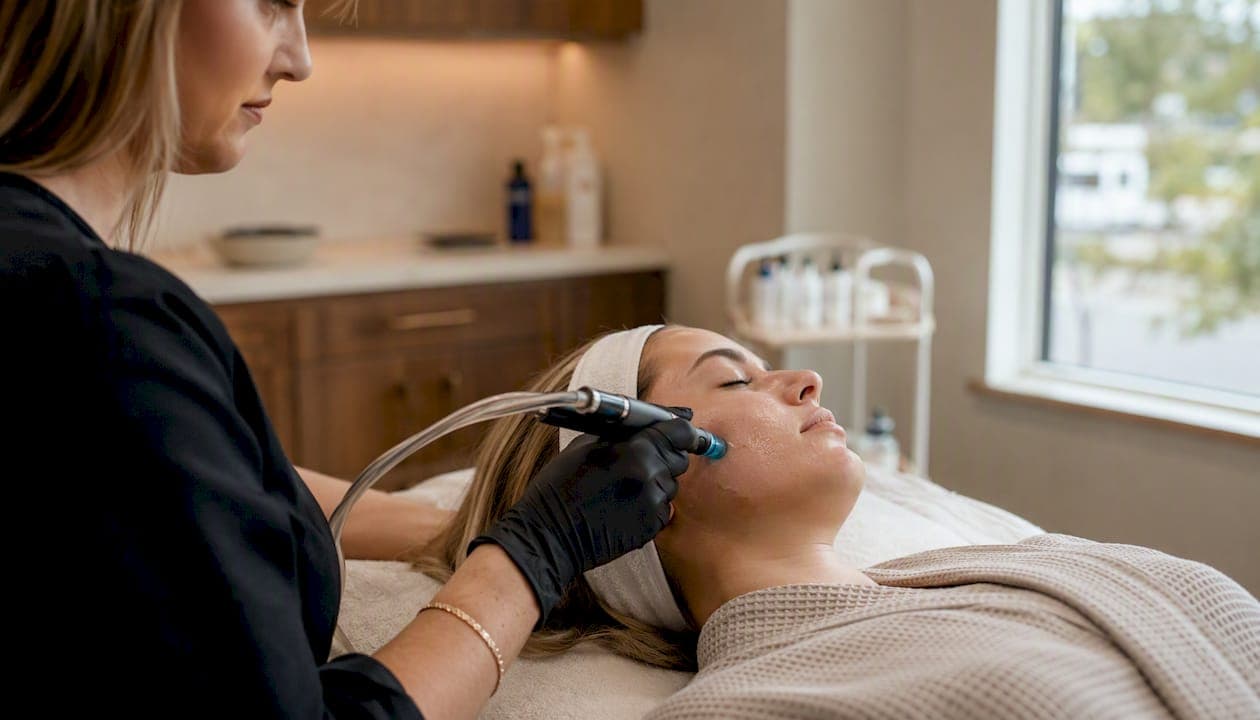
HydraFacial is a three-step, device-based facial: cleanse and exfoliate, extract congestion with a vacuum tip, then infuse skin with hydrating and corrective serums. The whole thing takes 30–60 minutes with no real downtime.
What makes it different from a standard facial is the simultaneous delivery of actives during the infusion step. You're not just exfoliating; you're pushing peptides, antioxidants, and hyaluronic acid into freshly cleared skin. That combination is why repeat sessions compound: each treatment builds on cleaner, better-hydrated skin than the last.
Outcomes that improve with regular sessions:
- Skin hydration and plumpness
- Pore clarity and reduced congestion
- Texture smoothness
- Brightness and reduction in dull, uneven tone
- Gradual improvement in fine lines and pigmentation with consistent visits
Why monthly treatments work: the skin biology behind the schedule
Monthly HydraFacials work because they sync with your skin's own renewal cycle. Skin cells turn over roughly every 28–30 days, so a monthly treatment cadence clears the old layer just as the new one is ready to surface. Exfoliate too early and you're disrupting a cycle that hasn't finished. Wait too long and dead cell buildup dulls the results from your last session.
Cumulative benefits matter here. Collagen stimulation from repeated exfoliation and serum infusion doesn't peak after one session; it builds over months. Pigment improvement follows the same pattern. Consistent monthly visits tend to produce better texture and brighter dark spots than sporadic treatments, according to clinician guidance on anti-aging protocols.
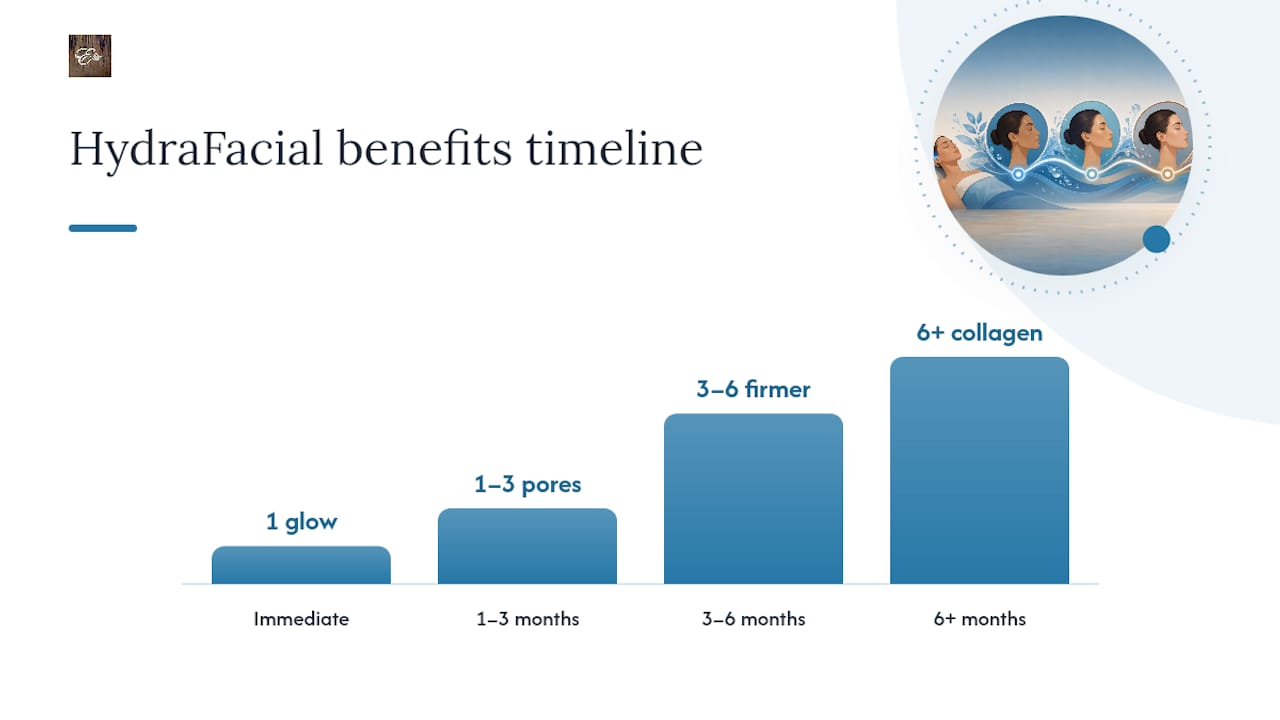
Results timeline at a glance:
| Timeframe | Sessions | What you notice |
|---|---|---|
| Immediately after | 1 | Hydrated glow, smoother texture, reduced redness |
| 1–3 months | 1–3 | Improved pore clarity, more even tone, better hydration retention |
| 3–6 months | 3–6 | Visible texture refinement, pigment reduction, firmer appearance |
| 6+ months | 6+ | Sustained improvement in collagen density and skin resilience |
HydraFacial's official FAQ confirms that many clients schedule about once a month, though providers can adapt cadence from as often as every 1–2 weeks for intensive goals to every 2–3 months for straightforward maintenance.
How your skin goal changes the schedule
There's no single right answer. A dermatologist-led guide puts it plainly: frequency should be tailored to skin type and goals, with oily or acne-prone skin often starting at every 2–3 weeks and dry or sensitive skin doing better at 6–8 week intervals.
Maintenance and general glow
Cadence: every 4–6 weeks. This is the sweet spot most clinics recommend for people whose skin is in decent shape and who want to keep it that way. No corrective phase needed. You show up monthly, your provider adjusts the serum blend seasonally, and results stay consistent.
Triggers to change: if you start a new retinoid or prescription topical, space sessions out to 6–8 weeks until your skin adjusts.
Oily, acne-prone, or congested skin
Cadence: every 2–3 weeks initially, then monthly. Congested skin benefits from more frequent extraction and salicylic-based infusions early on. A corrective course of 3–4 sessions at the tighter interval clears the backlog; after that, monthly maintenance holds the results. Avoid going shorter than two weeks, since that risks stripping the barrier and triggering more oil production.

Anti-aging and pigmentation
Cadence: monthly, consistently. Pigment and collagen work slowly. Skipping months or treating sporadically resets progress. Monthly sessions with brightening or growth-factor serums produce the most reliable texture and tone improvement over a 3–6 month window.
Dry, dehydrated, or sensitive skin
Cadence: every 6–8 weeks. Sensitive skin, including rosacea-prone skin, needs more recovery time between exfoliation sessions. The infusion step still delivers real hydration benefit, but the exfoliation component can be too stimulating if repeated too soon. A gentler serum selection and longer intervals protect the barrier while still delivering results.
Comparison by skin goal:
| Skin goal | Initial cadence | Maintenance cadence |
|---|---|---|
| General maintenance | Every 4–6 weeks | Every 4–6 weeks |
| Oily / acne-prone | Every 2–3 weeks | Monthly |
| Anti-aging / pigmentation | Monthly | Monthly |
| Dry / sensitive / rosacea | Every 6–8 weeks | Every 6–8 weeks |
| Intensive corrective (provider-directed) | Every 1–2 weeks | Monthly |
Triggers to adjust cadence: seasonal dryness (extend intervals in winter), a new prescription topical, a skin flare, or a major event coming up. Schedule a session 2–3 days before an important date for peak glow.
What first-time clients should expect from an initial course
If you're starting with a specific concern, a corrective course gets you to a baseline faster than monthly sessions alone.
- Skin assessment. Your provider evaluates skin type, congestion level, pigmentation, and any contraindications. This determines starting serum selection and initial spacing.
- First session. Baseline treatment. Expect immediate glow and mild sensitivity for 24 hours. Note how your skin responds over the following week.
- Second session (2–3 weeks later). Your provider checks whether the first session's results held, whether congestion cleared, and whether the serum mix needs adjusting.
- Re-evaluate after sessions 2–3. If the concern is improving, begin extending intervals toward monthly. If progress is slower than expected, your provider may recommend a different serum protocol or an adjunctive treatment.
- Transition to maintenance. Once results stabilize, shift to a 4–6 week schedule. Some providers use a course of six sessions spaced every two weeks as an intensive starting protocol before stepping down.
Checkpoint: if you notice persistent redness, stinging, or increased sensitivity after a session, tell your provider before the next one. That's a signal to slow down, not push through.
Can you get HydraFacials too often?
Yes. HydraFacial is gentle compared to a chemical peel or laser, but it still exfoliates. Going too frequently disrupts the skin barrier, and a compromised barrier shows up as chronic sensitivity, redness, and paradoxically worse breakouts.
Most providers advise against intervals shorter than two weeks for exactly this reason. The barrier needs time to recover and reinforce between sessions.
Red flags that you're over-treating:
- Persistent redness that doesn't resolve within 48 hours
- Stinging or burning with your regular skincare products
- Increased breakouts or congestion after sessions
- Skin that feels tight, raw, or reactive between treatments
- Chronic sensitivity to products that previously caused no reaction
Contraindications to discuss with your provider before booking: active rosacea flare, open wounds or active acne lesions, recent isotretinoin use, sunburn, or recent laser resurfacing.
Pro Tip: Between sessions, use a gentle, provider-approved hyaluronic acid serum and a broad-spectrum SPF 30+ daily. These two products protect the results from your last session and keep your barrier intact until the next one.
How to schedule HydraFacials alongside other treatments
Sequencing matters. Some procedures pair well with HydraFacial; others need a buffer.
Injectables (Botox, fillers): Schedule your injectable appointment at least 2 weeks before or after a HydraFacial. The suction and massage involved in a HydraFacial can theoretically displace fresh filler.
Laser resurfacing: Wait a minimum of 2–4 weeks after any ablative or fractional laser before a HydraFacial. Skin needs to fully heal first. If you're considering skin tightening or RF micro-needling, ask your provider for a sequenced schedule.
Chemical peels: Allow 2–4 weeks between a medium-depth peel and a HydraFacial. Layering two exfoliating treatments too close together is the fastest route to barrier damage.
LED light therapy: LED pairs well with HydraFacial and can often be done the same day or within a few days. It's a low-risk adjunctive option between sessions.
Micro-needling: Wait 4–6 weeks after micro-needling before a HydraFacial. The skin needs full barrier recovery before any exfoliation-based treatment.
If you're on isotretinoin or have had an intense laser procedure recently, get a physician-reviewed schedule before booking anything.
What to expect after a session: results, downtime, and cost
The immediate result is a hydrated, lit-from-within glow. Most people notice smoother texture and reduced redness within hours. That initial glow typically lasts about a week; with monthly sessions, the cumulative improvement in tone and texture becomes the new baseline.
Results timeline:
- Immediately: Plumper, brighter skin; reduced surface congestion
- 1–4 weeks: Improved hydration retention; pores appear tighter
- 3+ months: Visible texture refinement, pigment reduction, firmer feel with consistent monthly visits
Downtime: Minimal. Most people return to normal activities the same day. Avoid strong actives (retinoids, AHAs, BHAs) for 24–48 hours post-treatment, and apply SPF before going outside.
U.S. cost expectations: A single HydraFacial session typically runs $150–$300 depending on the clinic, location, and add-on boosters. Membership programs and package pricing reduce the per-session cost meaningfully. Elitelaserhair's Skin Care Club membership is one way to make regular sessions more affordable while keeping a consistent schedule.
How to choose a provider and what to ask at your consult
The clinic matters as much as the treatment. HydraFacial is a device-based procedure, and results vary based on the provider's training, the serum selection, and whether the protocol is customized to your skin.
What to look for in a provider:
- Medical supervision or licensed aesthetician with advanced training
- Documented before-and-after results for your concern
- Willingness to do a skin assessment before recommending a schedule
- Access to multiple serum options and booster add-ons
- Clear pricing and membership/package options
Six questions to ask at your consult:
- "How would you tailor the frequency to my specific skin type and goals?" A good answer names your skin type and gives a specific interval, not a generic "once a month."
- "Which serums will you use, and why?" Your provider should explain the rationale for each serum choice.
- "How many sessions do you recommend before we reassess?" Look for a checkpoint built into the plan.
- "Are there any contraindications given my current skincare routine or prescriptions?" Bring a list of your topicals.
- "How will you track my progress between sessions?" Photos or written notes are a good sign.
- "What should I avoid in the 24–48 hours before and after my appointment?" A provider who gives specific pre- and post-care instructions is one who takes outcomes seriously.
Why medical supervision changes your results
Customization under medical supervision reduces risk and improves outcomes. That's not a marketing claim; it's a structural difference. A non-medical setting may offer a standard HydraFacial protocol with a fixed serum menu. A medically supervised clinic can adjust the treatment based on your skin's response, integrate prescription-grade boosters, and flag contraindications that a non-clinical aesthetician might miss.
At Elitelaserhair, every HydraFacial is performed under medical supervision with a customized serum protocol matched to your skin goals. The clinic's HydraFacial service page outlines the treatment options, and membership pricing through the Skin Care Club makes consistent monthly sessions accessible. Clients with complex skin concerns benefit from the clinic's ability to sequence HydraFacial alongside other modalities, including facials and peels, within a single supervised treatment plan.
The difference shows up most clearly in corrective courses. When a provider can monitor your barrier response, adjust serum concentration, and coordinate with other treatments you're receiving, the corrective phase moves faster and with less risk of over-treatment.
A note on how we approach frequency at the clinic
Every plan starts with a skin assessment, not a default schedule. The first question is always what you're trying to achieve, followed by a look at what you're currently using at home and whether any prescriptions or recent procedures affect the starting point. From there, the cadence gets set and revisited after the first two or three sessions.
Progress is tracked with photos and provider notes. If your skin is responding faster than expected, intervals extend. If a concern is stubborn, the serum protocol adjusts before the frequency does. Bring your full skincare routine and any prescription topicals to your first consult. That information changes the plan more often than people expect.
Book your HydraFacial at Elitelaserhair
Elitelaserhair offers medically supervised HydraFacial treatments in Stony Brook, NY, with every session customized to your skin type and goals. Whether you're starting a corrective course for acne or congestion, or looking to maintain results with a monthly schedule, the clinic builds a plan around your skin, not a template.

The Skin Care Club membership makes regular sessions easier to sustain, with package pricing that lowers the per-session cost for clients who commit to a consistent schedule. Ready to find your cadence? Book a consultation and get a personalized HydraFacial treatment schedule built around your skin goals.
Sources
- Frequency of HydraFacial Treatments in Estero & Naples, FL
- How Often Should You Get a HydraFacial? Dermatologist’s Guide (2026)
- How Often Should You Get a HydraFacial for Best Results?
Ask your provider for clinic-specific guidance tailored to your skin history and current treatment plan.
This article is general information, not a substitute for advice from a qualified doctor. Consult a qualified healthcare professional about your own circumstances before acting on anything here.
FAQ
How often should you get a HydraFacial?
Most people do best with a HydraFacial once a month. Providers can adjust that to every 1–2 weeks for intensive corrective goals or every 2–3 months for straightforward maintenance, depending on your skin type and concerns.
How much gap should you leave between HydraFacials?
Most providers recommend a minimum of two weeks between sessions to protect the skin barrier. For maintenance, a four-to-six-week gap is the standard sweet spot.
Is a monthly HydraFacial worth it?
Yes, for most people. Monthly sessions align with the skin's 28–30 day renewal cycle, and cumulative visits produce better texture, hydration, and pigment improvement than sporadic treatments.
Is a 30-minute HydraFacial enough?
A 30-minute session covers the core three-step protocol and delivers real results. Longer sessions up to 60 minutes allow for add-on boosters targeting specific concerns like pigmentation or fine lines, which can improve outcomes for corrective goals.