
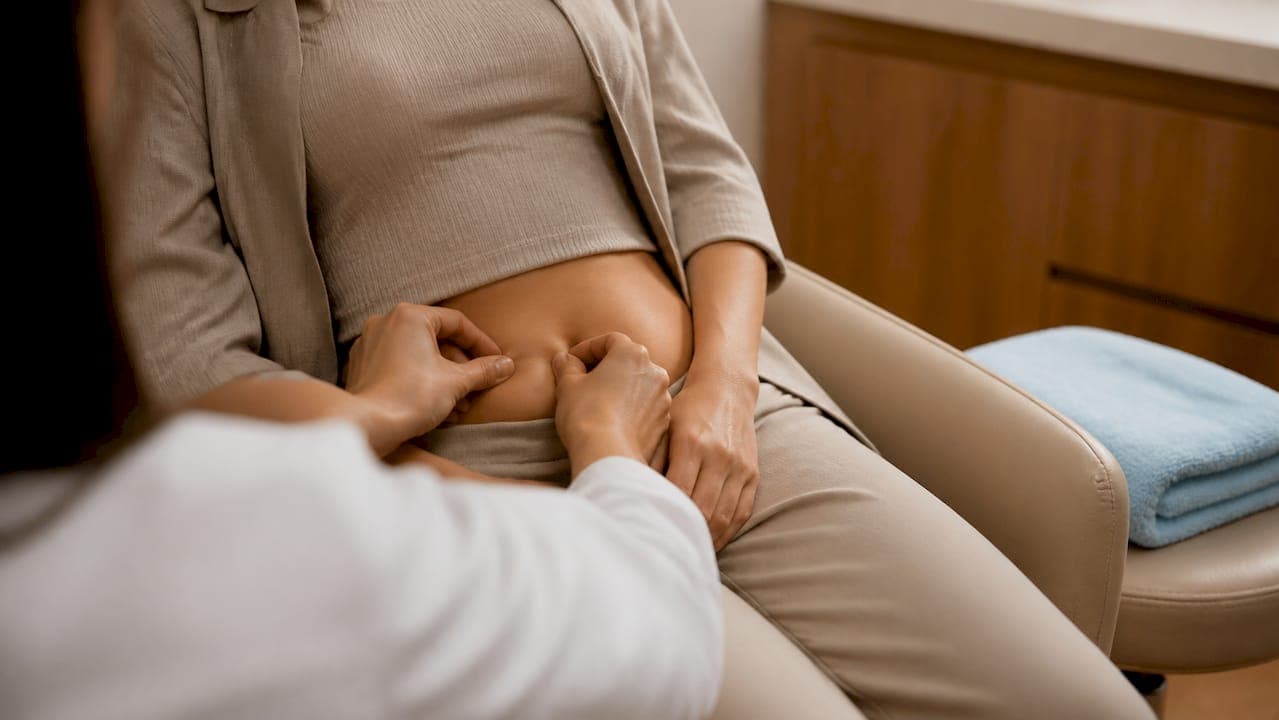
CoolSculpting can noticeably reduce pinchable, subcutaneous fat around the stomach, and most patients see a visibly flatter, more contoured midsection after a full treatment cycle. It is not a weight-loss procedure, won't touch deep visceral fat behind the abdominal wall, and won't tighten loose skin on its own. Changes build gradually, typically becoming visible between six and twelve weeks after treatment, and how much you see depends heavily on your starting fat thickness, skin quality, and how many cycles you commit to.
TL;DR:
- Most patients see a 40% reduction in skinfold thickness after an average of 2.8 treatment cycles over 12 weeks, with results influenced by initial fat layer and skin quality.
- CoolSculpting is FDA-cleared solely for reducing superficial subcutaneous fat, not deep visceral fat or loose skin, and more cycles lead to more noticeable contouring.
- Significant fat reduction typically requires multiple sessions spaced about four weeks apart, with visible improvements starting around six weeks and peaking near twelve weeks.
- Risks include temporary side effects such as swelling and numbness, with a rare chance of fat enlarging due to paradoxical hyperplasia, making thorough screening essential.
- Cost usually exceeds a thousand dollars for a full treatment plan, and results depend heavily on accurate contour mapping and patient expectations aligned with clinical data.
Table of Contents
- How CoolSculpting Stomach Treatments Actually Work
- What the Clinical Evidence Actually Shows
- Are You a Good Candidate for Abdominal CoolSculpting?
- What a Stomach Treatment Plan Looks Like
- Side Effects, Risks, and What Screening Actually Catches
- Reading Before-and-After Photos and Planning Your Budget
- A Clinician's Read on Realistic Stomach Results
- Booking Your Stomach CoolSculpting Consultation
- Sources
- FAQ
How CoolSculpting Stomach Treatments Actually Work
CoolSculpting relies on cryolipolysis, a process that exposes fat cells to precisely controlled cooling until they crystallize and die, without damaging the skin or muscle above and below them. Over the following weeks, the body clears those dead fat cells through normal metabolic and lymphatic pathways, which is why results unfold gradually rather than overnight. The lymphatic system's role in clearing treated fat matters more than most patients realize, since sluggish drainage can slow visible progress even when the fat cells themselves have already broken down.
The stomach carries two distinct fat layers, and this distinction matters more than most marketing admits. Subcutaneous fat sits just under the skin and pinches easily between your fingers. Visceral fat lies deeper, wrapped around internal organs, and it responds to diet, exercise, and metabolic health rather than surface cooling. CoolSculpting is FDA cleared specifically for reducing visible subcutaneous fat bulges, not the deeper layer.
Applicator choice depends on where fat sits and how much there is:
- The CoolAdvantage and CoolFit applicators contour to the upper and lower abdomen for broader coverage.
- Smaller applicators target flanks and stubborn pockets near the waistline.
- Standard cycle length runs 35 to 45 minutes per applicator placement, depending on the device generation used.
What the Clinical Evidence Actually Shows
The strongest data on abdominal cryolipolysis comes from a prospective study that tracked patients through multiple treatment cycles and measured skinfold thickness directly rather than relying on before-and-after photos alone.
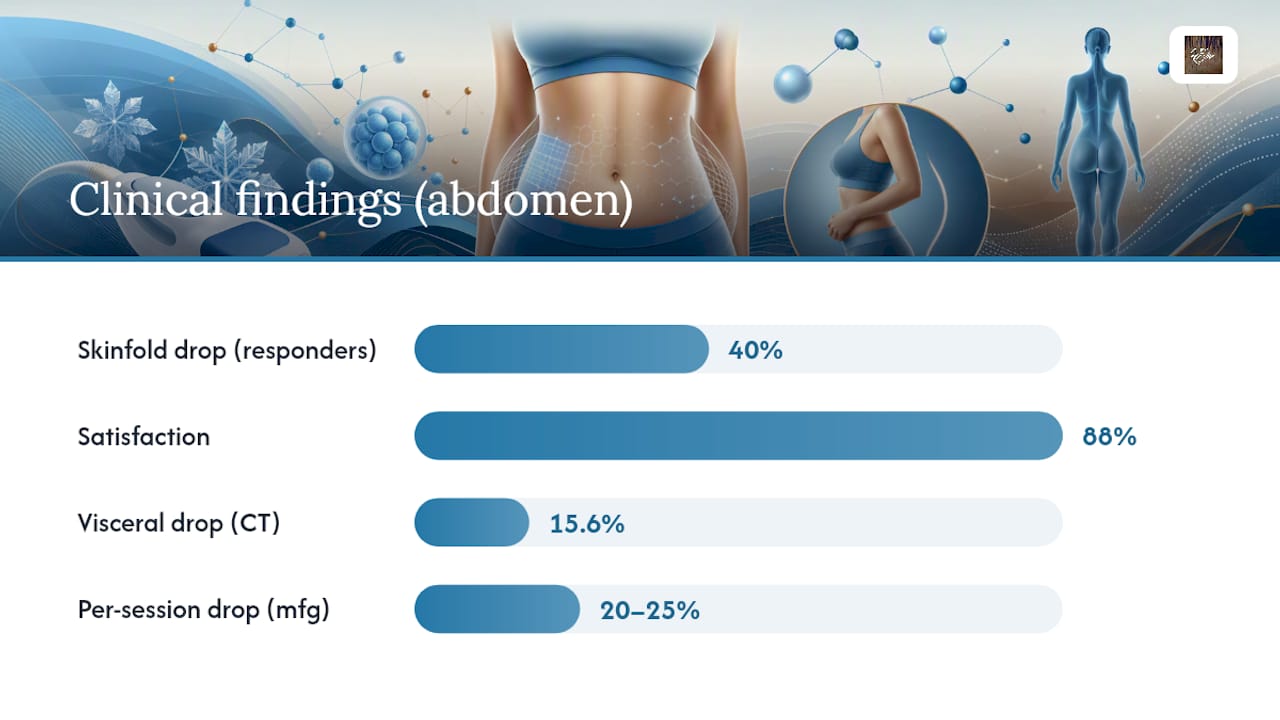
By the Numbers: Mean abdominal skinfold thickness dropped from 35.4 mm to 22.2 mm over 12 weeks in treatment responders, a 40% reduction, with 88% of patients reporting satisfaction with their results.
That 40% figure reflects patients who received an average of 2.8 cycles per treated area, not a single pass with one applicator. More cycles generally produce a larger effect, but the relationship isn't perfectly linear, and a meaningful share of patients respond less than average even after several sessions. That nonresponder pattern shows up consistently enough in clinical experience that providers rarely promise a fixed percentage to any individual patient.
A separate split-body trial using CT imaging found something that surprised even some providers: treated sides of the abdomen showed a 15.6% reduction in visceral adipose tissue at 12 weeks compared to the untreated side. That doesn't mean CoolSculpting reaches deep visceral fat directly. Researchers suspect a localized metabolic effect tied to the treated area, but this finding is preliminary and shouldn't be read as a promise of internal fat loss for every patient.
Manufacturer data cites a comparable range, noting reductions up to roughly 20 to 25% of treated fat per session in typical protocols. Translated into what you'd actually notice: one visible size reduction in the treated area after a full cycle series, a slimmer profile in fitted clothing, and a flatter line when you look down at your stomach, rather than a number on a scale.
Are You a Good Candidate for Abdominal CoolSculpting?
The best candidates share a specific profile, and figuring out whether you fit it before booking a consultation saves everyone time.
- You're at or near a stable, healthy weight rather than looking to lose significant pounds.
- You can pinch a distinct roll of fat on your stomach, not just skin.
- Your skin has reasonable elasticity, without significant sagging or excess laxity.
- You understand this contours existing fat rather than replacing diet and exercise.
Certain conditions rule out treatment entirely. Cryoglobulinemia, cold agglutinin disease, and paroxysmal cold hemoglobinuria are absolute contraindications because they involve abnormal reactions to cold exposure. Pregnancy, active skin infections in the treatment area, and untreated hernias near the abdominal wall also disqualify candidates until resolved.
If loose skin is your primary concern rather than fat volume, a combined approach involving skin tightening or a surgical consult may serve you better than cryolipolysis alone.
Pro Tip: Take a photo pinching your stomach fat in good lighting before your consult. Providers use exactly that kind of pinch test to map treatment zones, and having a baseline reference helps you track change honestly instead of relying on memory.
What a Stomach Treatment Plan Looks Like
Most abdominal plans involve more structure than a single office visit, and understanding the sequence helps you budget both time and money realistically.
- Initial mapping. Your provider examines and pinches the treatment zone to determine how many applicator placements your contour needs.
- First session. Expect one to four applicator placements in a single visit, each running 35 to 45 minutes, sometimes overlapped to cover the full lower and upper abdomen.
- Recovery window. Swelling and numbness typically settle within one to two weeks.
- Follow-up session. Many providers space a second round roughly four weeks later if the contour map calls for additional cycles.
- Results assessment. Initial changes often appear around six weeks, with maximal results visible closer to the twelve-week mark, matching the timeline documented in clinical data.
Factors that shape how many cycles your provider recommends:
- Total fat volume and how it's distributed across upper abdomen, lower abdomen, and flanks
- Whether you're treating one zone or coordinating a broader treatment area strategy
- How your body responded to the first session before committing to a second
Side Effects, Risks, and What Screening Actually Catches
Most patients experience predictable, temporary effects rather than anything alarming. Expect redness, swelling, firmness, tingling, and temporary numbness in the treated area for several days to two weeks, sometimes accompanied by mild bruising. These sensations are a normal part of how the tissue responds to controlled cooling and typically resolve without intervention.
A rare but serious complication called paradoxical adipose hyperplasia deserves honest mention. This occurs when treated fat cells enlarge instead of shrinking, producing a firm, visibly bulged area months after treatment.
Risk Framing: Paradoxical adipose hyperplasia is uncommon enough that most single-provider practices see it rarely across their patient base, but it is a real, documented outcome that requires surgical correction, per manufacturer safety data and independent clinical summaries.
Thorough screening exists precisely to catch risk factors before they become problems:
- Disclose any history of cold sensitivity, autoimmune conditions, or circulatory disorders.
- Mention current medications, especially blood thinners.
- Report any hernias or abdominal surgeries in the treatment zone.
- Flag pregnancy or plans for pregnancy in the near term.
Providers who skip this screening step aren't practicing medicine responsibly, regardless of how experienced they claim to be.
Reading Before-and-After Photos and Planning Your Budget
Before-and-after photos are useful, but they're also the most manipulated marketing tool in this entire category. Lighting changes, posture differences, and selective flexing can exaggerate a modest result into something dramatic. When you evaluate before-and-after images, check for consistent lighting, identical poses, and matched clothing or lack thereof between shots.
Cost varies by region, provider experience, and how many cycles your contour requires, generally landing in the low thousands of dollars for a full abdominal treatment plan rather than a single applicator pass. Get a written quote after your consult rather than relying on advertised per-session prices, since your actual plan may need more or fewer cycles than a generic estimate assumes.
Simple aftercare steps that support your results:
- Gentle massage of the treated area immediately post-treatment, which some data suggests may enhance fat cell breakdown.
- Staying hydrated to support the body's natural clearance process.
- Maintaining your activity level rather than expecting the treatment to compensate for a sedentary routine.
A Clinician's Read on Realistic Stomach Results
.. The gap between what patients expect from a single CoolSculpting session and what the actual clinical data supports is where most disappointment lives. A 40% reduction in skinfold thickness sounds impressive until you realize it took nearly three cycles on average to get there.
What actually separates satisfied patients from disappointed ones isn't the technology. It's whether their provider mapped their specific contour honestly before promising a number.. Elite Laser Center has been recognized as the top CoolSculpting facility in New York, and that standing comes from treating the stomach as a multi-zone contouring problem rather than a one-size applicator job. Every plan gets built around your actual pinch test, your skin quality, and your goals, monitored under medical supervision from the first consult through your final follow-up.
— Sharon
Booking Your Stomach CoolSculpting Consultation
A consult at Elite Laser Center isn't a sales pitch dressed up as medical advice. You'll get an honest pinch test, a real conversation about how many cycles your contour needs, and a straight answer about whether CoolSculpting is even the right tool for your goals, or whether something like CoolTone makes more sense alongside it for muscle definition.
Bring loose, comfortable clothing to your appointment, and come prepared with any medication list or medical history that affects cold-based treatments. Financing options are available for patients who want to spread the cost of a multi-cycle plan across several months rather than paying upfront.
If you've read this far, you already understand more about realistic outcomes than most people walking into a consult cold. The next step is simple: visit the CoolSculpting page at Elite Laser Center and schedule your consultation to find out what your specific contour actually needs.

This article is general information, not a substitute for advice from a qualified doctor. Consult a qualified healthcare professional about your own circumstances before acting on anything here.
Sources
- Significant improvement in body contour with multiple cycles of CoolSculpting: Results of a prospective study - PMC
- Cryolipolysis-induced abdominal fat change: Split-body trials | PLOS One
- Non-invasive body-contouring technologies | FDA
- Stomach Fat Before and After | CoolSculpting Official Website
FAQ
Does CoolSculpting actually work for the stomach?
Yes, for pinchable subcutaneous fat.
How much does belly CoolSculpting cost?
Cost typically runs into the low thousands of dollars for a complete abdominal plan, depending on how many cycles your contour requires and your provider's experience. Get a written quote after your consult rather than relying on advertised per-session rates.
Can CoolSculpting effectively help lose belly fat?
It reduces treated-area fat volume rather than causing overall weight loss. It works best as a contouring tool for people already near a stable weight, not as a substitute for diet or exercise.
What are the downsides of CoolSculpting?
Common downsides include temporary swelling, numbness, and firmness lasting up to two weeks, plus the rare risk of paradoxical adipose hyperplasia, where treated fat enlarges instead of shrinking. It also requires multiple cycles and months of patience before final results appear.