
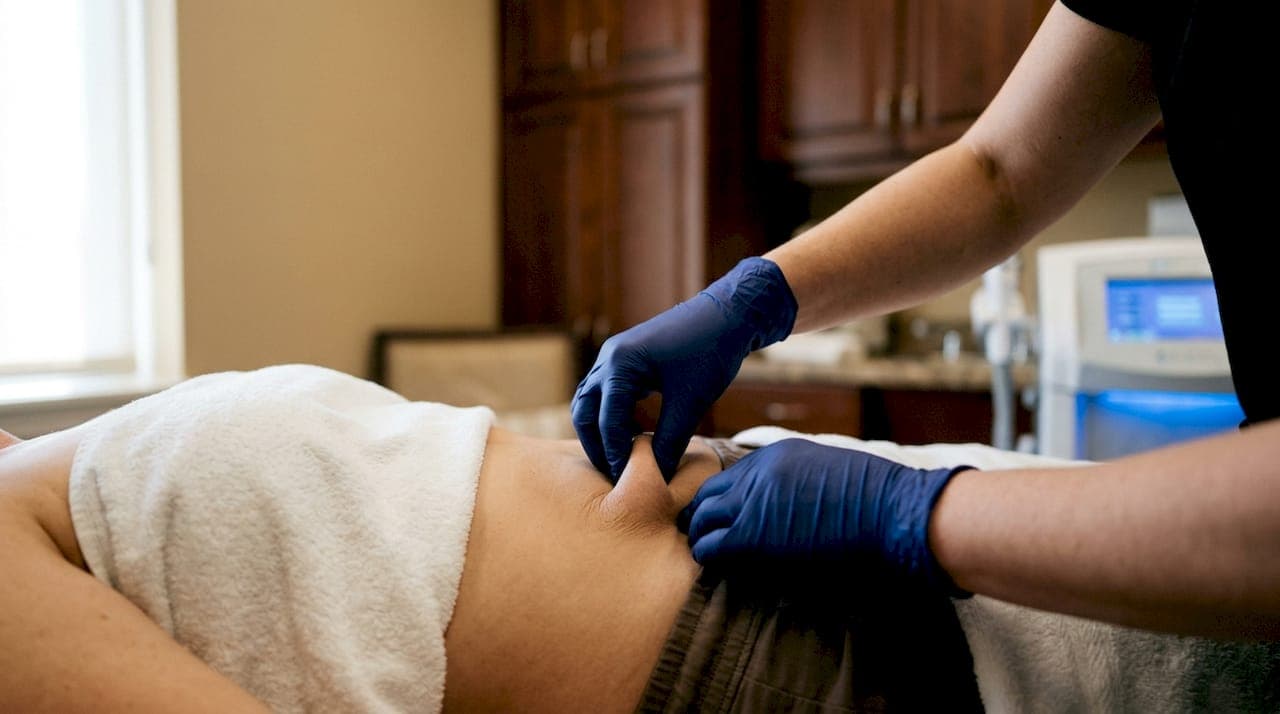
If you can pinch an inch of soft fat, you're close to your stable weight, and you don't have a cold-sensitivity disorder, you're probably a good candidate for CoolSculpting. If any of those three fail, you likely need a different approach.
- Pinch test: Can you grab a soft roll of fat with your fingers? If yes, that's a good sign.
- Weight stability: Are you within a reasonable range of your goal weight, not actively losing or gaining?
- Medical history: No cryoglobulinemia, cold agglutinin disease, or similar cold-sensitive conditions?
Pass all three? Book a consultation. Fail one? Read on before you do.
Key Takeaways
Good CoolSculpting candidates have pinchable localized fat, stable weight, decent skin elasticity, and no cold-sensitive medical conditions, confirmed only through a real physical exam.
| Point | Details |
|---|---|
| Pass the pinch test | Soft, mobile fat that lifts away from muscle responds best; dense or fibrous fat often doesn't. |
| Stay near your goal weight | Providers generally look for patients within about 10 to 15 pounds of their ideal weight. |
| Disclose your full medical history | Cold-sensitive disorders, implants, hernias, and pregnancy are key factors a provider must review first. |
| Expect gradual, multi-session results | Fat layer reduction runs roughly 20 to 26 percent per session, with final results visible around 4 months. |
| Get a real physical exam | Elite Laser Center evaluates pinchability, skin quality, and medical history before recommending a plan. |
This article is general information, not a substitute for advice from a qualified doctor. Consult a qualified healthcare professional about your own circumstances before acting on anything here.
Table of Contents
- What Makes You a Good Candidate for CoolSculpting Eligibility?
- Who Is Not a Candidate for CoolSculpting?
- Which Body Areas Qualify for CoolSculpting Treatment?
- How Long Until You See CoolSculpting Results?
- What Happens During a CoolSculpting Consultation?
- Is CoolSculpting Backed by Clinical Evidence?
- Ready to Find Out If You Qualify?
- Sources
- FAQ
What Makes You a Good Candidate for CoolSculpting Eligibility?
The best CoolSculpting candidates share three traits: localized pockets of soft, pinchable fat, a stable weight close to their goal, and skin with enough elasticity to contract after the fat cells clear out. This isn't a weight-loss procedure. It's a contouring tool for fat that hasn't budged despite diet and exercise, which is why professional society guidance points to people already near their ideal weight rather than those with a lot of pounds to lose.
The pinch test is the fastest way to check yourself at home. Grab the tissue at your abdomen, flank, or thigh between your thumb and fingers. Soft, mobile fat that lifts easily away from the muscle is what the CoolSculpting applicator needs to work. Fat that feels dense, fibrous, or barely moves, common in some thigh tissue, tends to respond less predictably to vacuum-based applicators.
BMI matters, but not the way most people assume. Clinic guidance generally favors patients within about 10 to 15 pounds of their goal weight, and device labeling for some applicators sets an upper BMI threshold, though allowances vary by treatment area, with submental applicators cleared for a wider BMI range than body applicators. Your provider will map this against the specific area you want treated.
Statistic callout: Clinical review data shows CoolSculpting can reduce the treated fat layer by roughly 20 to 26 percent per session, not 20 to 26 percent of your total body fat.
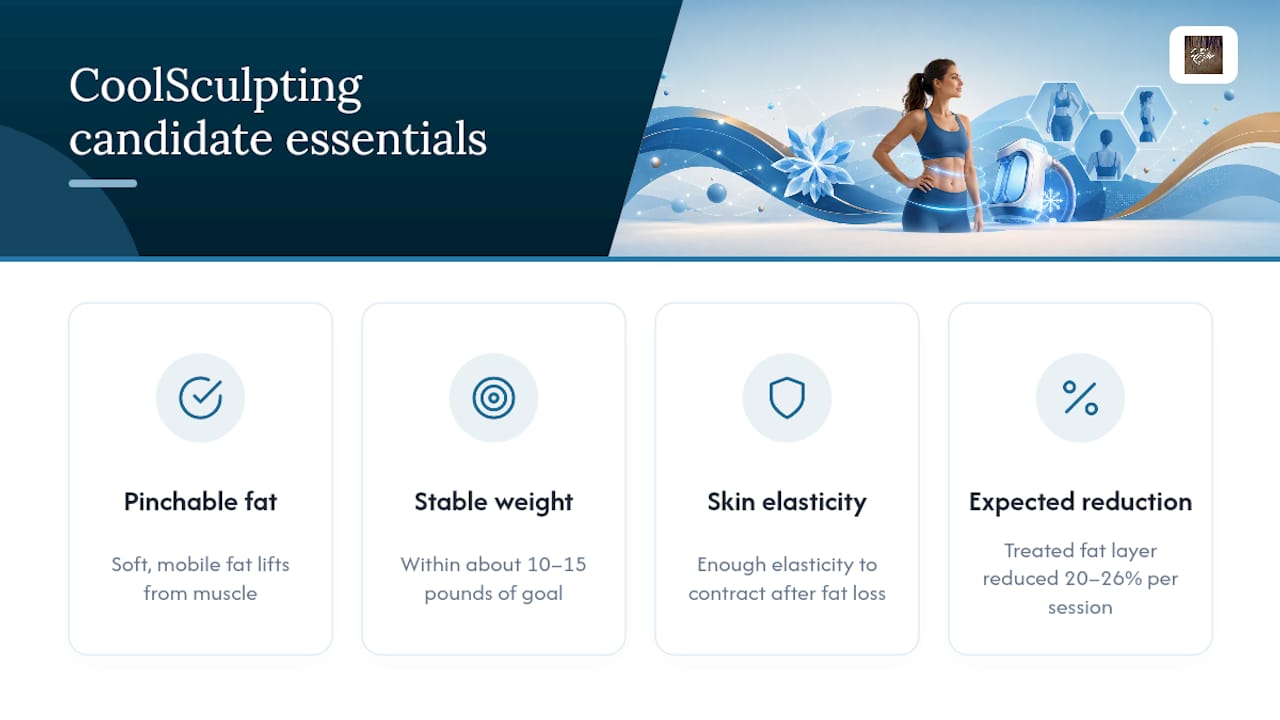
Pro Tip: Do the pinch test in the morning before eating, in a normal standing position, not flexed. Fat that disappears when you tighten your muscles is often muscle, not fat, and that area won't respond the way you expect.
Who Is Not a Candidate for CoolSculpting?
Some exclusions are absolute. Others depend on your specific anatomy and health history, which is exactly why a real consultation exists instead of a quiz.
- Cold-sensitive disorders: Cryoglobulinemia, cold agglutinin disease, and paroxysmal cold hemoglobinuria are firm exclusions, since the treatment relies on controlled cold exposure.
- Impaired circulation or lymphatic issues: Poor blood flow or lymphatic drainage in the treatment area can slow healing and increase risk.
- Significant skin laxity: Loose, crepey skin won't tighten after fat reduction the way firmer skin will.
- Hernias or implants near the treatment site: These need a provider's direct evaluation before anything is scheduled.
- Pregnancy or breastfeeding: Manufacturer materials list these as populations where the treatment hasn't been studied.
- Active skin infections at or near the applicator site.
Full disclosure of your medical history, including current medications, past surgeries, and any circulatory conditions, isn't optional paperwork. It's the single factor most likely to prevent an adverse event.
Manufacturer safety documentation spells these exclusions out in detail, and a trained provider should walk through every item on that list with you, not just hand you a form.
Which Body Areas Qualify for CoolSculpting Treatment?
CoolSculpting and CoolSculpting Elite systems are FDA-cleared for specific bulges: the submental area (under the chin), abdomen, flanks, thighs, back, upper arms, and the "banana roll" beneath the buttocks. Each area gets its own applicator shape.
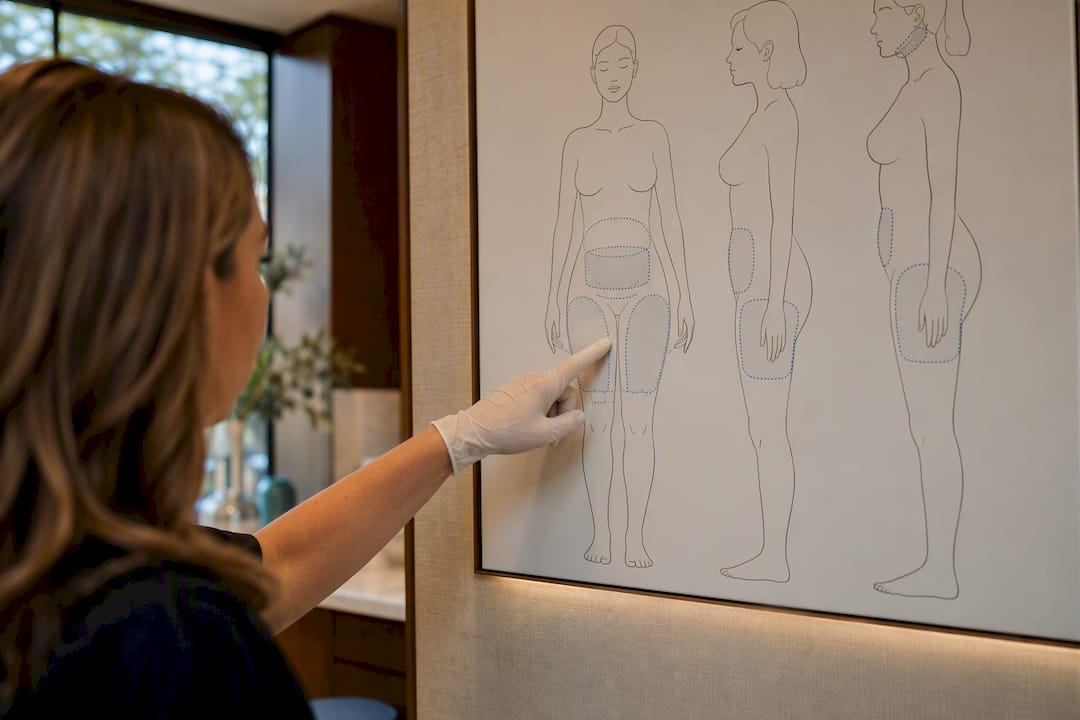
During a physical exam, your provider checks more than just visible fat. They'll pinch the area to confirm it lifts freely from underlying muscle, assess skin quality, and check for scars, hernias, or superficial nerves and blood vessels close to the surface. Device instructions specifically warn against treating spots with less than 1 centimeter of fat thickness or areas near exposed nerves, since those raise the risk of numbness or nerve irritation.
An area can get ruled out for reasons that have nothing to do with how much you want it treated. Minimal muscle mass underneath, superficial veins, or a bulge that's mostly muscle rather than fat will all steer a good provider toward saying no.
Pro Tip: Before your consultation, take photos of the area in good lighting from the front and side, and note where you can pinch versus where the tissue feels firm. It speeds up the exam and gives your provider a real baseline to compare against later.
How Long Until You See CoolSculpting Results?
Patience is part of candidacy. If you need to see dramatic change in two weeks, CoolSculpting isn't the right tool, regardless of how well you meet every other criterion.
- Weeks 1 to 3: Treated cells begin breaking down; you may notice temporary swelling or firmness, not fat loss yet.
- Around 1 month: Early changes start becoming visible as your body clears the affected fat cells.
- 8 to 12 weeks: Most of the visible reduction shows up in this window.
- Around 4 months: Final results are typically evident, based on the timeline reported in the clinical literature on cryolipolysis.
Most patients need more than one session per area to reach a noticeable, satisfying result, and multiple treatment cycles spaced weeks apart are common rather than the exception.
Statistic callout: That same clinical review puts per-session fat layer reduction at roughly 20 to 26 percent, which is why providers often recommend two or three sessions for areas with more volume.
What Happens During a CoolSculpting Consultation?
A real consultation is a medical evaluation, not a sales pitch. Here's what a provider should walk through with you.
- Full medical history review, including medications like blood thinners.
- BMI and weight-stability check against the treatment area's requirements.
- Photos and precise measurements of the target area to serve as your baseline.
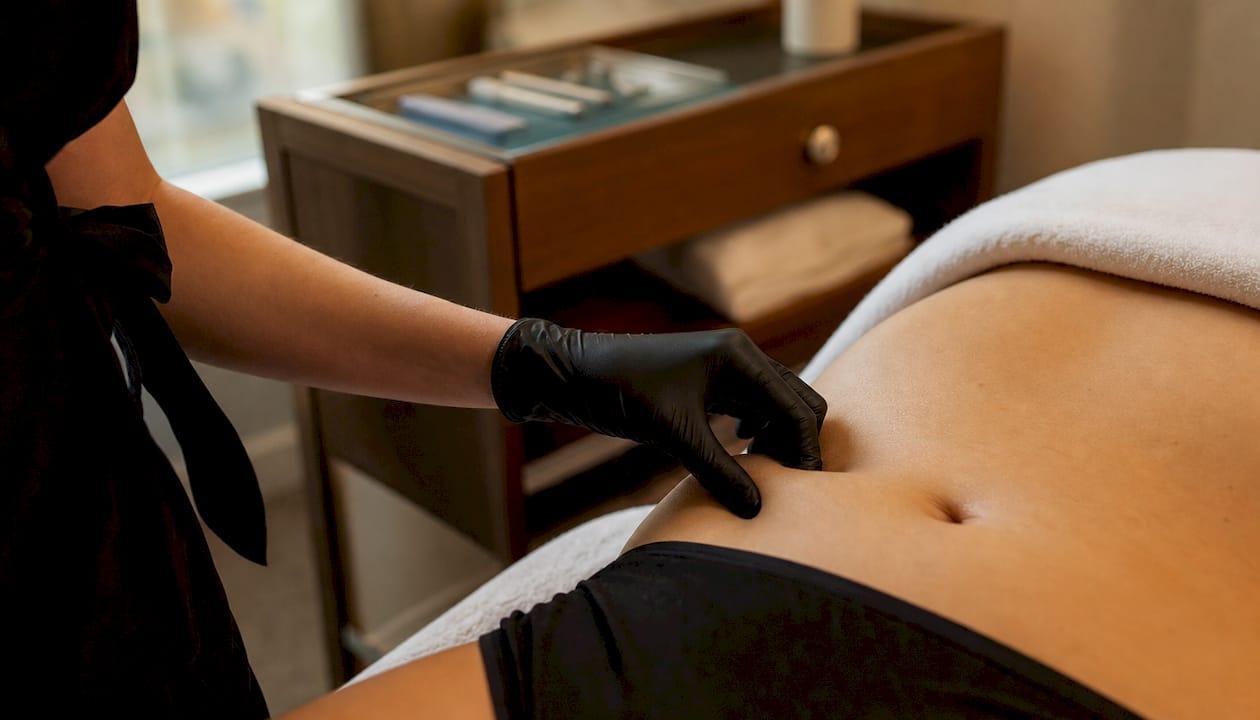
- A pinch test and visual check for scars, hernias, or implants nearby.
- A conversation about your goals and how many sessions are realistic.
Bring your medication list, note any past surgeries near the treatment area, and ask direct questions: how many sessions will this likely take, what does downtime look like, and what side effects are common versus rare?
- Red flag: No one measures or photographs the area before quoting a treatment plan.
- Red flag: Vague answers about safety exclusions or your medical history.
- Red flag: Pressure to book before a real physical exam happens.
Is CoolSculpting Backed by Clinical Evidence?
Cryolipolysis, the underlying technology behind CoolSculpting, has a solid clinical track record when patients are selected carefully. Peer-reviewed literature on patient selection consistently ties satisfaction rates to how well providers screen for the right anthropometric and skin characteristics before treating, not to the device alone.
- Typical adverse events are mild: temporary redness, bruising, or swelling that resolves on its own.
- Rare sensory changes, like numbness, can occur and usually fade over weeks.
- Manufacturer safety data excludes cold-sensitive blood disorders and unstudied populations like pregnant patients.
Outcomes in cryolipolysis depend less on the machine and more on who sits in the chair. Proper screening before treatment is what separates a satisfied patient from a disappointed one.
This article is educational and isn't a substitute for a licensed provider's evaluation of your specific health history.
A Provider's View on Realistic CoolSculpting Candidacy
CoolSculpting works best as a finishing tool once your weight has settled, not as a shortcut before you've stabilized. When laxity is mild, pairing it with skin tightening or RF microneedling often improves the final look. Severe laxity usually calls for a surgical conversation instead.
Ready to Find Out If You Qualify?
Elite Laser Center gives you something a quiz never can: a hands-on physical exam by a trained provider who checks pinchability, skin quality, and your full medical history before recommending anything.
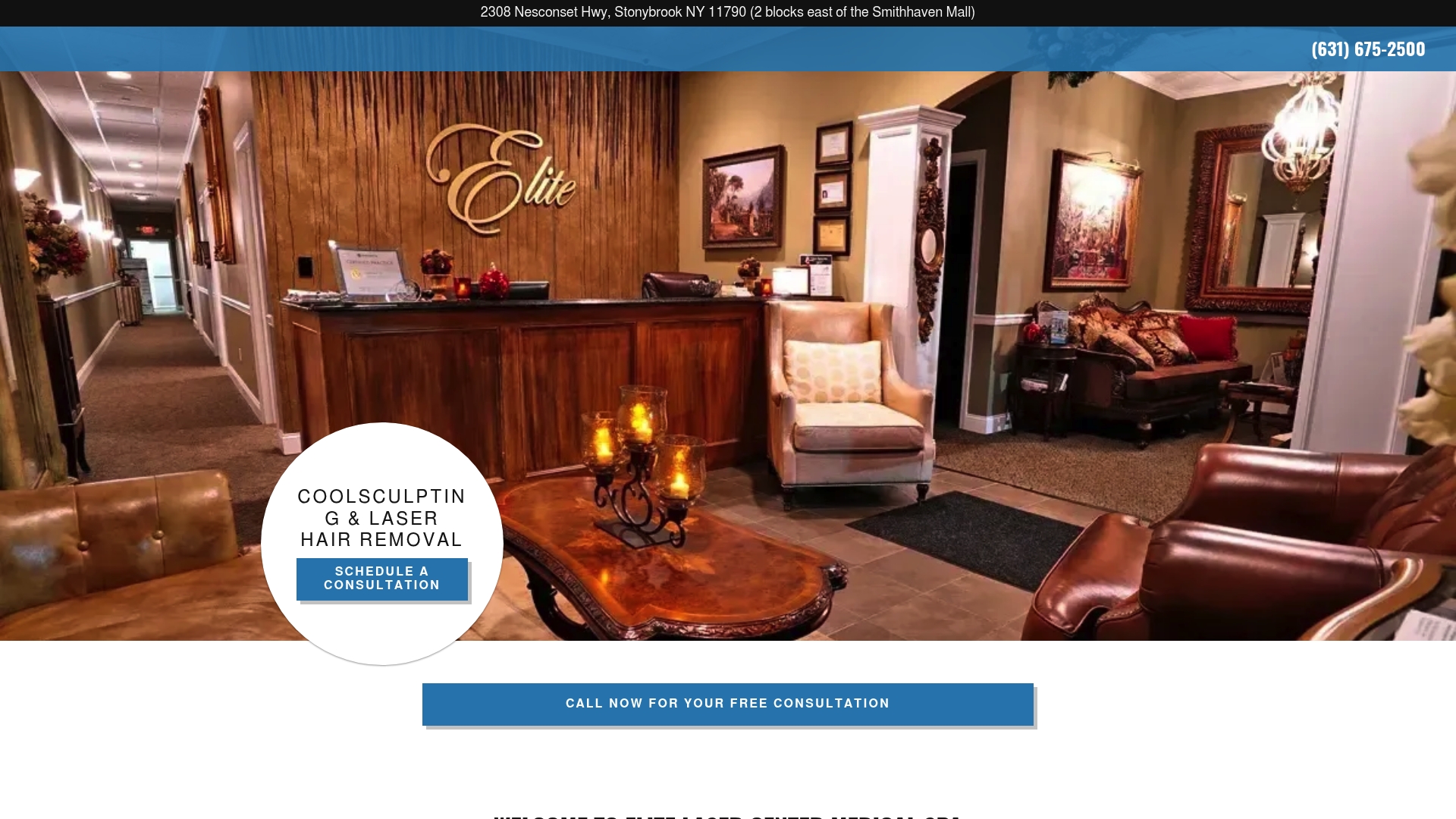
Your first visit at our Stony Brook location includes a real assessment, not a sales script: measurements, photos for your baseline, a pinch test on every area you're curious about, and a plan built around how many sessions your goals actually require. If skin laxity or another factor rules out CoolSculpting for you, we'll walk you through options like CoolTone or skin tightening instead of just saying no and sending you home. Package and financing options are available for multi-session plans. Schedule your consultation and find out exactly where you stand.
Sources
- Cryolipolysis: patient selection and special considerations
- CoolSculpting® Full Important Safety Information for Consumers (PDF)
- Cryolipolysis overview — American Society of Plastic Surgeons
FAQ
What Disqualifies You From CoolSculpting?
Cold-sensitive disorders like cryoglobulinemia and cold agglutinin disease are absolute exclusions, along with pregnancy, breastfeeding, and active skin infections near the treatment site.
What BMI Is Needed for CoolSculpting?
There's no single universal BMI cutoff; requirements vary by applicator and treatment area, with some body applicators indicated around a BMI of 30 and submental applicators allowing a higher range.
Who Is Not a Good Candidate for CoolSculpting?
People with significant skin laxity, impaired circulation, fibrous rather than soft fat, or a cold-sensitivity disorder are generally poor candidates, as are those expecting it to replace weight loss.
How Much Do 3 Sessions of CoolSculpting Cost?
Pricing depends on the treatment area, applicator count, and your specific plan, so it's best confirmed during a consultation like the one offered at Elite Laser Center rather than estimated generically.