
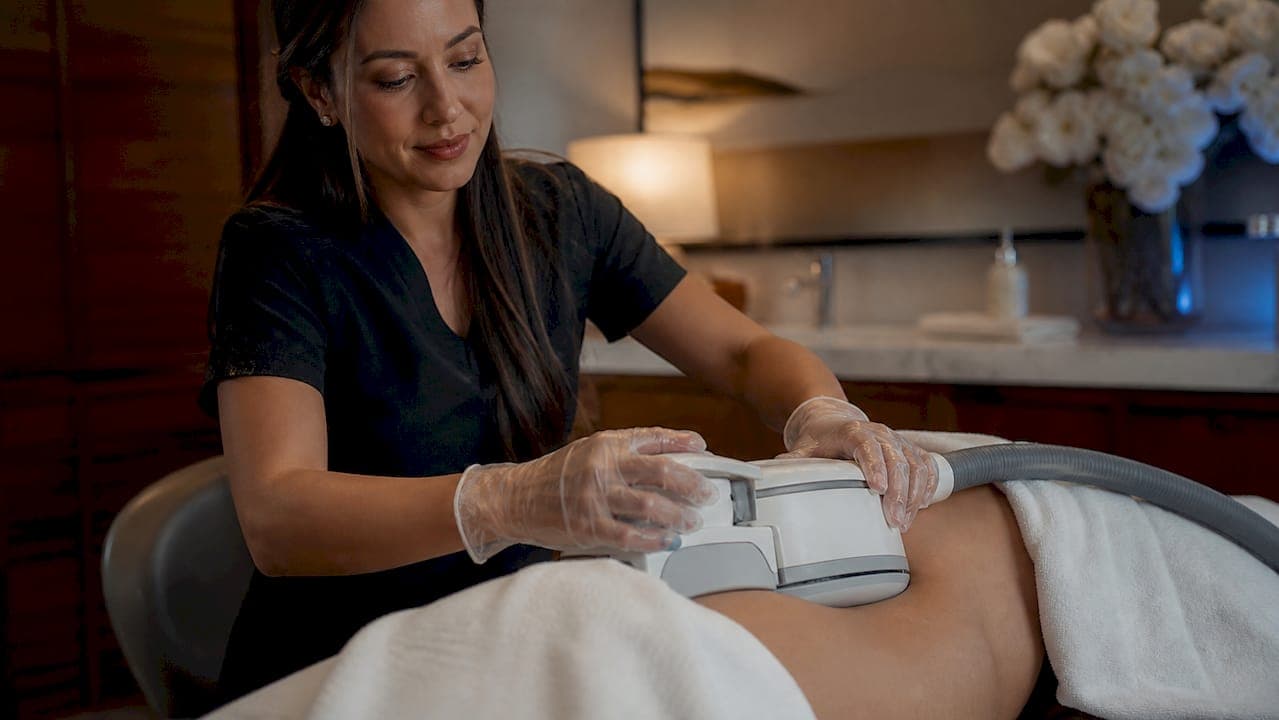
Most people notice the first hints of a slimmer contour between weeks 2 and 4, see a clearer, more defined change by weeks 8 to 12, and reach their final result somewhere between week 12 and week 24. That's the honest window, not a marketing promise. Clinical data behind CoolSculpting® Elite, made by Allergan, points to reductions of roughly one-fifth to one-quarter of the treated fat layer, with some studies showing larger effects when patients do multiple cycles.
Here's the compressed version before we go deep:
- First seen: subtle softening around 2 to 4 weeks, often noticed in clothing fit before it shows in the mirror.
- Midpoint: visible, measurable change by 8 to 12 weeks, the point most clinics use for progress photos.
- Final result: full contour settles by 16 to 24 weeks as the body finishes clearing treated fat cells.
CoolSculpting isn't a same-day fix. It's a slow biological process, and understanding that timeline changes how you plan sessions, when you take comparison photos, and how you judge whether it's actually working.
Pro Tip: Book your CoolSculpting sessions with your calendar in mind. If you want to look your best for an event, plan the treatment 4 to 6 months out, not 4 to 6 weeks.
Key Takeaways
CoolSculpting results follow a predictable biological timeline: early signs by 2 to 4 weeks, substantial change by 8 to 12 weeks, and final contour refinement by 16 to 24 weeks, with multi-cycle treatment plans producing larger measured reductions than single sessions.
| Point | Details |
|---|---|
| First signs appear early | Subtle softening or looser-fitting clothes often show up around 2 to 4 weeks post-treatment. |
| Midpoint is the clearest checkpoint | Most patients see substantial, measurable contour change by 8 to 12 weeks. |
| Final results take patience | Full refinement can continue out to 16 to 24 weeks, especially for larger treated areas. |
| Measure objectively | Use dated photos, tape measurements, and clinic caliper checks instead of relying on scale weight. |
| Multiple cycles boost outcomes | Responders averaging 2.8 cycles per area saw a 40% mean skinfold reduction at 12 weeks in one prospective study. |
| Elite Laser Center offers supervised planning | Their CoolSculpting program builds cycle counts and timelines around each patient's treated areas and goals. |
This article is general information, not a substitute for advice from a qualified doctor. Consult a qualified healthcare professional about your own circumstances before acting on anything here.
Table of Contents
- How Does CoolSculpting Actually Melt Fat?
- What Does the CoolSculpting Timeline Look Like Week by Week?
- How can you tell if CoolSculpting is working?
- What Affects How Fast Your CoolSculpting Results Show Up?
- Is One CoolSculpting Session Enough?
- What Side Effects Should You Expect, and When Should You Worry?
- What Does the Clinical Research Actually Show?
- How Should You Care for Your Body After CoolSculpting?
- A Clinician's View on Setting Realistic Expectations
- Ready to Start Your Own CoolSculpting Timeline?
- Sources
- FAQ
How Does CoolSculpting Actually Melt Fat?
CoolSculpting doesn't melt anything. It freezes fat cells until they die, a process called cryolipolysis, and then your body hauls the debris away over the following weeks. That's the entire mechanism, and it's also why nobody walks out of a CoolSculpting appointment looking different.
The confusion around timing usually comes down to one thing: patients expect a single event (the treatment) to produce a single result (a new shape). In reality, there are two separate phases happening on two very different clocks.
Phase one is surface recovery. This is the redness, tenderness, and numbness at the treatment site, and it typically resolves within days to a couple of weeks.
Phase two is internal clearance, and it's the phase that actually matters for your results. The frozen fat cells undergo a controlled cell death, then your immune system and lymphatic system spend the next several weeks to months breaking them down and flushing them out. Devices in the CoolSculpting® Elite family, developed by Allergan, are designed to make that first phase as tolerable as possible, but they can't speed up phase two. Biology sets that pace.
The mechanism, step by step:
- Controlled cooling brings targeted fat cells to a temperature that triggers apoptosis (programmed cell death) without damaging surrounding skin or muscle.
- The body identifies the dying fat cells as cellular debris.
- Immune cells and the lymphatic system gradually transport that debris out over weeks to months.
- As the volume of dead cells clears, the treated area visibly slims down.
That clearance process is why nearly every reputable source on cryolipolysis timing lands in the same range. Manufacturer data shows individual patient timelines with visible change appearing anywhere from 8 to 26 weeks depending on the area and number of treatments.
What Does the CoolSculpting Timeline Look Like Week by Week?
Here's where the specifics matter. Below is what typically happens at each checkpoint, based on clinical follow-up data and manufacturer reporting.
Day 0 to 3: Numb, tender, and completely unchanged. Right after treatment, expect redness, tenderness, and a numb or "frozen" sensation in the treated area. Mild swelling is common, and some patients describe the area feeling firm to the touch. None of this reflects fat loss yet. It's tissue responding to the cold.
Week 1 to 2: Surface symptoms fade, nothing visible yet. For most people, the redness and tenderness resolve within this window. Clinical recovery guidance notes that little downtime is typical, and most patients are back to normal activity almost immediately. Internally, cell breakdown has started, but it's too early to see or measure a difference.
Week 3 to 4: The first real signal. This is when many patients report the earliest visible or felt change, often as looser-fitting clothes before it registers visually. Some clinics that track outcomes closely note initial visible results beginning around three weeks for certain areas, particularly smaller ones like the chin.
Week 5 to 8: Momentum builds. This stretch is when the contour change becomes harder to deny. Take your second comparison photo here, using the same lighting and pose as your baseline.
Week 9 to 12: The clinical checkpoint. Twelve weeks is the benchmark most studies use to measure outcomes, and for good reason: it's typically when the majority of the clearance process has occurred. A prospective study on multi-cycle CoolSculpting found that responders averaged a 40% decrease in skinfold thickness by this point, though that group had received an average of 2.8 cycles per treated area, not just one.
Week 16 to 24: Final refinement. Some patients, especially those with a thicker initial fat layer or multiple treated areas, continue to see subtle improvement out to six months. Manufacturer case examples show individual timelines extending as far as 26 weeks before the final result is fully apparent.
| Timeframe | What you'll likely feel | What you'll likely see |
|---|---|---|
| Day 1 to 3 | Numbness, tenderness, mild swelling | No visible change |
| Week 1 to 2 | Surface symptoms resolving | No visible change yet |
| Week 3 to 4 | Little to no sensation | First subtle softening, often felt in clothing fit |
| Week 5 to 8 | Fully normal sensation | Noticeable, photographable change |
| Week 9 to 12 | Fully normal | Substantial, measurable contour change |
| Week 16 to 24 | Fully normal | Final result settles |
To track your own progress accurately, keep a simple checklist: dated photos from the same angle, tape measure readings at the same landmark, and if your clinic offers it, a skinfold caliper note at each visit.
How Can You Tell if CoolSculpting Is Working?
Trust your tape measure and your camera, not your bathroom scale. CoolSculpting targets localized fat pockets, not overall body weight, so the number on the scale can stay flat even while the treated area visibly shrinks.
Set up a simple photo protocol at the start: same lighting, same time of day, same pose, same clothing (or none, if that's more accurate for the area). Photograph your baseline before treatment, then again at 4 weeks, 8 to 12 weeks, and 24 weeks. Comparing those four images side by side tends to reveal changes your eye misses day to day.
For objective numbers, use:
- A tape measure at a fixed landmark (say, two inches above the navel for abdomen treatments), recorded monthly.
- A clinic skinfold caliper measurement, which research on multi-cycle outcomes treats as a more reliable metric than visual estimation alone.
- Circumference tracking if you're treating arms, thighs, or flanks.
Pro Tip: Photograph the treated area at baseline, 4 weeks, 8 to 12 weeks, and 24 weeks. Store them in one folder labeled by date. Side-by-side comparisons catch subtle change your daily mirror check will miss entirely.
Recovery and results are two separate timelines running in parallel. Surface symptoms like numbness or firmness typically settle within one to two weeks, but the actual fat-reduction process continues quietly underneath for months. Patients who mistake early numbness for a failed treatment are often just impatient with a process that was never designed to be fast.
If you've hit the 12 week mark with zero visible or measured change, or if you notice worsening symptoms rather than improvement, that's the point to call your provider rather than wait it out.
What Affects How Fast Your CoolSculpting Results Show Up?
No two patients run on the exact same clock, and several factors explain why.
Treated area matters a lot. Smaller, more superficial areas like the double chin or underarm tend to show visible change earlier than large areas like the abdomen or flanks, according to patient timeline examples published by the manufacturer. More tissue simply takes longer to clear.
Number of cycles changes the math. A single cycle on a small area can produce a visible result. Larger areas or higher-volume goals typically call for multiple cycles, and outcomes scale with that. The prospective study cited earlier used an average of 2.8 cycles per area to reach that 40% skinfold reduction.
Baseline fat thickness cuts both ways. A thicker starting fat layer can show a larger absolute change once clearance is complete, but it often needs more cycles to get there. Thinner areas show subtler shifts, but faster.
Other variables worth knowing:
- BMI and metabolic rate: a faster baseline metabolism tends to clear cellular debris more efficiently.
- Age and skin elasticity: younger, more elastic skin typically retracts more smoothly as fat volume decreases underneath it.
- Activity level: regular movement supports circulation and lymphatic flow, both of which play a role in clearance speed.
- Diet stability: significant weight swings during the clearance window can mask or exaggerate perceived progress.
- Hydration: adequate fluid intake supports the lymphatic system doing the actual work of transport.
Is One CoolSculpting Session Enough?
For a small, isolated area, one session can produce a satisfying result. For most people chasing a fuller transformation, though, one session is a starting point, not a finish line.
The prospective study on multi-cycle regimens found that patients who underwent an average of 2.8 cycles per treated area saw a mean 40% decrease in skinfold thickness by the 12 week mark, with 27 of 28 patients classified as responders and no adverse events recorded in that cohort. Compare that to earlier systematic reviews, which reported single-cycle reductions in the 14.7% to 28.5% range. The gap between those numbers is the entire argument for a planned, multi-session approach when the goal is more than a subtle change.
Planning-wise, here's what a realistic session structure tends to look like:
- Sessions are commonly spaced about 4 weeks apart to allow full clearance between treatments.
- Total sessions typically range from 1 to 6, depending on the treated area and how much reduction the patient wants.
- Larger areas (abdomen, flanks) more often need multiple cycles than smaller ones (chin, upper arms).
- A consultation should set the number up front based on fat thickness, area size, and your goals, not guess after the fact.
If your provider recommends more than one cycle, that's not an upsell. It's what the clinical data actually supports for a fuller result.
What Side Effects Should You Expect, and When Should You Worry?
Almost everyone experiences some combination of redness, swelling, bruising, tenderness, numbness, tingling, and temporary firmness in the treated area. All of this is normal, and clinical recovery data shows these effects typically resolve over days to a couple of weeks with minimal disruption to daily activity.
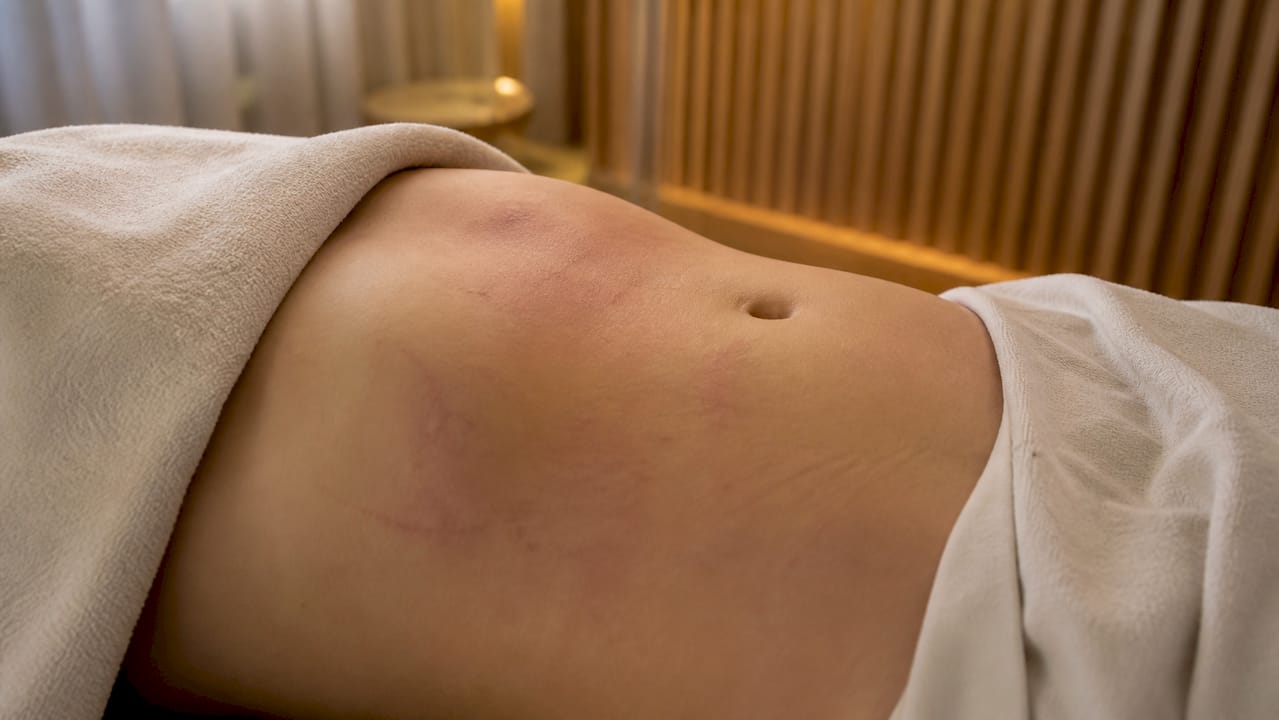
Here's the part that surprises people: swelling or firmness can make the treated area look bigger right after treatment, not smaller. That's an inflammatory response to the tissue trauma, and it's temporary. It settles as the initial swelling resolves, well before the actual fat clearance becomes visible weeks later.
Common short-term effects and their usual timeline:
- Redness and tenderness: resolves within days.
- Swelling and firmness: usually settles within one to two weeks, occasionally longer for larger areas.
- Numbness and tingling: can linger several weeks as nerve sensation returns to normal.
- Bruising: fades on a typical bruise timeline, one to two weeks.
- Itching: intermittent, usually tied to nerve regeneration, resolves as numbness fades.
There's one rare complication worth knowing about before you book: paradoxical adipose hyperplasia (PAH), a documented but uncommon outcome where the treated fat tissue actually enlarges instead of shrinking. It's rare, and reputable clinics screen for risk factors during consultation, but if you notice unusual firmness or enlargement that doesn't match the expected clearance pattern, that warrants a follow-up visit rather than a wait-and-see approach.
If swelling doesn't start improving after two weeks, if you notice worsening pain, signs of infection, or an area that seems to be growing rather than shrinking as the weeks pass, call your provider. Those aren't symptoms to wait out on your own.
What Does the Clinical Research Actually Show?
The most cited effect-size numbers for CoolSculpting come from a mix of manufacturer case data and independent prospective studies, and it's worth knowing how they differ.
Manufacturer clinical study data reports fat layer reduction in the range of about one-fifth to one-quarter with standard single regimens. Independent research tells a more nuanced story. A systematic review cited within a prospective multi-cycle study found single-cycle reductions ranging from about 14.7% to 28.5%, a wider spread than the marketing number suggests. When that same study measured outcomes after multiple cycles (an average of 2.8 per area), responders saw a mean skinfold thickness decrease of 40% at the 12 week mark.
| Data point | Reported figure | Source type |
|---|---|---|
| Single-cycle fat-layer reduction | Approximately 20% to 25% | Manufacturer clinical data |
| Single-cycle reduction (systematic review range) | Approximately 14.7% to 28.5% | Independent systematic review |
| Multi-cycle skinfold reduction at 12 weeks | 40% mean decrease in responders | Prospective single-arm study |
| Average cycles per treated area (multi-cycle study) | 2.8 cycles | Prospective single-arm study |
That 40% figure came from a cohort where 27 of 28 patients were classified as responders, with no adverse events reported over the study period. It's a strong result, but it's worth noting the limitations honestly: this was a single-arm prospective study, meaning there was no separate control group for direct comparison, and the sample size was modest. Manufacturer case examples carry a similar caveat: they showcase real outcomes, but they're not equivalent to a controlled clinical trial. Read the numbers as a credible range, not a guarantee for any individual case.
How Should You Care for Your Body After CoolSculpting?
Recovery isn't passive. What you do in the weeks after treatment can support how efficiently your body clears the treated fat cells, even though it won't replace the underlying biology.
Hydration matters more than most patients expect, since your lymphatic system is doing the heavy lifting of transporting cellular debris out of the treated area, and that system depends on adequate fluid intake to function well. Staying consistent with diet during the clearance window also helps: large weight swings, in either direction, can distort your perception of progress and mask the localized change CoolSculpting is producing.
A few habits worth building into the weeks after treatment:
- Stay well hydrated, especially in the first two to four weeks.
- Resume light exercise as soon as you're comfortable, since movement supports circulation and lymphatic flow.
- Avoid large, rapid weight fluctuations that can obscure your actual results.
- Ask your provider about lymphatic massage or manual drainage, which some clinics recommend to support clearance.
- Follow your clinic's specific instructions on topical care and activity restrictions for the treated area.
Pro Tip: If your clinic recommends post-treatment massage, ask about frequency. Many practices suggest gentle massage in the days immediately following treatment, which some providers believe helps distribute the cooling effect evenly through the tissue.
None of this speeds up the biology. A healthy lifestyle supports the clearance process your body is already running. It doesn't replace the treatment itself, and it won't turn a one-cycle result into a multi-cycle result.
A Clinician's View on Setting Realistic Expectations
When I sit down with a patient considering CoolSculpting, the first conversation isn't about the treatment itself. It's about the calendar. I walk through the checkpoints, week 2, week 4, week 8, week 12, and out to week 24, so nobody leaves the consultation expecting a mirror-ready result by their next event three weeks out.
The questions I hear most often aren't about pain or downtime. They're about doubt. Patients call around week 3 or 4, convinced nothing happened, when in reality the internal clearance process is still working exactly on schedule. That's why we document a baseline photo and measurements at the first visit and schedule follow-up check-ins at the 8 week and 12 week marks. Numbers and photos settle the doubt that memory alone can't.
Safety follows the same structured approach. Every patient is screened for risk factors before treatment, and every consultation includes a clear explanation of what's normal (temporary swelling, numbness) versus what warrants a call to the office (unusual firmness, asymmetry, or an area that seems to be growing rather than shrinking). A well-run CoolSculpting program isn't just about the applicator. It's about the follow-through.
Ready to Start Your Own CoolSculpting Timeline?
If you've read this far, you already understand something most people don't going into their first consultation: CoolSculpting is a process, not an event, and the providers overseeing it matter as much as the technology itself. Elite Laser Center runs its CoolSculpting program in Stony Brook under direct medical supervision, with treatment plans built around your specific areas, fat thickness, and goals rather than a one-size-fits-all package.
A consultation at Elite Laser Center covers exactly what this article walked through: your realistic timeline, how many cycles your treatment areas likely need, and how progress will be measured along the way with photos and clinical assessment rather than guesswork. For patients weighing complementary options, the clinic also offers CoolTone for muscle toning alongside fat reduction. Elite Laser Center has been recognized as a top CoolSculpting facility in New York, and every session is performed under experienced medical supervision. If you're ready to see what a personalized treatment plan looks like for your body, schedule a CoolSculpting consultation and get a timeline built around your actual goals, not a generic average.
Sources
- All Before and After | CoolSculpting Official Website
- CoolSculpting Recovery: Timeline, Tips, And Side Effects - Acibadem Hospitals Group
FAQ
How can you tell if CoolSculpting is working?
Track objective measures rather than your bathroom scale: standardized photos at the same angle and lighting, tape measurements at a fixed landmark, and clinic caliper checks at baseline, 4 weeks, and 12 weeks reveal changes that day-to-day observation misses.
Is one session of CoolSculpting enough?
One session can work for a small, isolated area, but most patients pursuing a fuller result benefit from multiple cycles. A prospective study found that patients averaging 2.8 cycles per area saw a 40% mean skinfold thickness reduction by 12 weeks.
Why do I look bigger after CoolSculpting?
Temporary swelling and tissue firmness from the cooling process can make the treated area look larger right after treatment. That inflammatory response typically settles within one to two weeks, well before the actual fat clearance becomes visible.
How much do 3 sessions of CoolSculpting cost?
Pricing varies by treatment area, clinic, and geographic location, so it isn't something a general timeline article can quote accurately. A consultation at a supervised clinic like Elite Laser Center will give you a specific cost based on your treatment plan and the number of cycles recommended for your goals.