
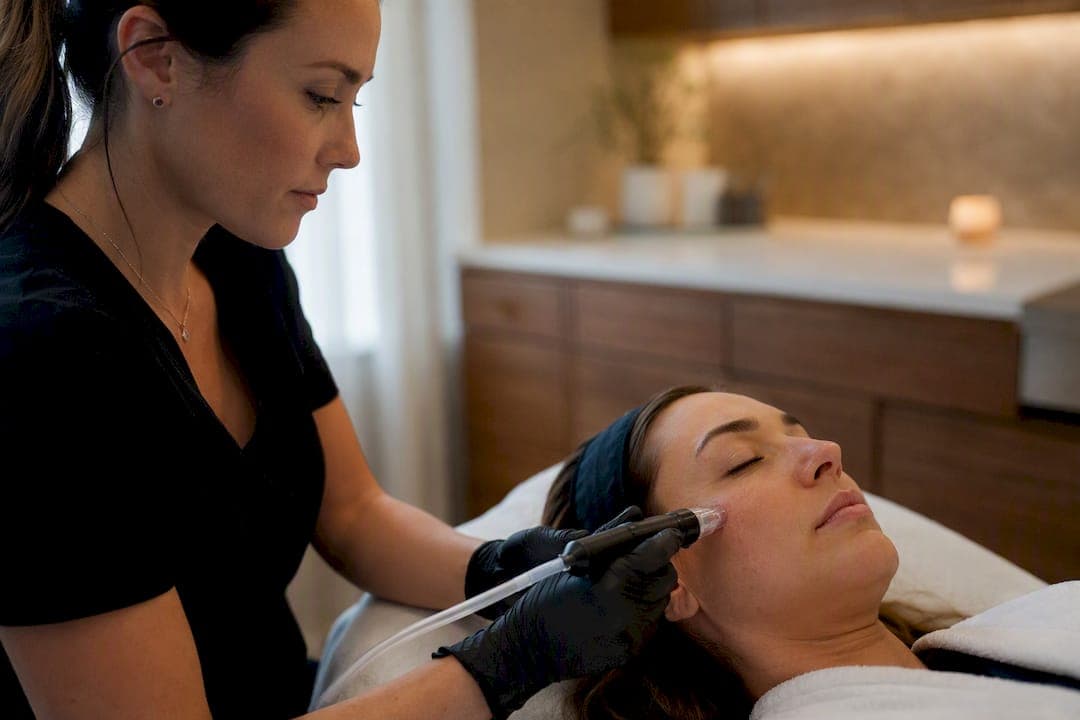
Most people deal with visible redness and swelling for several days after RF microneedling, with many comfortable returning to work or wearing makeup again within a week. That range shifts depending on your job, your skin, and how deep your provider set the needles. The actual collagen rebuilding that gives RF microneedling its reputation happens on a much longer clock, unfolding over weeks to months after the redness is long gone.
- Peak redness and swelling: a few days for most patients
- Social readiness (work, light makeup): typically within the first week
- Visible skin quality improvements: several weeks to a few months post-treatment
Key Takeaways
RF microneedling downtime typically resolves within a week, but full aesthetic results depend on collagen remodeling that continues for 4 to 12 weeks after treatment.
| Point | Details |
|---|---|
| Peak redness window | Most swelling and redness peak within 24 to 48 hours, then fade over the following days. |
| Social readiness varies by job | Remote workers often resume normal life same-day; client-facing or on-camera roles should plan for day 5 to 7. |
| Watch for PIH | Post-inflammatory hyperpigmentation is the most clinically notable risk, especially for darker skin tones. |
| Mineral sunscreen matters | Zinc oxide or titanium dioxide formulas protect healing skin better than chemical sunscreens during early recovery. |
| Elite Laser Center customizes settings | The clinic adjusts energy and depth per patient under medical supervision to balance results with a manageable recovery window. |
Table of Contents
- How Long Is RF Microneedling Downtime Immediately After Treatment?
- What Does the Day-by-Day RF Microneedling Recovery Timeline Look Like?
- What Side Effects Are Normal, and Which Ones Are Warning Signs?
- What Aftercare Steps Actually Speed Up RF Microneedling Recovery?
- When Should You Contact Your Provider About Side Effects?
- What Factors Change How Long Your Downtime Lasts?
- When Do You See Real Results, and How Does That Compare to Downtime?
- The Gap Between Marketing Timelines and Real Recovery
- Ready to Plan Your RF Microneedling Recovery With Expert Support?
- Sources
- FAQ
How Long Is RF Microneedling Downtime Immediately After Treatment?
The first few hours are the most dramatic part of the entire recovery. Your skin will look flushed, feel warm to the touch, and often carry a tightness similar to a moderate sunburn. That reaction usually peaks somewhere between one and six hours after the session ends, then starts to calm down.
If your provider used deeper needle settings, you might notice tiny pinpoint bleeding spots or small scabs forming over the next day. This is a normal part of the skin's micro-injury response, not a sign anything went wrong. Most patients tolerate the sensation well because topical numbing cream is applied before and sometimes during the pass, which keeps discomfort in the mild-to-moderate range rather than sharp pain.
For the rest of treatment day, keep things simple:
- Cleanse gently with lukewarm water and a mild, fragrance-free cleanser.
- Apply a cool compress for 10 to 15 minutes if swelling feels uncomfortable.
- Skip makeup entirely and stay away from direct heat sources like hot showers or stovetops.
- Follow whatever specific product instructions your provider hands you before you leave.
Pro Tip: Keep your phone's camera flash off if you're photographing your skin for progress tracking that first night. Flash photography exaggerates redness and can make a completely normal reaction look alarming.
What Does the Day-by-Day RF Microneedling Recovery Timeline Look Like?
Recovery isn't a single event. It's a sequence, and knowing the sequence lets you plan around it instead of guessing.
Treatment day. Skin is bright red, warm, and slightly swollen. This is the worst it will look. If you have a same-day event that requires a polished appearance, reschedule it. Low-visibility activities (working from home, running errands) are fine.
Days 1 and 2. Redness and swelling typically hit their peak in this window before starting to fade, a pattern consistent with the inflammatory response documented in clinical studies on RF microneedling recovery. Skip makeup entirely for at least 24 hours to avoid clogging the microchannels the needles created. Some people wake up on day 2 more swollen than they expected, especially around the eyes or jawline. That's normal and usually resolves by evening.
Days 3 through 5. Texture often feels a bit rough or sandpapery as the skin starts its surface renewal. Many people feel comfortable applying light, mineral-based makeup by day 3, though if you have an important event, photo shoot, or on-camera commitment, plan for day 5 instead to give yourself margin.

Days 5 through 7. Most patients look close to normal, with only faint pinkness that a bit of concealer easily covers, as shown in the scalp micropigmentation results gallery. This is generally the window clinic guides point to for on-camera or high-visibility roles to feel fully camera-ready again.
Week 2 and beyond. Surface texture settles completely. Any lingering dryness or flaking resolves, and skin returns to its normal routine, including your regular actives if your provider has cleared you.
| Timeframe | What You'll See | Social Readiness |
|---|---|---|
| Treatment day | Bright redness, warmth, tightness | Low-visibility activities only |
| Days 1–2 | Peak redness/swelling, possible pinpoint marks | Remote work, no makeup |
| Days 3–5 | Rough texture, fading color | Light makeup often fine; plan day 5 for events |
| Days 5–7 | Mild pinkness, near-normal appearance | Office and on-camera roles typically ready |
| Week 2+ | Full surface settling | No restrictions |
If your job involves client meetings, video calls, or photography, mentally file this as a five-to-seven-day social buffer, not a one-day inconvenience. Remote workers and those with flexible schedules have more room to book treatment closer to an event.
What Side Effects Are Normal, and Which Ones Are Warning Signs?
Redness, swelling, tightness, light peeling, and small pinpoint marks are all expected parts of healing. A comprehensive review of RF microneedling complications found that most side effects resolve within one week, with discomfort and visible marks fading well before that.
What isn't normal: spreading redness beyond the treated area, pus or discharge, blistering, or a fever. Persistent darkening of the skin days or weeks later can signal post-inflammatory hyperpigmentation, or PIH, which is the most clinically significant risk tied to this treatment, particularly for patients with darker skin tones. Conservative energy settings and strict sun protection are the two biggest levers for reducing that risk.
What Aftercare Steps Actually Speed Up RF Microneedling Recovery?
Good aftercare doesn't just make you more comfortable. It directly reduces your odds of pigment issues, prolonged redness, or infection.
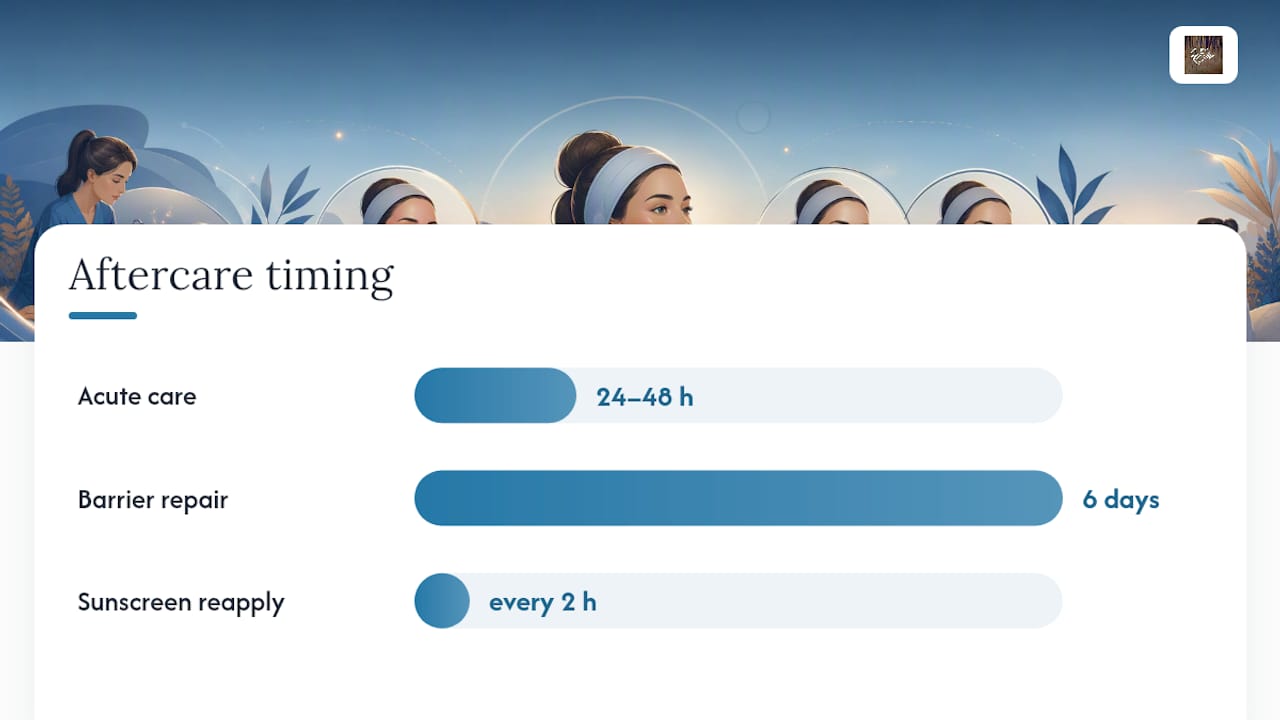
For the first 24 to 48 hours:
- Cleanse with a gentle, non-foaming cleanser, using your fingertips rather than a washcloth.
- Apply cool compresses as needed to manage swelling.
- Skip makeup completely, even if you feel fine by evening.
- Avoid heat, sweat, and anything that raises your skin temperature, including hot yoga or a sauna session.
- Drink water consistently; hydrated skin heals with less visible irritation.
From day 2 through day 7, shift toward barrier repair. Use whatever moisturizer your provider recommends, and hold off on retinoids, AHAs, and BHAs until you're fully healed, since those ingredients can irritate skin that's still rebuilding its surface. Once your provider gives the green light, usually within a day or two, switch to a mineral sunscreen with zinc oxide or titanium dioxide rather than a chemical formula. Mineral sunscreens sit on top of the skin instead of absorbing into it, which matters when your skin's barrier is more permeable than usual during early healing.
If you have a history of cold sores, mention it at your consultation. Providers often prescribe antiviral medication as a preventive measure before treatments that involve facial needling, since the micro-injury can trigger an outbreak in people prone to them.
Pro Tip: Set a phone reminder for "sunscreen reapplication" every two hours if you're headed outdoors during the first week. Healing skin burns faster and pigments more easily than skin that hasn't been treated.
When Should You Contact Your Provider About Side Effects?
Reach out if pain or redness gets worse instead of better after 48 to 72 hours, or if you notice pus, fever, or blistering. Take dated photos so you can show your provider exactly how symptoms have progressed.
Call the treating clinic first; they know your specific settings and history. If you can't reach them and symptoms are worsening quickly (spreading redness, high fever), seek urgent medical care rather than waiting.
What Factors Change How Long Your Downtime Lasts?
Not everyone heals on the same schedule, and a few variables explain most of the difference. Higher energy levels and deeper needle penetration create more short-term inflammation, which is why providers dial back settings for patients who need to return to visible work quickly. Thin-skinned or reactive areas like the under-eye region and neck tend to swell longer than the cheeks or forehead. And if you've had recent chemical peels, retinoid use, or other treatments, mention it at consultation. That history can extend your recovery window beyond the typical few days.
When Do You See Real Results, and How Does That Compare to Downtime?
Downtime and results run on two completely different timelines, and confusing them leads to disappointment. Swelling and redness resolve within about a week, but the collagen remodeling that actually firms and smooths skin builds gradually over 4 to 12 weeks. Most treatment plans involve three to four sessions spaced several weeks apart for the best cumulative outcome, with many patients returning annually for a maintenance session. Taking consistent photos under the same lighting helps you actually see the gradual change that's easy to miss day to day.
The Gap Between Marketing Timelines and Real Recovery
Most marketing around RF microneedling leans hard on "minimal downtime," and technically that's true. But minimal doesn't mean zero, and treating it as zero is where people get caught off guard.
The bigger issue is that recovery isn't uniform. A patient getting a conservative pass on their cheeks heals differently than someone getting deeper settings on acne scarring. Job type matters just as much as skin biology. Someone who works from home can book a Thursday treatment without thinking twice. Someone doing on-camera work or client-facing sales needs to treat that five-to-seven-day window as a real scheduling constraint, not a suggestion.
The other underappreciated point is that RF microneedling sits in a middle zone between basic microneedling and more aggressive laser resurfacing. It delivers more correction than a plain microneedling pass but with a shorter recovery than ablative lasers, which is exactly why it's become a mainstay for people who want meaningful improvement without disappearing from work for two weeks. Understanding that middle position helps set realistic expectations instead of comparing it to either extreme.
— Sharon
Ready to Plan Your RF Microneedling Recovery With Expert Support?
Elite Laser Center's approach to RF microneedling starts with a plan built around your skin, your schedule, and your goals, not a one-size-fits-all setting dial. Every session is performed under medical supervision using FDA-approved technology, with energy and depth adjusted based on your skin type and the results you're after.

A consultation is the easiest way to get a realistic downtime estimate for your specific skin and schedule. Bring a list of any recent treatments, medications, or events you're planning around, and your provider will map out a timeline before you commit to a date. If you're also curious about complementary options, Elite Laser Center's facials and peels can round out a broader skin plan. Ready to see what your recovery timeline would actually look like? Book your RF microneedling consultation and get a plan built around your calendar, not a generic estimate.
Sources
Clinical review: BMC Plastic and Reconstructive Surgery. Dermatology guidance: AAD.
This article is general information, not a substitute for advice from a qualified doctor. Consult a qualified healthcare professional about your own circumstances before acting on anything here.
- Complications of radiofrequency microneedling: a comprehensive review | BMC Plastic and Reconstructive Surgery
- PubMed listing (relevant RF microneedling clinical study)
- Healthline — Radiofrequency microneedling
FAQ
How Long Does It Take to Recover From RF Microneedling?
Most visible redness and swelling resolve within 3 to 7 days, with the majority of the improvement happening in the first 48 to 72 hours.
What Is the Best Age for RF Skin Tightening?
There's no single ideal age; RF microneedling is commonly used from the late 20s onward once early signs of collagen loss or texture changes appear, and treatment plans are adjusted to individual skin condition rather than age alone.
Is One Session of RF Microneedling Enough?
A single session can produce some improvement, but most providers recommend three to four sessions spaced several weeks apart for meaningful, lasting results.
Does Microneedling Age You Faster?
No credible evidence supports that microneedling accelerates aging; it's designed to stimulate collagen production, and any short-term redness or peeling is part of normal healing, not skin damage.
When Can I Wear Makeup After RF Microneedling?
Most providers recommend avoiding makeup for at least 24 hours, with many patients comfortable using light, mineral-based makeup by day 3.