
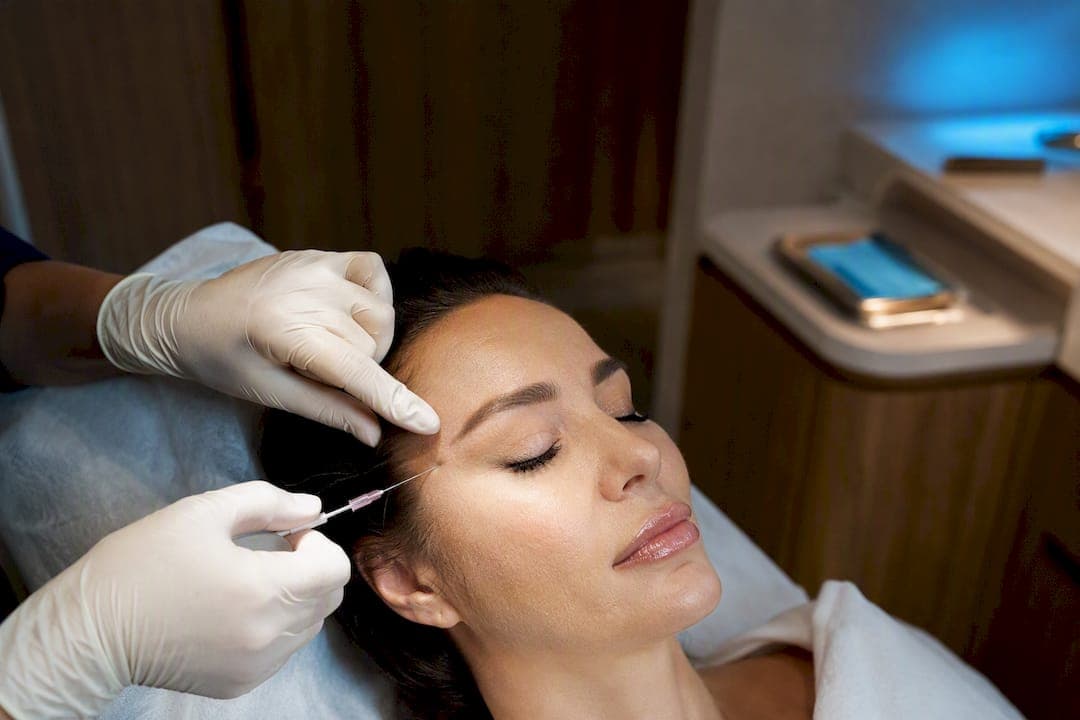
A PDO thread lift can raise a drooping brow by a modest, visible amount without surgery, typically lasting somewhere between six months and a year before a touch-up is worth considering; learn more about PDO thread lift: what to expect and how to choose safely. It works best on mild to moderate brow ptosis, not on heavy skin excess. If your lids or brow have significant sagging, a surgical consult is the more honest starting point.
TL;DR:
- PDO thread lifts provide a subtle lift primarily suitable for mild to moderate brow drooping in patients aged 30 to 50 with good skin elasticity.
- The lifting effect is temporary, lasting about six months to a year, with collagen stimulation offering some support beyond the dissolving threads.
- Risks include bruising, swelling, dimpling, thread visibility, or migration, which are usually manageable and resolve within days to weeks.
- A single treatment typically costs between a few hundred to a couple of thousand dollars, depending on the provider and number of threads used.
- Severe drooping or excess skin require surgical lifts, as threads cannot remove large amounts of tissue or provide dramatic, permanent results.
Table of Contents
- How PDO Threads Lift the Brow: Mechanism and Thread Types
- Who Is a Good Candidate for a Brow Thread Lift?
- What Happens During the Procedure?
- Risks, Side Effects, and How Complications Are Managed
- Recovery Timeline and Aftercare
- How Long Does the Results Last?
- What Does a Brow Thread Lift Cost, and What Drives the Price?
- Botox, Fillers, or Surgery: How Do Alternatives Compare?
- Elitelaserhair's Approach to PDO Brow Thread Lifts
- PDO Thread Lift Brow: What the Research Actually Supports
- Ready to Talk to a Provider About Your Brow?
- Sources
- FAQ
How PDO Threads Lift the Brow: Mechanism and Thread Types
Polydioxanone, or PDO, is the same absorbable material surgeons have used in sutures for decades. The body breaks it down over months, which is exactly the point: as the thread dissolves, it triggers neocollagenesis, or new collagen formation, in the surrounding tissue.
Clinics use a few thread designs. Smooth mono threads mainly support skin quality. Cog or barbed threads, the ones typically used for brow lifting, have tiny anchors along their length that grip tissue and pull it upward when tensioned. Some practitioners layer bidirectional threads in a crisscross pattern for broader lift across the brow. The lift itself has two phases: an immediate mechanical pull you see the day of treatment, and a slower structural change over the following weeks as collagen fills in around the anchored threads. Clinical case series describe this as a modest but measurable effect, not a dramatic surgical-style elevation.
Who Is a Good Candidate for a Brow Thread Lift?
The ideal candidate has mild to moderate brow droop, decent skin elasticity, and realistic goals. Someone in their late 30s to mid 50s, before skin laxity becomes severe, tends to see the cleanest results, since threads lift tissue rather than remove it. Case data backing this treatment comes largely from patients with that profile.
A few situations point away from threads and toward a surgical consult:
- Significant redundant skin or heavy lid hooding, since threads cannot remove excess tissue the way a scalpel can.
- Active skin infections, autoimmune conditions affecting healing, or blood-clotting disorders.
- Expectations of a permanent, dramatic change rather than a temporary, subtle one.
- Very thin skin over the brow, which raises the odds of visible thread contour or dimpling.
If any of those apply, an endoscopic or open surgical brow lift usually delivers a more durable, appropriate result than threads ever could.
What Happens During the Procedure?
A brow thread appointment usually runs 30 to 45 minutes and follows a fairly consistent sequence.
- Consultation and mapping. The provider reviews your medical history, takes before photos, marks the brow's desired lift points while you're upright, and confirms consent.
- Numbing. A topical or local anesthetic is applied at the entry points, most often along the hairline or upper temple.
- Insertion. A thin cannula or needle carries the thread beneath the skin toward the lower brow margin, following a crisscross or fan pattern depending on how much lift is needed.
- Tensioning. The provider gently pulls the thread to anchor the cog barbs and lift the brow, trimming any excess thread at the entry point.
- Immediate check. You sit up so the provider can compare symmetry and adjust before you leave.
Expect visible lift right away, along with some swelling, tenderness, and possible bruising at entry points for the first day or two. Most people return to normal routines the next day, avoiding strenuous facial movement in the meantime.
Risks, Side Effects, and How Complications Are Managed
Bruising, swelling, tenderness, and mild dimpling near entry points are common and typically resolve within days to about ten days in most cohorts. These are considered expected, self-limited effects rather than complications.
Less common issues include infection, visible or palpable threads under thin skin, thread migration, and, rarely, injury to a small nerve or blood vessel near the temple. Some patients report tension headaches, sometimes called "threadaches," from the pulling sensation. A plastic surgeon interviewed about fox eye thread trends cautioned that visible threads and dimpling show up more often in patients with thin skin or when technique is rushed.
Management depends on severity:
- Mild swelling or bruising: cold compresses and time.
- Visible or uncomfortable thread: manual adjustment or removal in-office.
- Suspected infection: antibiotics, with escalation if it doesn't improve quickly.
Pro Tip: Choose a clinic that documents exactly which threads were placed, where, and in what pattern. If you ever need surgery later, that record helps a surgeon understand your tissue planes before they operate.
Recovery Timeline and Aftercare
The first 48 to 72 hours bring the most visible swelling and any bruising, which cold compresses and sleeping slightly elevated can ease. Most patients return to work and light activity within a day.
Over the following one to four weeks, threads settle into position and the lift can look subtler as initial swelling resolves. During this window:
- Skip strenuous exercise and heavy sweating for about a week.
- Avoid facials, aggressive skincare devices, or massaging the brow area.
- Sleep on your back when possible to reduce pressure on the treated area.
- Call the clinic promptly if you notice worsening pain, spreading redness, or a thread poking through the skin.
Elitelaserhair's own aftercare guidance walks through this window in more detail, and following it closely matters more than people expect, since early irritation is one of the more preventable causes of thread visibility later.
How Long Does the Results Last?
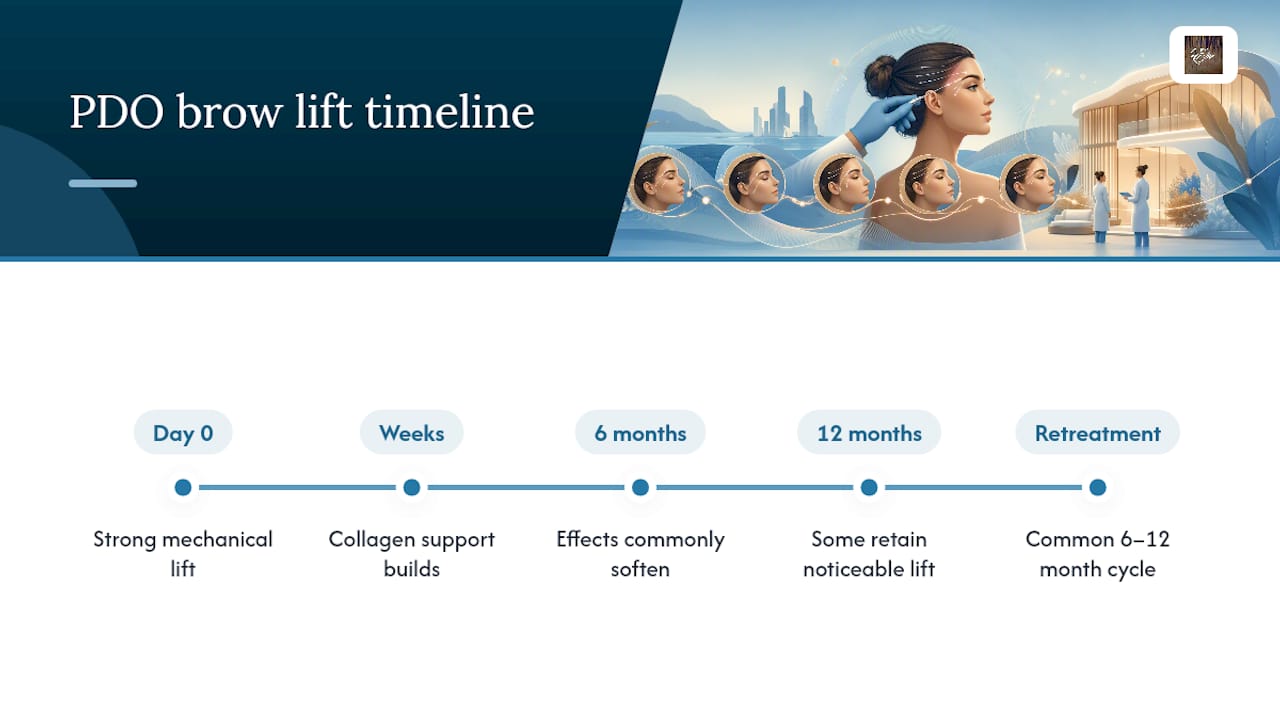
The visible lift is strongest in the first weeks, when the mechanical pull from the thread is doing most of the work. As the PDO material dissolves, that mechanical effect fades, but the collagen it stimulated along the way can keep supporting skin structure a bit longer.
Duration varies by patient, thread type, and skin quality, but clinical literature generally points to effects commonly softening around the six-month mark, with some patients holding a noticeable lift closer to a year. Thinner, less elastic skin tends to lose the effect faster. Most providers plan retreatment on a six to twelve month cycle rather than treating it as a one-time fix, and pairing threads with skin-quality treatments can extend how long the improvement remains visible.
What Does a Brow Thread Lift Cost, and What Drives the Price?
Brow PDO thread lifts are an out-of-pocket cosmetic procedure, and pricing swings with the provider's experience, the thread brand used, how many threads are placed, and regional overhead. A single-session brow treatment commonly lands somewhere in the mid-hundreds to low-thousands of dollars range, though your clinic's exact quote depends on your specific plan.
Cheaper isn't automatically a red flag, but a quote far below the local norm often means fewer threads, a less experienced injector, or lower-grade material. Before booking, ask to see:
- The provider's medical credentials and specific PDO thread training.
- Before-and-after photos of brow cases, not just facial threading in general.
- What the follow-up policy covers if the lift falls short or a thread becomes visible.
Botox, Fillers, or Surgery: How Do Alternatives Compare?
Botox relaxes the muscles that pull the brow down, giving a subtle lift without touching skin position. It works well for mild asymmetry but has real limits once skin has genuinely dropped. Fillers placed at the temple or lateral brow add volume that indirectly supports the tail of the brow, which is a different mechanism than threads pulling tissue upward.
Surgical brow lifts, endoscopic or open, remove excess skin and reposition tissue permanently, at the cost of real downtime and scarring risk. Many providers combine approaches: threads for lift plus Botox or skin tightening for texture, especially in patients who aren't ready for surgery but want more than injectables alone provide.
Elitelaserhair's Approach to PDO Brow Thread Lifts
Elitelaserhair offers PDO thread lifts performed under medical supervision, which matters more with brow threading than with most cosmetic treatments, since entry points sit close to nerve and vascular structures at the temple.
A consultation typically includes a hands-on assessment of your brow position and skin quality, a discussion of realistic lift expectations, and a written plan with pricing before you commit to anything. The team also provides aftercare support so you know exactly what normal healing looks like versus what warrants a call back. Medically supervised placement, paired with careful documentation of thread type and pattern, may keep options open if surgical lifting is pursued down the road.
PDO Thread Lift Brow: What the Research Actually Supports
The honest read of the clinical literature is that PDO thread lifts do what they're supposed to do, if you match expectations to the evidence rather than to marketing photos. The studies showing measurable eyebrow angle and height improvement are real, but the changes are modest, often a few degrees or a fraction of a centimeter, not the dramatic transformation implied by "fox eye" trend content online.
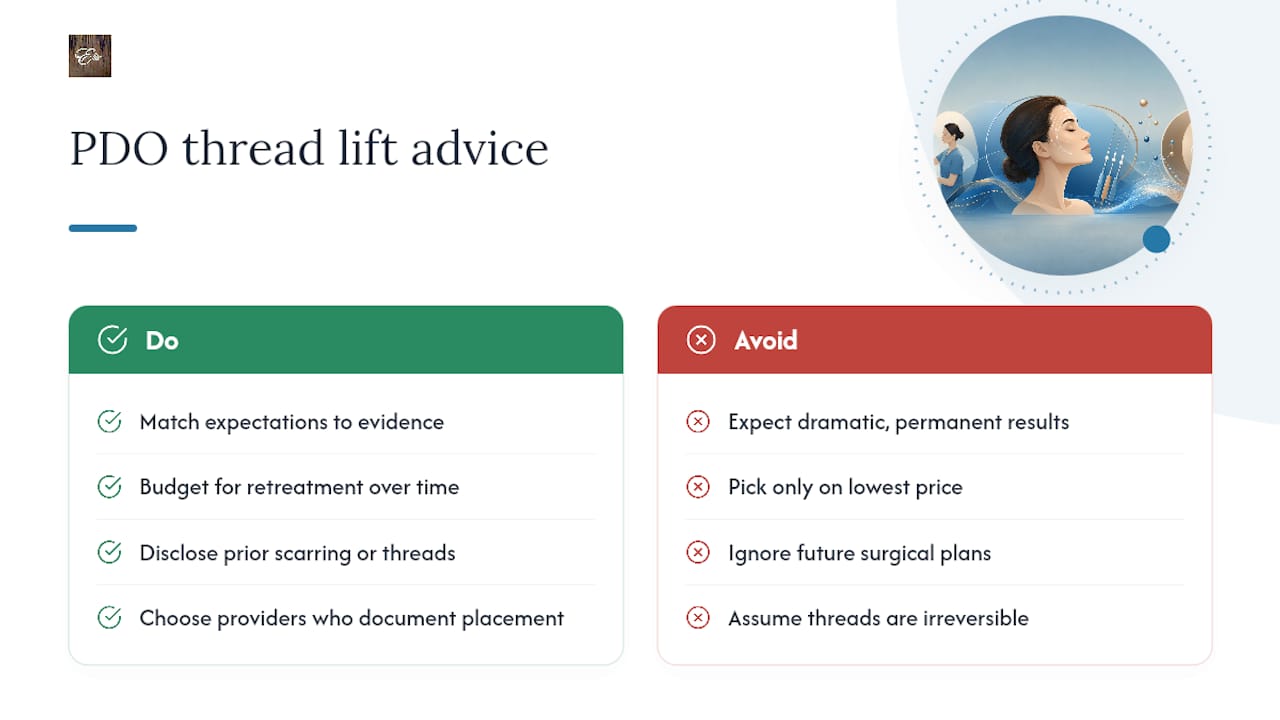
Where conventional advice falls short is in downplaying two things: duration and reversibility of the decision, if not the material. Threads dissolve. That's not a flaw, it's the mechanism, but it means budgeting for retreatment rather than treating one session as a permanent fix. The other overlooked piece is scarring history. If you might want surgery someday, disclose every thread you've had, and choose providers who document placement carefully now.
Prioritize candidate fit over price. Mild to moderate droop, healthy skin, and a provider willing to say "surgery might serve you better" when it's true, that combination matters more than any single thread brand on the market.
— Sharon
Ready to Talk to a Provider About Your Brow?
If the idea of a subtle, non-surgical lift sounds like the right next step, the real question is whether your specific brow anatomy is a good match, and that's not something a price list can answer. A consult can. Bring your medical history and, if you have them, older photos showing how your brow position has changed over the past few years.
PDO thread consultations typically include brow assessment, a realistic lift estimate, and a written cost plan before treatment, ideally under medical supervision rather than a rushed spa-counter upsell. That supervision is the difference between a provider who tells you threads aren't the right fit and one who sells them anyway. You can book a PDO thread lift consultation directly, or ask about pairing threads with skin tightening if your skin quality needs support beyond lift alone.
Sources
- Anatomical perspectives of brow‐lifting using threads: Clinical cases with techniques
- Eyebrow lifting with barbed threads: A simple, safe, and effective ambulatory procedure
- Eyebrow lifting using multidirectional absorbable thread
This article is general information, not a substitute for advice from a qualified doctor. Consult a qualified healthcare professional about your own circumstances before acting on anything here.
FAQ
How long does a PDO thread brow lift last?
Results commonly soften around six months as the thread dissolves, though some patients keep a noticeable lift closer to a year depending on skin quality and thread type.
Why do some plastic surgeons hesitate to recommend PDO threads?
Surgeons often note that threads only lift modestly and can't remove excess skin, and that internal scarring from threads may complicate tissue planes if surgery is needed later.
How much does a PDO thread brow lift cost?
Pricing is out-of-pocket and varies by provider and thread count, generally falling in the mid-hundreds to low-thousands range for a single brow session.
Can PDO thread lift results be seen right after treatment?
Yes, the mechanical lift is visible immediately after the threads are tensioned, though initial swelling and bruising can temporarily mask the final look for a few days.
Is a PDO brow lift right for severe brow drooping?
No. Significant skin excess or heavy ptosis generally responds better to a surgical brow lift, since threads lift existing tissue rather than remove extra skin.