
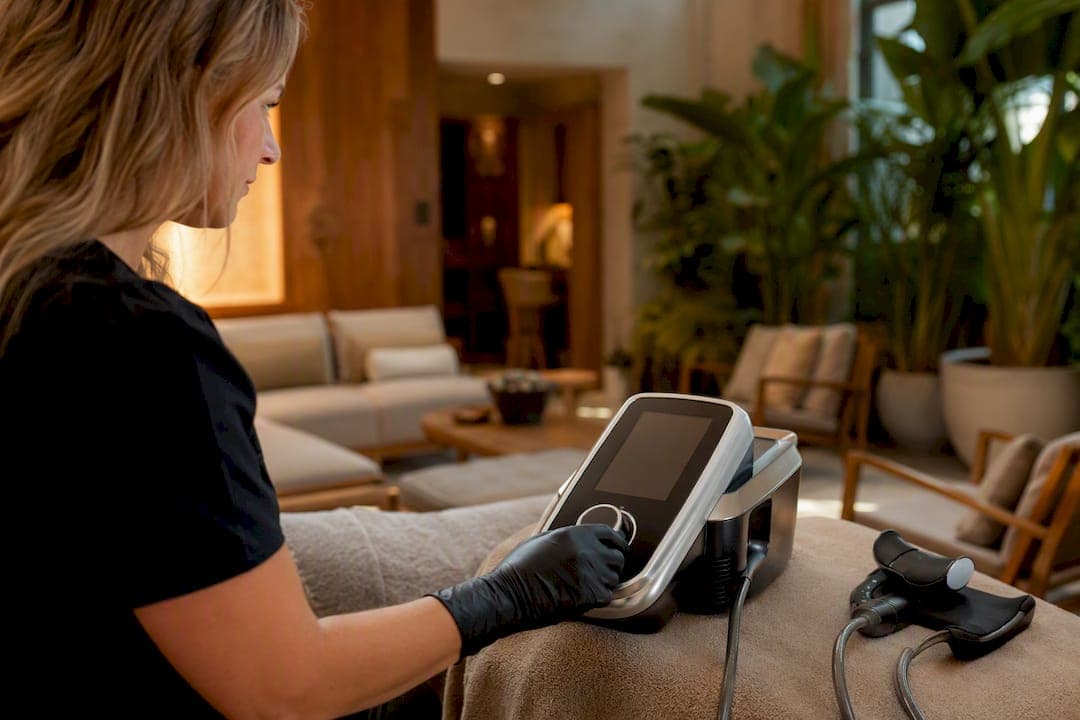
CoolTone eligibility comes down to three things: your general health, a short list of absolute disqualifiers, and a provider's medical-history screening. If you're a healthy adult without an implanted electronic device, aren't pregnant, and have no active infection or open wound at the treatment site, you're likely a candidate. CoolTone is cleared for the abdomen, buttocks, and thighs, and it's built for people already close to their goal weight who want more muscle definition, not for weight loss.
The device is prescription-use-only, meaning a physician has to be involved in your care from the start.
- Pregnant? Not a candidate, no exceptions.
- Pacemaker, defibrillator, neurostimulator, or drug pump? Disqualifying, even if the device sits outside the treatment area.
- Active infection, open wound, or malignant tumor near the site? Wait until it resolves, then get reassessed.
None of this replaces an actual consultation. A trained provider still has to confirm your candidacy through a real medical-history review before you're cleared for treatment.
Key Takeaways
CoolTone eligibility depends on being a healthy adult free of implanted electronic devices, pregnancy, and active infection at the treatment site, confirmed through a provider's medical screening.
| Point | Details |
|---|---|
| Cleared areas only | CoolTone is FDA-cleared for the abdomen, buttocks, and thighs, not for weight loss or other body areas. |
| Absolute disqualifiers | Pregnancy, implanted electronic devices, active infection, and malignant tumors rule out treatment entirely. |
| Prescription-only device | Federal law requires CoolTone to be used by or on the order of a physician, so a real consultation is mandatory. |
| Typical treatment course | Most plans run 4 to 8 sessions over 2 to 4 weeks, roughly 30 minutes each. |
| Medically supervised screening | Elite Laser Center evaluates candidacy through physician-overseen medical-history review before booking any sessions. |
This article is general information, not a substitute for advice from a qualified doctor. Consult a qualified healthcare professional about your own circumstances before acting on anything here.
Table of Contents
- Who Makes the Best CoolTone Candidate?
- FDA Clearance, Age Guidance, and Prescription Rules
- Contraindications and Medical Conditions That Disqualify You
- What Happens During a Consultation and Medical Screening
- Treatment Course, Session Count, and Realistic Results
- Safety, Side Effects, and How Providers Reduce Risk
- Why a Medically Supervised Provider Matters for CoolTone
- The Real Judgment Call on CoolTone Eligibility
- Book a CoolTone Eligibility Consultation
- Sources
- FAQ
Who Makes the Best CoolTone Candidate?
The strongest CoolTone candidates are healthy adults who are already close to their target body weight and stick to a regular exercise routine, but want more visible muscle tone in specific areas. Think of someone who works out consistently but hits a plateau no amount of extra squats seems to fix. That's the person CoolTone was built for.
Manufacturer guidance is direct about this: CoolTone is not a weight-loss procedure. It contracts muscle fibers the way an intense workout would, using magnetic muscle stimulation, but it doesn't melt fat or tighten loose skin. Providers who work with the device regularly describe it as a finishing tool. It's for people who've already put in the gym time and want that last bit of definition, not a shortcut for people starting from scratch. Practice-level guidance from dermatology providers echoes this: individual assessment matters more than a generic checklist, because "healthy adult near goal weight" still covers a wide range of bodies and goals.
If you're carrying significant excess fat over the muscle you want to tone, or you have loose skin that needs a surgical lift, CoolTone alone won't get you the result you're picturing. In those cases, a fat-reduction approach or a skin-tightening procedure typically needs to happen first, or alongside it.
Pro Tip: If you're not sure whether your goal is "more fat loss" or "more definition," ask yourself this: can you already see the muscle when you flex, just not when you're relaxed? That's usually a toning question, not a fat question.
FDA Clearance, Age Guidance, and Prescription Rules
CoolTone holds FDA clearance for strengthening, toning, and firming the abdomen, buttocks, and thigh muscles, and nowhere else on the body. That's the full list of approved treatment areas. Anything outside those three zones is off-label.
The device is also restricted to sale by or on the order of a physician, which is federal law, not a clinic preference. That single fact explains why you can't just buy a unit and try it at home: a licensed provider has to be involved in evaluating you and directing your care. Manufacturer materials note the device hasn't been studied in children, which is why treatment is limited to adults.
Contraindications and Medical Conditions That Disqualify You
Some conditions rule out CoolTone entirely. Others just require extra caution and a provider's judgment call. Knowing the difference before your consultation saves everyone time.
Absolute contraindications:
- Pregnancy, at any stage.
- Implanted electronic devices, including pacemakers, defibrillators, neurostimulators, drug pumps, and cochlear implants.
- Metal or electrical implants located in or near the intended treatment area.
- An active malignant tumor.
- Active infection or an open wound at the target site.
Important cautions that need a closer look: epilepsy or other seizure disorders, pulmonary insufficiency, recent surgery near the treatment site, hemorrhagic conditions, Graves' disease, and hernias in or near the area being treated. None of these automatically rule you out, but they all require the provider to weigh risk before moving forward.
The Important Safety Information for CoolTone is explicit that even implants located outside the treatment zone still matter. Electromagnetic fields from the device can interact with life-sustaining equipment regardless of where on the body it sits, which is why a thorough implant history gets checked every time, not just implants near the belly or thighs.
Timing matters too. Providers commonly avoid treating the abdomen during menstruation, largely for comfort rather than a hard safety rule. IUD carriers get an extra layer of attention here.
Manufacturer guidance specifically warns patients with intrauterine devices to monitor for severe abdominal pain, cramping, spotting, or heavy bleeding during or after treatment, and to seek medical care right away if any of those symptoms show up.
That warning isn't there to scare anyone off. It's there because IUDs are common, and providers need patients watching for the right symptoms afterward.
What Happens During a Consultation and Medical Screening
A real CoolTone consultation isn't a five-minute chat. It's a structured screening designed to catch anything on that contraindication list before a single session is booked.
Expect the provider to ask about:
- Any implanted or electronic devices, current or past
- Cardiac history, including arrhythmias or prior heart procedures
- Seizure history or any neurological conditions
- Pregnancy status, including plans for pregnancy in the near term
- Recent surgeries, especially anywhere near the treatment area
- Bleeding or clotting disorders
- Current medications and supplements
After the history review, the physical exam covers the treatment site itself: skin condition, visible scarring, a check for hernias, and a quick sensory and palpation check to confirm the area responds normally. If anything raises a flag, that visit might end in a referral instead of a treatment plan. A cardiology clearance or written physician sign-off isn't unusual for someone with a borderline cardiac history. Bringing a list of current medications and any relevant medical records to a skin consultation speeds this whole process up considerably.
Treatment Course, Session Count, and Realistic Results
Most CoolTone plans run 4 to 8 sessions spread over 2 to 4 weeks, with each session lasting around 30 minutes depending on the provider and treatment area. That's a tighter, more frequent schedule than something like CoolSculpting, because the magnetic muscle stimulation needs repeated sessions to build the effect, the same way your muscles need repeated workouts to show change.
- Some patients notice a difference in muscle firmness within the first couple of weeks.
- Full results generally take longer to show up and vary based on starting fitness level.
- People who already exercise regularly tend to see more noticeable definition, faster.
- Results aren't permanent. Maintenance sessions and continued exercise keep the effect going.
Baseline fitness plays a bigger role in outcome than most people expect walking in. Someone who already has decent muscle tone under a thin layer of fat will usually see a clearer before-and-after than someone starting from very low muscle activation. That's not a knock on anyone's fitness level. It's just how the technology works: it amplifies what's already there.
Safety, Side Effects, and How Providers Reduce Risk
CoolTone's side effect profile is generally mild and short-lived, but it's worth knowing what's normal and what's a reason to call your provider.
Common effects reported by the manufacturer include muscular pain, temporary muscle spasm, temporary joint or tendon discomfort, and redness at or near the treatment site. Most of these resolve within a day or two, similar to soreness after an intense workout.
- Muscle soreness, comparable to a hard workout
- Temporary spasms during or right after the session
- Mild joint or tendon discomfort near the treated area
- Redness that fades within hours to a day
Less common concerns include treating over scarred skin without proper evaluation first, and the interaction risk with implants discussed earlier. Providers who follow manufacturer protocol reduce risk through a few concrete practices: confirming there's no contraindication before every session (not just the first one), placing applicators carefully around scars or sensitive areas, and stopping mid-session if a patient reports unusual pain rather than pushing through it.
Pro Tip: If soreness after a session feels sharper or lasts noticeably longer than typical workout soreness, that's worth a call to your provider, not something to just wait out.
Why a Medically Supervised Provider Matters for CoolTone
Because CoolTone is a prescription-use device, the provider running your sessions matters as much as the device itself. Elite Laser Center operates as a medical spa where every CoolTone treatment happens under physician oversight, not as a standalone spa add-on.
That structure shows up in a few practical ways:
- Every candidacy decision starts with an actual medical-history review, not a form you fill out alone.
- Treatment plans get built around your specific goals and health history rather than a one-size-fits-all session count.
- Staff are trained specifically on CoolTone protocols, consistent with the device's physician-oversight requirement.
- The clinic's broader focus on non-surgical body contouring means a provider can point you toward CoolSculpting or skin tightening instead, if that's actually the better fit for your goals.
That last point matters more than it sounds. A clinic that only offers one treatment has an incentive to make you fit it. A clinic offering multiple options can tell you honestly when CoolTone isn't the answer.
The Real Judgment Call on CoolTone Eligibility
Most eligibility guides read like a checklist and stop there. The more useful way to think about it: CoolTone candidacy has two separate questions stacked on top of each other, and people tend to only ask one of them.
The first question is medical: do you have a disqualifying condition or implant? That's black and white, and it's the easy part to screen for.
The second question is about fit, and it's the one conventional advice tends to skip. Being medically cleared for CoolTone doesn't mean it's the right tool for your goal. Someone chasing a flatter stomach through fat loss will walk away disappointed even if every session goes perfectly, because the device was never built to solve that problem. The honest answer for a lot of people isn't "yes, book CoolTone." It's "get evaluated for whether CoolTone, CoolSculpting, or both address what you're actually trying to change." Readers should prioritize an honest conversation about their goal before they prioritize the treatment itself. A provider who asks about your goals before your medical history is doing it backward.
Book a CoolTone Eligibility Consultation
Elite Laser Center gives you something a lot of med spas skip: a physician-overseen evaluation that actually screens for the disqualifiers covered above, instead of a quick intake form and a same-day booking. That distinction matters when the treatment involves electromagnetic muscle stimulation and a device that's legally restricted to physician-directed use.
Booking a consultation is straightforward. Come ready to talk through your medical history, including any implanted devices, past surgeries, and current medications, and mention if you have an IUD so the provider can walk you through the monitoring guidance ahead of time. During the visit, expect a physical check of the treatment area alongside the history review, and an honest conversation about whether CoolTone fits your goal or whether a fat-reduction option like CoolSculpting makes more sense first. If you're ready to find out where you stand, visit the CoolTone service page to schedule your eligibility consultation.
Sources
- Achieve your muscle toning and strenghtening goals with ...
- CoolTone device manual (Rx AbbVie)
- CoolTone® Uses and Important Safety Information (Allergan Aesthetics)
FAQ
How long do CoolTone results last?
Results are not permanent since muscle tone naturally declines without upkeep, so most providers recommend continued exercise and periodic maintenance sessions to preserve the effect.
How much does a CoolTone treatment cost?
Cost varies by provider and the number of sessions in your plan; Elite Laser Center breaks down typical CoolTone budgeting factors for readers comparing treatment costs.
What disqualifies you from CoolTone treatment?
Pregnancy, implanted electronic devices like pacemakers or neurostimulators, active infection or open wounds at the treatment site, and active malignant tumors are all absolute disqualifiers.
Does CoolTone really work?
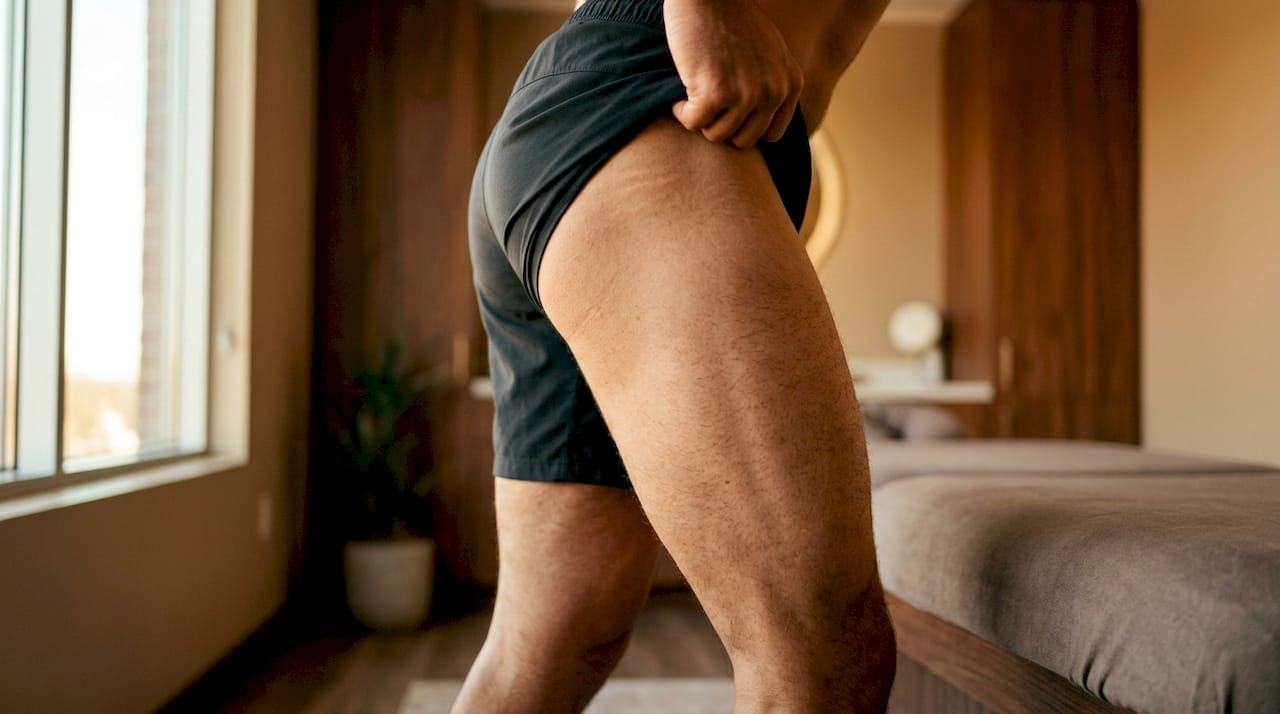
Manufacturer data and provider guidance indicate CoolTone effectively strengthens and tones the abdomen, buttocks, and thighs in healthy adults, though it works best as a complement to existing fitness routines rather than a substitute for them.
Is CoolTone the same as CoolSculpting?
No. CoolTone targets muscle toning through magnetic stimulation, while CoolSculpting targets fat reduction, and many patients use both for different goals.