
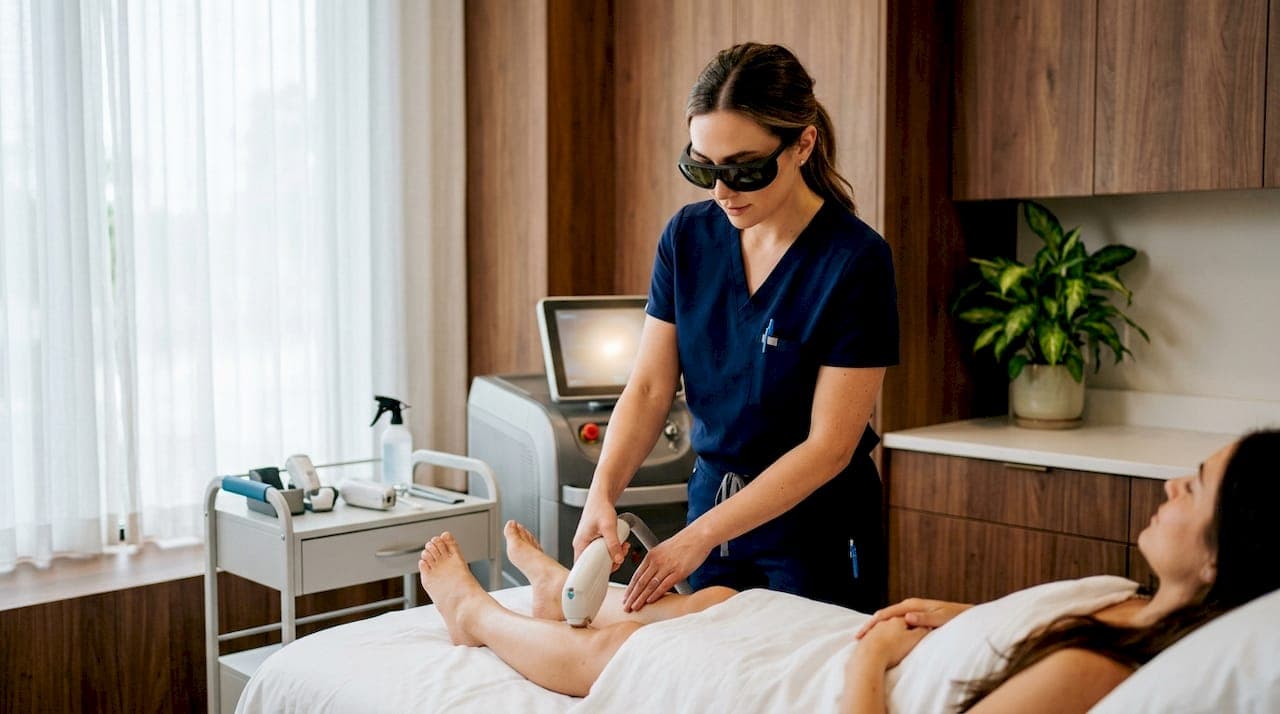
Laser hair removal is the process of using concentrated laser light to selectively damage hair follicles, reducing future hair growth long term. The procedure works through selective photothermolysis, a principle where laser energy targets melanin in the hair shaft and follicle without harming surrounding skin. Three wavelengths drive most clinical treatments today: 755 nm (Alexandrite), 810 nm (Diode), and 1064 nm (Nd:YAG). Each wavelength suits different Fitzpatrick skin types, and choosing the wrong one raises your risk of burns, pigmentation changes, and poor results. Understanding how the procedure works before you book your first session puts you in a far better position to get the outcome you want.
What is laser hair removal and how does it work?
Laser hair removal uses targeted light energy to heat and destroy the hair follicle at its root. The laser emits a specific wavelength absorbed by melanin, the pigment that gives hair its color. That heat travels down the hair shaft into the follicle, damaging the cells responsible for regrowth. Skin tissue around the follicle absorbs far less energy, so it stays largely unaffected when settings are calibrated correctly.
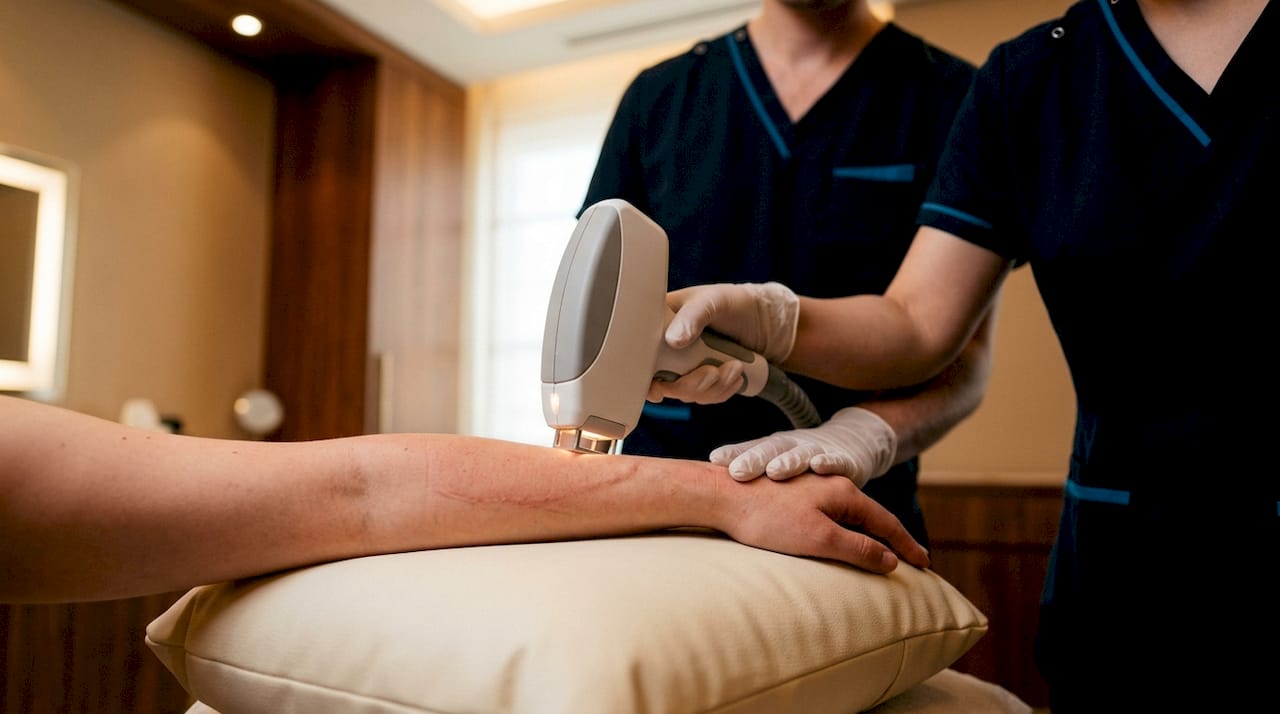
The procedure only works on hair in the anagen phase, which is the active growth stage. Because not all follicles are in anagen at the same time, multiple sessions are required to catch each follicle at the right moment. This is why a single session never delivers complete clearance, no matter how powerful the device.
Which laser type is right for your skin tone?
Matching the laser wavelength to your skin tone is the single most important safety decision in laser hair removal. The Fitzpatrick scale classifies skin from Type I (very fair) to Type VI (very dark), and each range responds differently to laser energy.
Alexandrite laser (755 nm)
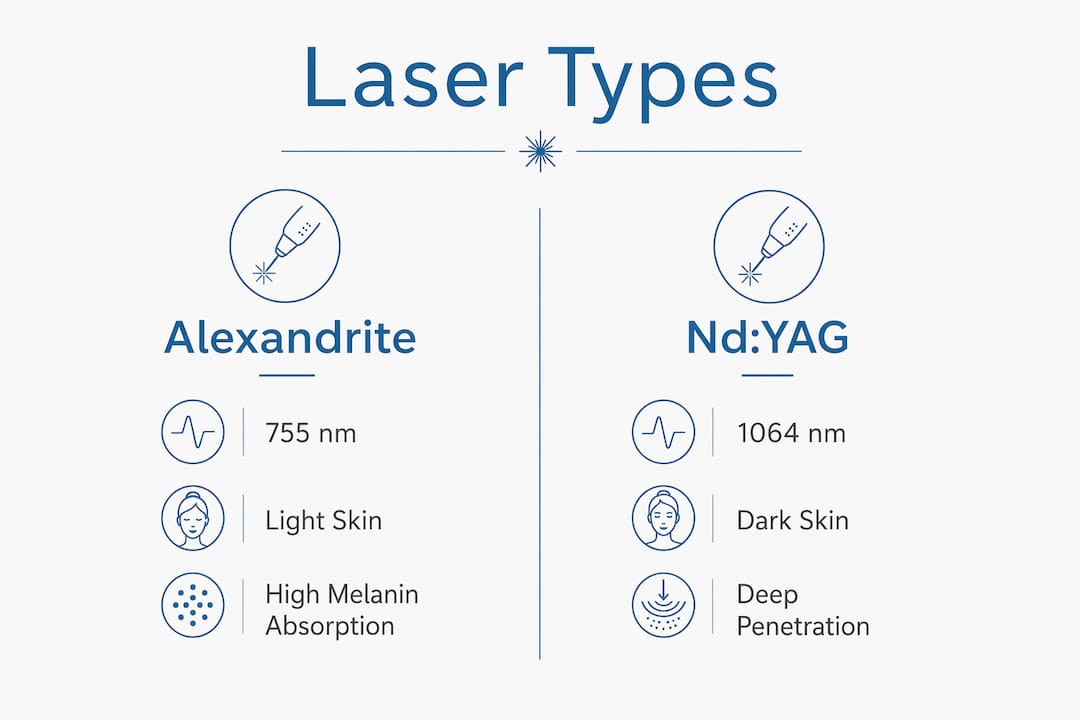
The Alexandrite laser carries the highest melanin absorption of the three main wavelengths. That makes it highly effective on light to medium skin tones (Fitzpatrick I–III) with dark, coarse hair. The tradeoff is that it poses a greater burn risk on darker skin because epidermal melanin competes with follicular melanin for the laser energy.
Diode laser (810 nm)
The Diode laser sits in the middle of the wavelength range and offers moderate melanin absorption. It works well across Fitzpatrick I–IV skin types and is one of the most widely used platforms in clinical settings. Providers sometimes use it as a starting point and switch to Nd:YAG if a patient's skin darkens from sun exposure mid-course.
Nd:YAG laser (1064 nm)
The Nd:YAG laser penetrates deepest into the dermis and absorbs the least epidermal melanin. That combination makes it the safest choice for Fitzpatrick IV–VI skin types. It causes fewer burns and less hyperpigmentation than shorter wavelengths on darker skin, though it can be slightly less effective on very fine or light hair.
| Laser type | Wavelength | Best skin types | Key risk |
|---|---|---|---|
| Alexandrite | 755 nm | Fitzpatrick I–III | Burns on darker skin |
| Diode | 810 nm | Fitzpatrick I–IV | Moderate pigmentation risk |
| Nd:YAG | 1064 nm | Fitzpatrick IV–VI | Slightly lower efficacy on fine hair |
Pro Tip: Switching laser platforms between sessions, such as moving from Diode to Nd:YAG if your skin tans during treatment, can improve both safety and results. Ask your provider whether they have multiple platforms available before you commit to a package.
What should you expect during a treatment course?
A full laser hair removal course typically requires 4–10 sessions, spaced 4–12 weeks apart depending on the body area and your skin type. Lighter skin types often complete treatment in 3–8 sessions. Darker skin types may need 8–10 sessions because providers use lower energy settings to protect the epidermis, requiring more passes to achieve the same follicle damage.
During each session, the handpiece pulses light across the treatment area. Most people describe the sensation as a rubber band snapping against the skin. Immediately after, you will likely notice mild redness and small bumps around each follicle. These are called erythema and perifollicular edema, and they are normal signs that the follicle absorbed heat. They typically resolve within a few hours.
The numbered steps below outline what a standard treatment course looks like from start to finish:
- Pre-treatment consultation. Your provider reviews tanning history, current medications, pregnancy status, and any hormonal conditions such as polycystic ovary syndrome (PCOS). This comprehensive patient assessment directly affects which laser and settings are chosen.
- Shaving the area. You shave the treatment zone 24 hours before your appointment. This removes surface hair so laser energy reaches the follicle rather than burning hair above the skin.
- Laser application. The provider applies a cooling gel or uses a device with a built-in cooling tip, then pulses the laser across the area in overlapping passes.
- Immediate aftercare. You apply a soothing cream and broad-spectrum sunscreen before leaving the clinic.
- Follow-up sessions. You return at the interval your provider recommends, typically every 4–8 weeks for facial areas and every 8–12 weeks for the legs or back.
Pro Tip: Never wax or pluck between sessions. Both methods remove the hair shaft from the follicle, leaving nothing for the laser to target at your next appointment. Shaving only.
How effective is laser hair removal, and what results can you expect?
Patients can expect 70–85% total hair reduction after completing a full treatment course. The first session typically produces a 10–25% reduction. Results build cumulatively as each session catches follicles in the anagen phase that earlier sessions missed.
Several factors influence how much reduction you achieve:
- Hair color and thickness. Dark, coarse hair responds best because it contains the most melanin for the laser to target. Light blonde, red, gray, or white hair responds poorly because melanin concentration is low.
- Body area. Facial hair cycles faster than body hair, so the face often requires more frequent sessions. The legs and back have slower cycles and need longer gaps between appointments.
- Hormonal influences. Conditions like PCOS stimulate new follicle activity, which can reduce the long-term result. Patients with active hormonal conditions often need periodic maintenance sessions.
- Provider skill and device quality. Suboptimal settings are one of the most common reasons for poor outcomes.
What does a laser hair removal guarantee mean?
A laser hair removal guarantee is a provider's commitment to deliver a defined level of hair reduction within a set timeframe, often covering additional sessions at no extra charge if results fall short. Elitelaserhair offers a three-year guarantee on laser hair removal packages, which means clients receive continued treatment within that window without additional cost if the expected reduction is not achieved. The guarantee does not imply permanent, total hair elimination. It covers the agreed reduction target and accounts for the biological reality that some follicles respond more slowly than others.
What are the risks and side effects of laser hair removal?
Common side effects include temporary redness, swelling, and mild skin sensitivity at the treatment site. These typically resolve within hours. Less common but more serious effects include blistering and pigmentation changes, both of which are more likely when the wrong laser wavelength is used for a patient's skin type.
One underreported risk is paradoxical hypertrichosis, a condition where laser treatment stimulates rather than destroys hair growth. Paradoxical hypertrichosis occurs in up to 18.3% of high-risk patients, particularly those with darker skin or hormonal imbalances. The mechanism is not fully understood, but lower energy settings on darker skin types appear to stimulate dormant follicles rather than destroy them.
Key risks to know before starting treatment:
- Blistering or skin graying after a session are clinical red flags. These signs indicate overtreatment and require immediate clinical attention, not home management.
- Hyperpigmentation (darkening) or hypopigmentation (lightening) can occur when laser energy is absorbed by epidermal melanin rather than follicular melanin.
- Tanning before treatment dramatically increases burn risk by raising epidermal melanin levels.
- Pregnancy is a contraindication for laser hair removal. Providers should always screen for this during consultation.
A one-size-fits-all approach to laser settings is the most common cause of adverse outcomes. Personalized energy calibration based on skin type, hair characteristics, and treatment history is what separates safe, effective treatment from risky guesswork.
How to prepare for laser hair removal and care for your skin after
Preparation directly affects how safe and effective each session will be. Follow these steps before and after every appointment:
Before treatment:
- Avoid sun exposure and tanning beds for at least four weeks before your session. Tanned skin raises burn risk regardless of your baseline skin tone.
- Shave the area 24 hours before your appointment. Do not wax, thread, or use depilatory creams.
- Disclose all medications to your provider, including antibiotics, retinoids, and hormonal therapies. Some medications increase photosensitivity.
- Avoid self-tanning products for two weeks before treatment.
After treatment:
- Apply a broad-spectrum SPF 30 or higher sunscreen daily throughout your treatment course.
- Keep the treated skin hydrated with a fragrance-free moisturizer.
- Avoid hot showers, saunas, and intense exercise for 24–48 hours after each session.
- Do not pick at any scabbing or crusting that develops.
Pro Tip: Patient adherence to session spacing and UV avoidance influences long-term results more than the laser brand alone. Skipping appointments or tanning between sessions undermines even the best clinical protocol.
Maintenance sessions after your initial course are a normal part of the process, not a sign that treatment failed. Most people schedule one or two touch-up sessions per year, particularly if hormonal factors are involved.
Key Takeaways
Laser hair removal delivers long-term hair reduction, not permanent elimination, and its safety and effectiveness depend entirely on matching the right laser wavelength to your skin type and following a consistent treatment protocol.
| Point | Details |
|---|---|
| Laser type must match skin tone | Alexandrite suits Fitzpatrick I–III; Nd:YAG is safest for Fitzpatrick IV–VI. |
| Multiple sessions are required | A full course of 4–10 sessions spaced 4–12 weeks apart is standard. |
| Results are cumulative | Expect 10–25% reduction per session, reaching 70–85% after a full course. |
| Paradoxical hair growth is a real risk | Up to 18.3% of high-risk patients experience increased hair growth after treatment. |
| Maintenance sessions extend results | Hormonal factors and new follicle activity mean annual touch-ups are often necessary. |
What I've learned after years of watching people go through this
Most people walk into their first laser consultation expecting permanent hair removal. They leave disappointed when they learn the reality: laser hair removal is long-term hair reduction, not elimination. That distinction matters more than any device specification or package price.
The clients I've seen get the best results share two traits. First, they were honest during their consultation about tanning, medications, and hormonal history. Second, they kept every appointment and followed aftercare instructions without shortcuts. The laser does the biological work, but the patient's behavior between sessions determines how well that work holds.
The other thing I'd caution anyone against is choosing a provider based on price alone. Darker skin tones in particular carry real risk when treated by someone who does not understand wavelength selection or energy calibration. The Nd:YAG laser is the recommended wavelength for Fitzpatrick IV–VI skin types, but only when the provider knows how to use it correctly. A bargain session with the wrong settings can cause hyperpigmentation that takes months to resolve.
Go in with realistic expectations, ask your provider which laser they plan to use and why, and treat the process as a multi-month commitment rather than a one-time fix.
— Sharon
Laser hair removal at Elitelaserhair in Stony Brook, NY
Elitelaserhair at Elite Laser Center in Stony Brook, NY offers Alexandrite, Diode, and Nd:YAG laser treatments suited to all skin types, including Fitzpatrick IV–VI. Every client begins with a thorough consultation covering tanning history, medications, and skin tone before any treatment is scheduled.
The center's three-year guarantee on laser hair removal packages means you receive continued treatment within that window if your target reduction is not achieved. All sessions are performed under experienced medical supervision, and treatment plans are adjusted between appointments based on how your skin responds. If you are ready to move forward, book a consultation with the Elitelaserhair team to get a personalized plan built around your skin type and goals.
FAQ
What is laser hair removal, exactly?
Laser hair removal is a medical procedure that uses concentrated light energy to damage hair follicles and reduce future hair growth. It works through selective photothermolysis, targeting melanin in the follicle while leaving surrounding skin intact.
How many sessions does laser hair removal take?
Most people need 4–10 sessions spaced 4–12 weeks apart, depending on their skin type and the body area being treated. Lighter skin types typically finish in fewer sessions than darker skin types.
Is laser hair removal permanent?
Laser hair removal produces long-term reduction, not permanent elimination. Most patients achieve 70–85% hair reduction after a full course, with occasional maintenance sessions needed, especially when hormonal factors are present.
Which laser is safest for dark skin?
The Nd:YAG laser at 1064 nm is the safest option for Fitzpatrick IV–VI skin types. Its deeper penetration and lower epidermal melanin absorption reduce the risk of burns and hyperpigmentation compared to shorter wavelengths.
What is a laser hair removal guarantee?
A laser hair removal guarantee is a provider's commitment to deliver a defined level of hair reduction within a set period, with additional sessions included at no extra cost if results fall short. Elitelaserhair offers a three-year guarantee on its laser hair removal packages.