
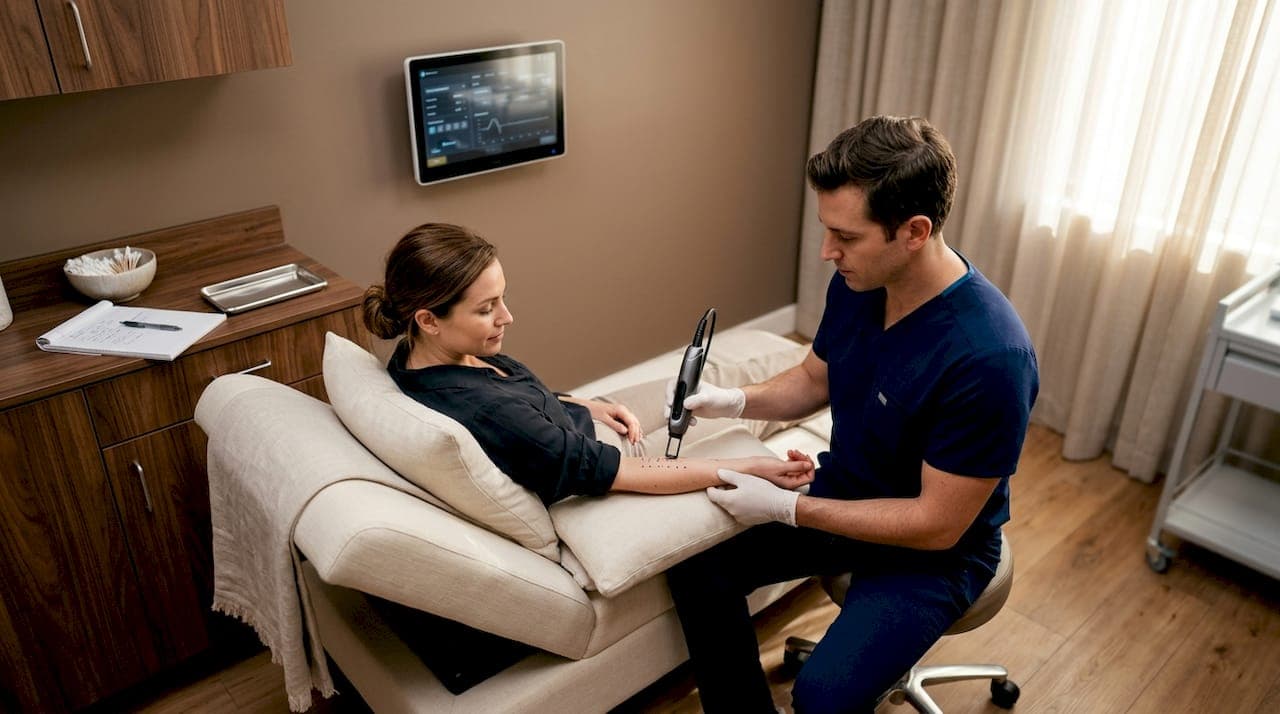
A skin test laser treatment is a mandatory patch test procedure that applies laser energy to a small area of skin to assess how your skin responds before a full session begins. Clinically, this step is called a spot test or patch test, and it serves one non-negotiable purpose: preventing burns, pigment changes, and allergic reactions by confirming that the laser settings are safe for your specific skin. StatPearls via NCBI identifies erythema and edema as the two primary markers practitioners watch for during the role of skin test laser treatment. Skipping this step is not a shortcut. It is a clinical risk.
What does skin test laser treatment involve and how does it work?
A patch test applies laser energy to a small, discreet area of skin, typically on the inner arm or behind the ear, using the same device settings planned for the full treatment. The practitioner then monitors your skin's response over the following hours and days. This process is not a formality. It is the only reliable way to confirm that the chosen wavelength, energy level, and pulse duration are compatible with your skin on that specific day.
Three physiological markers guide the assessment:
- Erythema (redness): Mild redness is expected and acceptable. Severe or spreading redness signals that energy settings are too high.
- Edema (swelling): Perifollicular swelling around the hair follicle is a normal response to laser energy. Widespread swelling is a warning sign.
- Pain response: Discomfort during the test helps calibrate pulse duration and cooling settings for patient comfort during the full session.
Results are assessed 48–72 hours after the test in standard cases. For patients with known skin sensitivities, monitoring may extend up to 2–3 weeks to catch delayed inflammatory or pigmentary responses.
The core principle behind the test is energy titration. No single laser setting works for every person. Practitioners adjust fluence (energy per unit area) based on what the test patch reveals, not on a fixed protocol. This individualized calibration is what separates a safe treatment from a damaging one.
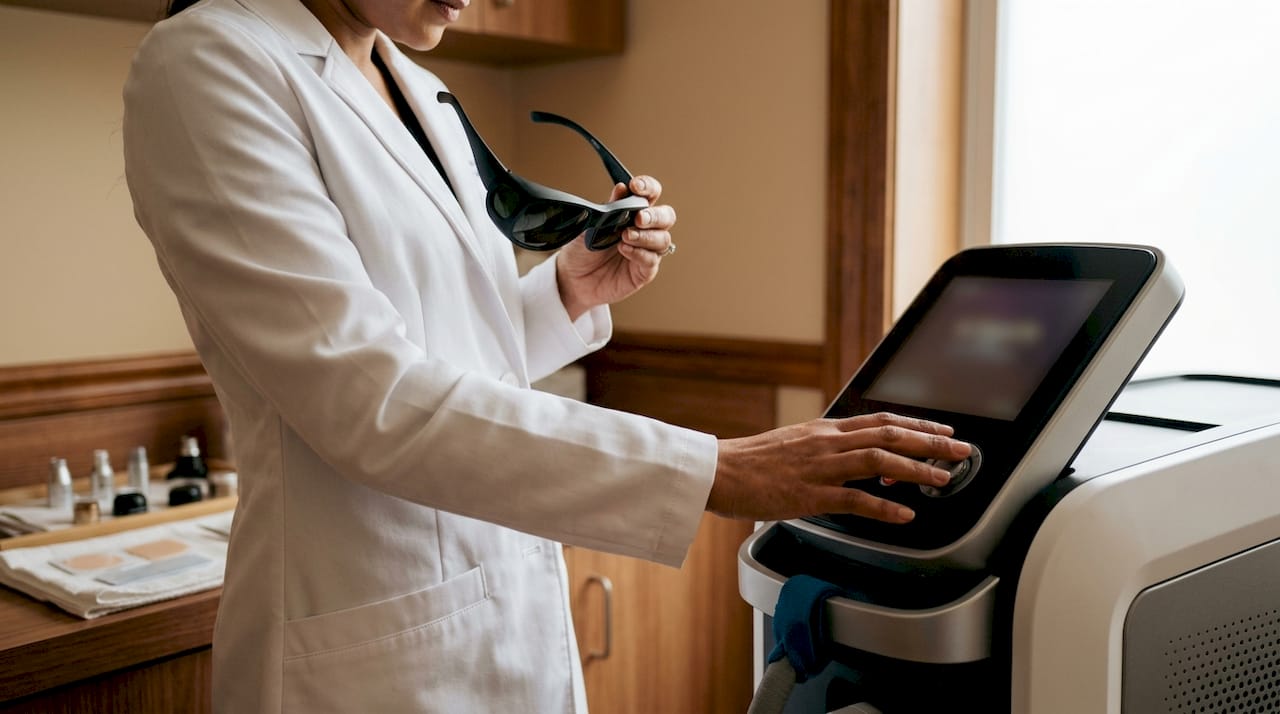
Pro Tip: Ask your practitioner to perform the patch test on a body area that matches the treatment zone as closely as possible. Skin thickness and follicle density vary significantly across the body, so a test on the inner arm may not fully predict how your back or bikini line will respond.
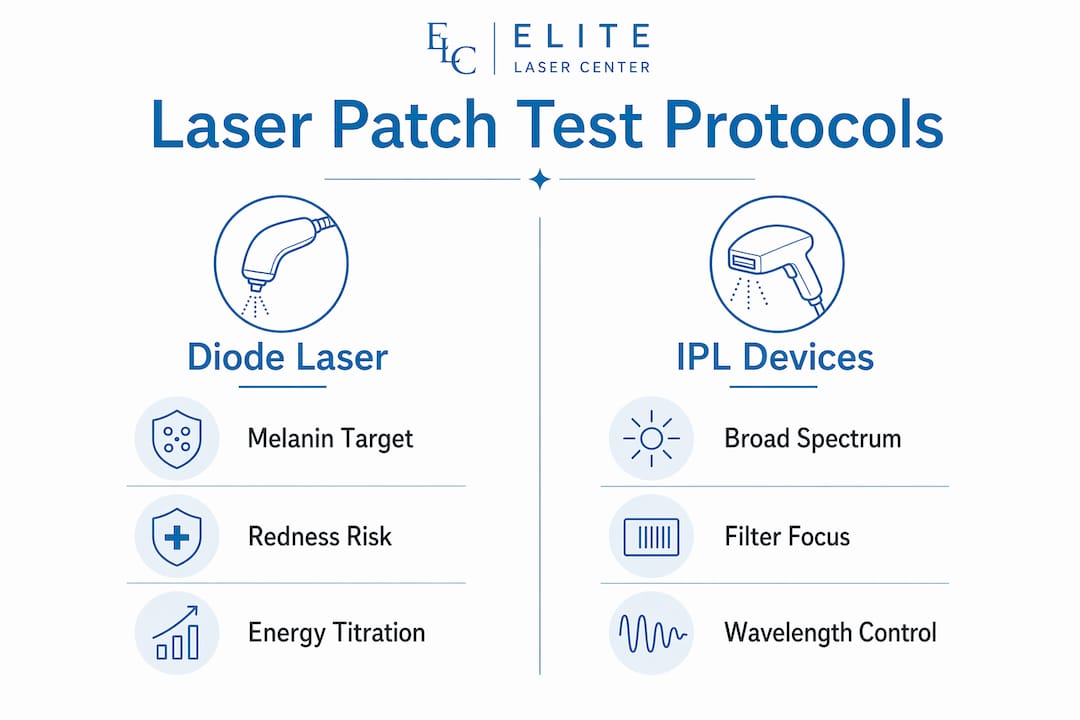
Laser type also shapes the testing protocol. A diode laser, an Nd:YAG laser, and an intense pulsed light (IPL) device each interact with skin tissue differently. The test parameters adjust accordingly.
Why is skin testing critical for different skin types?
Skin type is the single biggest variable in laser safety. Patients with Fitzpatrick skin types III–VI face a significantly higher risk of dyspigmentation, meaning unwanted darkening or lightening of the skin, when laser settings are not carefully calibrated. Darker skin tones contain more melanin in the epidermis, which competes with the melanin in the hair follicle as a target for laser energy. Without a patch test, the risk of absorbing too much energy in the wrong tissue layer rises sharply.
High-risk groups who require patch testing without exception include:
- Patients with Fitzpatrick skin types III through VI
- Anyone with recent sun exposure or a fresh tan
- Patients who have started new medications, particularly photosensitizing drugs like certain antibiotics or retinoids
- Anyone with a history of adverse reactions to prior laser sessions
- Patients with active skin conditions such as eczema, psoriasis, or rosacea in the treatment area
Assuming that a previous patch test still applies is one of the most common and avoidable errors in laser practice. Skin physiology changes with sun exposure, hormonal shifts, and medication use. A test result from three months ago does not guarantee safety today.
Skin testing customizes the treatment to the patient's current condition, not their baseline profile. A patient who tolerated a specific energy level in january may react differently in july after weeks of outdoor activity. The patch test catches that change before it becomes a burn.
Clinical guidance consistently recommends retesting after any relevant change in skin condition or medical history. Irreversible pigment changes are among the most distressing outcomes in aesthetic laser practice, and they are largely preventable with proper pre-treatment testing.
How do different laser technologies shape the patch test protocol?
Different laser technologies produce different tissue interactions, which means the patch test protocol is not identical across devices. The three most common technologies in clinical use are the diode laser, the Nd:YAG laser, and IPL.
| Laser type | Primary target | Common side effects | Patch test focus |
|---|---|---|---|
| Diode laser | Melanin in follicle | Perifollicular edema, carbonization | Energy titration, cooling adequacy |
| Nd:YAG laser | Deep follicle, vascular | Purpura, mild blistering | Pulse duration, spot size |
| IPL (intense pulsed light) | Broad spectrum targets | Erythema, crusting, pigment shift | Filter selection, fluence level |
A clinical trial comparing diode laser and IPL in 48 participants found that the diode laser produced better long-term hair reduction but also more side effects, including perifollicular edema and carbonization. That finding reinforces why patch testing is device-specific. The side-effect profile of a diode laser demands different calibration than IPL, even when treating the same patient.
IPL devices use broad-spectrum light filtered to specific wavelengths. The patch test for IPL focuses heavily on filter selection and fluence level, because incorrect filter choice can cause unexpected pigment shifts, particularly in patients with medium to darker skin tones. The Nd:YAG laser, which penetrates deeper into the dermis, requires careful attention to pulse duration during testing to avoid purpura or blistering.
Pro Tip: If you are switching clinics or devices between treatment sessions, always request a new patch test. The settings that worked on one machine do not automatically translate to a different device, even if the laser type is the same.
The patch test also functions as a litmus test of practitioner competency. A practitioner who selects the correct wavelength, energy, and pulse duration for your skin on that specific day demonstrates clinical judgment that goes beyond operating a device.
What steps and timing considerations get the best results from a patch test?
Getting the most from a skin test requires preparation before the appointment and careful monitoring after it. The following steps reflect current best practices for both patients and practitioners.
- Avoid sun exposure for at least two weeks before the patch test. Tanned skin absorbs laser energy differently, which skews test results and increases burn risk.
- Disclose all current medications. Photosensitizing drugs, including certain antibiotics, diuretics, and retinoids, alter how skin responds to laser energy. Your practitioner needs this information before selecting test settings.
- Do not wax or pluck the test area. Shaving is acceptable. Waxing removes the follicle that the laser needs to target, making the test unreliable.
- Wait the full observation period before proceeding. Standard results are read at 48–72 hours, but delayed reactions can appear up to 2–3 weeks later in sensitive patients. Rushing to a full session before this window closes is a clinical error.
- Retest after any change in equipment or skin condition. Practitioners must repeat patch tests if the laser device, wavelength, or energy settings change, or if the patient's skin condition has shifted since the last test.
- Use test results to build a personalized treatment plan. The patch test is not just a safety check. It is data. The erythema level, pain response, and healing timeline all inform the settings, session spacing, and aftercare protocol for the full treatment.
Monitoring delayed reactions is especially relevant for patients in regions with high sun exposure year-round. Patch testing in high-UV climates requires extra caution because ambient UV exposure can alter melanin distribution between the test and the full session. Practitioners in these environments often extend the observation window and schedule full treatments during lower-UV months.
The skin test's dual role is to confirm both safety and efficacy. The goal is to find the highest energy level your skin can tolerate without adverse effects, because that level also delivers the best hair reduction or skin treatment outcome.
Key Takeaways
A skin patch test is the clinical foundation of safe laser treatment, converting individual skin response data into a personalized, evidence-based treatment plan.
| Point | Details |
|---|---|
| Patch test is mandatory | Applying laser to a small area before full treatment prevents burns, pigment changes, and adverse reactions. |
| Observation window matters | Standard results read at 48–72 hours; sensitive patients need monitoring for up to 2–3 weeks. |
| Skin type drives risk level | Fitzpatrick types III–VI face higher dyspigmentation risk and require conservative, tested settings. |
| Device type changes the protocol | Diode, Nd:YAG, and IPL each have distinct side-effect profiles that the patch test must account for. |
| Retesting is non-negotiable | Any change in equipment, medication, or skin condition requires a fresh patch test before proceeding. |
Why I consider the patch test the most undervalued step in laser practice
Patients frequently ask me whether they can skip the patch test because they had laser done somewhere else last year. My answer is always no, and the reason goes deeper than liability.
Skin is not static. It changes with seasons, medications, stress, and hormonal shifts. A patch test result from a previous clinic, on a different device, under different settings, tells me almost nothing about how your skin will respond to my equipment today. Skin physiology variability mandates fresh testing after any relevant change, and "relevant change" covers more ground than most patients realize.
The other misconception I encounter regularly is that a patch test is just a formality that cautious clinics do to protect themselves legally. That framing gets it backwards. The test is how I move from a general treatment plan to a plan built specifically for your skin on this day. Without it, I am working with assumptions. With it, I have data.
Standardization of patch test protocols across the industry would reduce complications significantly. Too many adverse outcomes in aesthetic laser practice trace back to skipped or rushed pre-treatment testing. The patch test is not a speed bump. It is the foundation that makes everything else work.
— Sharon
Safe laser treatments start with a proper skin test at Elitelaserhair
At Elitelaserhair, every laser hair removal session begins with a mandatory patch test performed by experienced medical professionals using FDA-approved technology. This is not optional, and it is not a formality. It is how the team at Elitelaserhair builds a treatment plan that is calibrated to your skin, your history, and your goals.

Elitelaserhair serves clients across Suffolk County and has been recognized as the top CoolSculpting facility in New York. The center's three-year guarantee on laser hair removal packages reflects the confidence that comes from doing the safety work correctly from the start. Whether you are new to laser treatments or returning after a break, the skin care treatments at Elitelaserhair are designed to deliver real, visible results without cutting corners on safety.
FAQ
What is the purpose of a skin test before laser treatment?
A skin test, also called a patch test or spot test, applies laser energy to a small area to confirm that the device settings are safe for your skin before a full session begins. It prevents burns, pigment changes, and allergic reactions by revealing how your skin responds to the specific laser being used.
How long does it take to read a laser patch test result?
Standard patch test results are assessed 48–72 hours after the test. Patients with known skin sensitivities may need monitoring for up to 2–3 weeks to catch delayed inflammatory or pigmentary responses.
Do I need a new patch test if I have had laser treatment before?
Yes. Previous laser treatments do not exempt you from a new patch test, especially if you have changed clinics, switched devices, started new medications, or experienced significant sun exposure since your last session. Skin physiology changes over time, and prior results do not guarantee current safety.
Which skin types need the most careful patch testing?
Patients with Fitzpatrick skin types III through VI require the most careful patch testing because darker skin tones carry a higher risk of dyspigmentation when laser settings are not precisely calibrated to their melanin levels.
Does the laser type affect how the patch test is done?
Yes. Diode lasers, Nd:YAG lasers, and IPL devices each produce different tissue interactions and side-effect profiles. The patch test protocol adjusts for each device type, focusing on the specific parameters, such as filter selection for IPL or pulse duration for Nd:YAG, that carry the highest risk for that technology.