
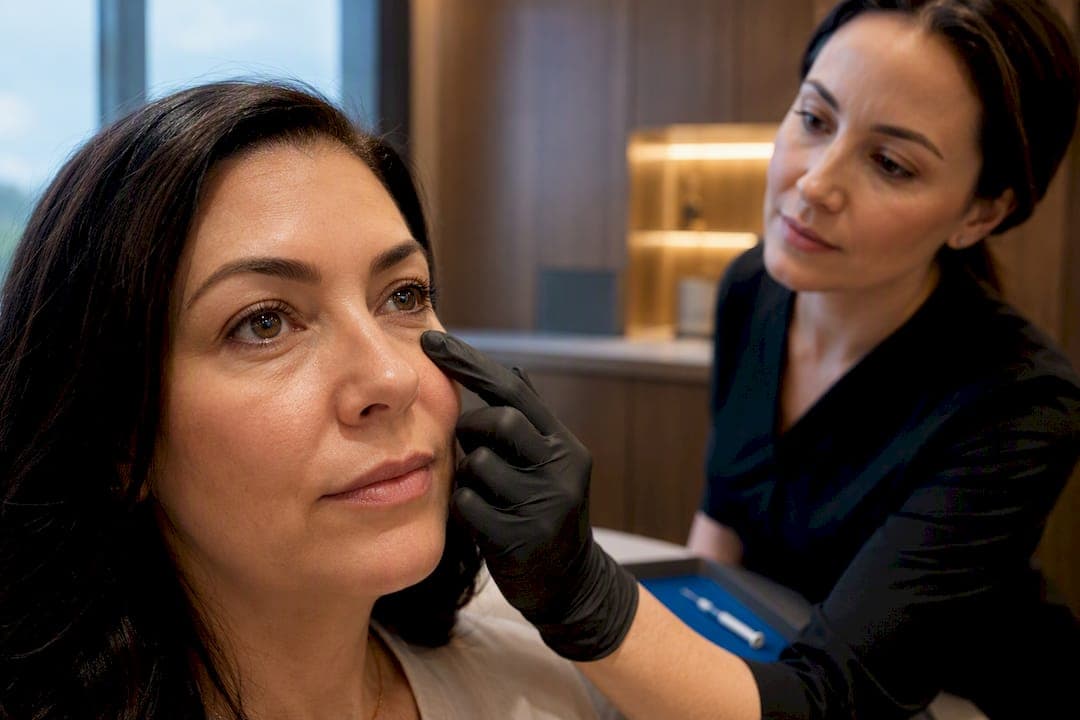
Tear trough filler works well for the right candidate: hollowed, sunken under-eyes caused by volume loss respond to hyaluronic acid injections, and the results are reversible if something looks off. The catch is that this is one of the least forgiving areas on the face to inject, so outcomes depend heavily on whether the person holding the needle or cannula has real experience with periorbital anatomy.
TL;DR:
- Proper injection depth against the bone is essential to prevent bluish discoloration from light scattering through shallow filler placement.
- Candidates with mild to moderate hollowing, thick skin, and minimal fat prolapse see the best, long-lasting results from tear trough filler.
- Experienced injectors using cannula techniques tend to produce fewer bruises and safer outcomes than needle injections in this sensitive area.
- Typical filler lasts about 9 to 12 months, with longevity affected by metabolism, lifestyle, and product type, requiring scheduled touch-ups.
- The safest and most effective results depend more on provider skill and anatomy knowledge than specific product brands or formulations.
Table of Contents
- What Is Tear Trough Filler and How Does It Work?
- Who Is a Good Candidate for Under-Eye Filler?
- What Happens During a Tear Trough Filler Appointment?
- How Long Does Tear Trough Filler Last?
- What Does Tear Trough Filler Cost?
- Is Tear Trough Filler Safe? Risks and Complications
- Aftercare and Recovery: What to Expect After Treatment
- What Are the Alternatives to Tear Trough Filler?
- How Do I Find a Qualified Tear Trough Filler Provider?
- Why Provider Experience Matters More Than the Product You Choose
- Ready to Talk About Under-Eye Filler? Here's What Elite Laser Center Offers
- Sources
- FAQ
What Is Tear Trough Filler and How Does It Work?
The tear trough is the shallow groove running from the inner corner of the eye along the lower eyelid toward the cheek. Anatomically, it sits over a spot where skin is thin, fat pads are minimal, and the underlying bone (the orbital rim) creates a natural depression that deepens with age as fat and collagen thin out. Genetics, sleep loss, and sun damage all speed up the process, but the core problem is almost always volume, not just pigment.
Hyaluronic acid fillers dominate this treatment area for a reason. HA is a sugar molecule the body already produces in skin and connective tissue, so it integrates naturally and, more importantly, it can be dissolved with an enzyme called hyaluronidase if the result needs correcting. That reversibility is the single biggest safety advantage HA has over other filler materials.
Other substances exist. Calcium hydroxylapatite (CaHA) and autologous fat transfer both add volume, but neither can be reversed once placed, and fat transfer carries its own surgical downtime and unpredictability. A 2020 interdisciplinary consensus paper on tear trough treatment specifically recommends cross-linked HA products with rheologic properties suited to thin skin, precisely because of that reversal option.
Depth of placement matters just as much as the product itself. Inject HA too close to the surface under skin this thin, and you get the Tyndall effect: a bluish or grayish discoloration visible through the skin, caused by how light scatters off filler sitting too shallow.
A few things to keep in mind before your consultation:
- Volume loss, not excess skin or pigment, is what filler actually corrects.
- HA is the standard choice in this area because it's reversible.
- Injection depth (ideally against bone, called supraperiosteal placement) prevents the bluish Tyndall discoloration.
- Fat grafting and CaHA exist but are not reversible if results disappoint.
Who Is a Good Candidate for Under-Eye Filler?
The best candidates have mild to moderate hollowing, reasonably thick and elastic skin, and minimal fat pad bulging. If your under-eye issue is mostly a shadow from lost volume rather than a bulge of herniated fat, filler tends to deliver a visible, satisfying change. Skin quality matters too: crepey, very thin, or heavily sun-damaged skin doesn't hide filler well and can show lumps or discoloration that smoother skin would mask.
Certain conditions rule out treatment, at least temporarily. Active skin infection near the injection site, pregnancy or breastfeeding, recent dental work (which can introduce bacteria into the bloodstream), and blood-thinning medications all mean postponing or reconsidering treatment. Cleveland Clinic notes that careful candidate screening is central to getting a good outcome here, more so than in almost any other filler site.
Some people are better served by surgery. If under-eye bags come from herniated fat pads rather than lost volume, or if skin laxity is significant, a lower eyelid blepharoplasty addresses the actual problem instead of masking it. Filler placed over prominent fat bulges can even make the area look puffier.
- Good fit: mild to moderate hollowing, decent skin elasticity, minimal fat prolapse.
- Poor fit: significant skin laxity, prominent fat bags, active infection, pregnancy, recent dental procedures, blood-thinning medication use.
- Sometimes the trough looks hollow because the cheek beneath it has flattened. Treating the midface can improve the transition without touching the trough directly.
Pro Tip: Bring a well-lit, makeup-free selfie from ten years ago to your consultation. Comparing past and present photos helps your injector figure out whether you're dealing with volume loss, fat herniation, or both, and it sharpens the treatment plan before a needle ever comes out.
What Happens During a Tear Trough Filler Appointment?
A proper consultation starts well before any injection. Your provider should take a full medical history, review medications and allergies, photograph the area in neutral lighting, and perform a "snap test" (gently pulling the lower lid skin to check elasticity and recoil). All of that informs how much product to use and where.
On treatment day, expect this general sequence:
- The provider marks injection points and the orbital rim boundary while you're upright, since gravity shifts hollows once you lie down.
- A topical numbing cream or ice is applied; some providers add a small amount of local anesthetic mixed into the filler itself.
- Product is placed in small increments, either as a deep supraperiosteal bolus (a small deposit against the bone) or in tiny microboluses spread along the trough.
- The injector checks symmetry by having you sit up periodically, since results can look different lying flat.
- Gentle massage and a final visual check close out the session.
Technique choice matters here more than in almost any other filler area. Needle injection allows precise bolus placement but carries a higher risk of hitting a small blood vessel. Cannula injection uses a blunt-tipped tube inserted through a single entry point, gliding under the skin rather than piercing through it repeatedly. A 2021 systematic review in the Aesthetic Surgery Journal found cannula use was associated with meaningfully less bruising than needle injection, 7% versus 17%, which is part of why many experienced injectors default to cannula in this specific region.
A few practical notes on what to expect:
- Sessions typically last less than an hour, including numbing time.
- Volume is conservative and incremental. Overfilling the tear trough is a common mistake, and it's easier to add more at a follow-up than to correct overfilling.
- You'll likely be asked to sit up and look in a mirror multiple times during the appointment to confirm symmetry before you leave.
How Long Does Tear Trough Filler Last?
Full results take about two weeks to settle, not the day you walk out of the office. Initial puffiness from the injection itself, plus normal HA hydration and swelling, can make the area look slightly overfilled at first. That settles as the product integrates with surrounding tissue.
By the Numbers: A 2021 systematic review of 1,956 patients who received tear trough filler reported an 84.4% short-term satisfaction rate and a 76.7% long-term satisfaction rate, meaning most people are still happy with results well after the initial glow fades.
Longevity in this specific area runs shorter than filler placed in the cheeks or lips, largely because the skin is thinner and moves constantly with blinking and facial expression. EyeWiki, published by the American Academy of Ophthalmology, puts typical duration at roughly 9 to 12 months, though this varies by individual.
Several factors shift that timeline in either direction:
- Higher metabolic rate and more facial movement tend to break down HA faster.
- Product choice (different HA formulations have different cross-linking and cohesivity) affects how long a given filler holds up.
- Sun exposure and lifestyle factors that accelerate collagen breakdown can shorten visible results even if the filler itself hasn't fully metabolized.
Because the area is small and precision-dependent, most patients plan on a touch-up appointment rather than expecting a single treatment to last indefinitely.
What Does Tear Trough Filler Cost?
Expect a national range roughly between $600 and $1,800 per treatment session, though the exact number depends heavily on who's injecting you, what product they use, and how much volume your case requires. A board-certified dermatologist or facial plastic surgeon in a major metro area typically charges more than a general aesthetic provider, and that premium often reflects genuine experience with a technically demanding region.
What actually drives the price:
- Provider credentials. Physicians and experienced nurse injectors with periorbital-specific training generally charge more than entry-level providers, and for this particular area, that price gap is arguably worth paying for.
- Product selected. Different HA formulations are priced differently per syringe, and the tear trough rarely requires a full syringe per side.
- Volume needed. Deeper hollows or asymmetric cases sometimes require follow-up touch-ups to get symmetry right, adding to total cost.
Maintenance is typically scheduled around the 9 to 12 month mark once results visibly fade, though some patients stretch longer depending on how their body metabolizes the product. Cosmetic filler is considered elective, so health insurance does not cover it. Budgeting for at least one annual touch-up is the realistic way to think about ongoing cost rather than treating the first session as a one-time expense.
Is Tear Trough Filler Safe? Risks and Complications
Most side effects from tear trough filler are mild and predictable: swelling, mild bruising, and tenderness at injection points, usually resolving within a week to ten days. Because the skin here is so thin, bruising tends to be more visible than it would be elsewhere on the face, even when the underlying injection went perfectly.
Delayed complications show up less often but are worth knowing about. The Tyndall effect (that bluish tint from filler sitting too close to the surface) can appear weeks after treatment as the product settles and hydrates. Small lumps or nodules sometimes form, particularly with overfilling or uneven placement. A 2021 systematic review reported an overall minor complication rate of roughly 44% across the studies analyzed, a figure that sounds alarming until you realize it includes routine bruising and swelling, not just serious events.
The rare but genuinely serious risk is vascular occlusion, meaning filler is accidentally injected into or compresses a blood vessel, cutting off circulation. In the tear trough region, this matters enormously because of proximity to vessels connected to the ophthalmic artery, which supplies the eye. Vision loss from filler is exceedingly rare, but it is documented, and it is one reason the FDA has issued safety communications specifically warning against certain injection devices and stressing the need for trained operators using proper technique.
If something goes wrong, here's the general management sequence a qualified provider follows:
- Stop the injection immediately if the patient reports sudden severe pain, vision changes, or the skin blanches (turns white) or mottles.
- Inject hyaluronidase promptly to dissolve the HA and relieve pressure on the vessel; this is why any HA injector should have hyaluronidase on hand at every appointment, not just available somewhere in the building.
- Refer urgently to an ophthalmologist or specialist if any vision symptoms occur.
- For infection or delayed nodules, oral antibiotics or corticosteroid injections may be appropriate depending on presentation.
Pro Tip: If you notice sudden, severe pain, blanching skin, or any change in vision during or immediately after your appointment, say so immediately and don't wait to see if it passes. Vascular events are time-sensitive, and minutes matter for salvaging blood flow.
Anyone experiencing sudden vision changes, severe unrelenting pain, or skin that's turning white or dusky after filler should go to the emergency room, not wait for a callback from the injector's office.
Aftercare and Recovery: What to Expect After Treatment
The first 48 hours set the tone for how smooth your recovery goes. Apply a cold compress in short intervals to control swelling, avoid pressing directly on the treated area, and sleep with your head slightly elevated to reduce overnight fluid pooling around the eyes.

Certain activities need to wait. Skip strenuous exercise, alcohol, and any facial treatments (facials, peels, laser sessions) for at least 24 to 48 hours, since increased blood flow and heat can worsen swelling and bruising. If you have dental work scheduled, space it out from your filler appointment by at least two weeks in either direction; dental procedures introduce bacteria into the bloodstream, and doing both close together raises infection risk in filler-treated tissue.
Bruising, if it happens, typically fades over one to two weeks and can be helped along with arnica gel or gentle cooling. Swelling usually peaks in the first day or two, then steadily improves. As mentioned earlier, full settling takes about two weeks, so resist the urge to judge your results at the 48 hour mark.
- Cold compress in the first 48 hours, applied gently, never with direct pressure.
- No strenuous exercise, alcohol, or facial treatments for 24 to 48 hours.
- Space dental work at least two weeks from your filler appointment.
- Judge final results at the two week mark, not day one.
For general post-treatment skincare habits that support recovery beyond the injection site itself, Lord's Love Butter's guide to quick post-workout skincare recovery offers useful, low-effort routines worth adapting once you're cleared to exercise again.
What Are the Alternatives to Tear Trough Filler?
Filler isn't the only option, and for some people, it isn't even the right one. Lower eyelid blepharoplasty, a surgical procedure that removes or repositions fat pads and tightens lax skin, is the better choice when bags come from fat herniation rather than volume loss, or when skin laxity is significant enough that filler alone can't fix the contour.
Fat grafting, which transfers a patient's own fat into the tear trough, offers longer-lasting volume than HA filler since a portion of transferred fat can survive permanently. The trade-off is a more involved procedure with real downtime and less predictable, less reversible results compared to HA.
For pigment and texture issues that filler doesn't touch, complementary treatments matter:
- Cheek filler can improve midface support, softening the transition where the trough meets the cheek without adding volume directly under the eye.
- Lasers and chemical peels address discoloration and fine texture concerns that volume replacement alone won't fix.
- Topical retinoids and vitamin C can modestly improve skin quality over months but won't restore lost volume, no matter how consistently they're used.
How Do I Find a Qualified Tear Trough Filler Provider?
Credentials matter more here than almost anywhere else on the face. Prioritize providers who are physicians, board-certified dermatologists, facial plastic surgeons, or oculoplastic specialists, and ask directly how many tear trough cases they've handled versus filler in general. Periorbital anatomy is unforgiving, and general injection experience doesn't automatically translate to safe technique in this specific region.
At your consultation, come prepared with direct questions:
- What product do you use for the tear trough specifically, and why that one?
- Do you keep hyaluronidase on-site, and what's your protocol if something looks wrong?
- Can I see before-and-after photos of your own tear trough cases, not stock images?
- What's your plan if I develop bruising, a lump, or asymmetry after treatment?
Red flags worth walking away from: a provider with no reversal plan, no hyaluronidase on hand, injections performed by unsupervised non-medical staff, or heavy pressure to book immediately without a real assessment. A reasonable in-clinic evaluation includes a skin and fat pad assessment, a discussion of realistic expectations, and honesty about whether you're actually a good candidate, not just a sales pitch.
Pro Tip: Ask to see at least three before-and-after photo sets specifically of tear trough cases, not general under-eye or cheek filler results. The trough is different enough anatomically that broader filler experience doesn't always transfer.
Why Provider Experience Matters More Than the Product You Choose
Most of the marketing around under-eye filler focuses on the product: which HA brand, which molecular weight, which "proprietary" cross-linking technology. That's mostly noise. The real variable that determines whether you love or regret your results is the hands holding the syringe.
Some medical spas build their approach around that reality, keeping injectable treatments under experienced medical supervision rather than treating filler as a commodity service. The clinic's own patient education content covers aftercare and longevity guidance drawn from practitioner experience, which matters in an area where generic advice ("just ice it") doesn't capture the nuance of periorbital healing.
If there's one thing worth internalizing from all the systematic-review data on this topic, it's that satisfaction rates in the high 70s and low 80s aren't accidents. They correlate with careful candidate selection and technique, not luck. Anatomy knowledge reduces risk, and it improves how natural the final result actually looks.
— Sharon
Ready to Talk About Under-Eye Filler? Here's What Elite Laser Center Offers
Some providers offer Botox, Dysport, and dermal filler injections, including treatments for volume loss around the eyes, performed under medical supervision rather than by unsupervised staff.

That distinction is the whole point of this article: the tear trough rewards experience and punishes shortcuts. Some injectable services are built around a personalized consultation first, so clients are not handed a generic treatment plan before anyone has actually assessed their skin, fat pads, or goals. If you've read this far and think you might be a good candidate for tear trough correction, the next step is a real conversation with someone who can look at your anatomy directly. Visit the injectables page to see what's offered and schedule a consultation with Elite Laser Center.
Sources
- Nonsurgical tear trough volumization: a systematic review of patient satisfaction — American Academy of Ophthalmology editorial summary
- Recommendations for the treatment of tear trough deformity with cross‐linked hyaluronic acid filler — PMC
- Nonsurgical tear trough volumization: systematic review (Aesthetic Surgery Journal)
This article is general information, not a substitute for advice from a qualified doctor. Consult a qualified healthcare professional about your own circumstances before acting on anything here.
FAQ
How Risky Is Tear Trough Filler?
Most risks are minor, like bruising and swelling, which affect a meaningful share of patients but resolve on their own. Serious complications like vascular occlusion or vision changes are rare, but the tear trough's anatomy makes them more consequential than in most other filler sites, which is why an experienced medical injector with a hyaluronidase plan matters so much here.
How Long Does Filler in the Tear Trough Last?
Tear trough filler typically lasts 9 to 12 months, though individual results vary based on metabolism, product choice, and lifestyle factors. Most patients plan on an annual touch-up rather than expecting permanent correction from a single session.
How Much Does a Tear Trough Filler Cost?
Pricing for tear trough filler generally runs between $600 and $1,800 per session nationally, depending on the provider's credentials, the product used, and the volume needed. Current pricing for dermal filler services is available directly through the clinic's injectables page.
Do Tear Trough Fillers Actually Work?
Yes, for the right candidate. A 2021 systematic review found 84.4% short-term satisfaction and 76.7% long-term satisfaction, though results depend heavily on whether hollowing is caused by volume loss rather than fat herniation or skin laxity.
Recommended
- See Change in 24–72 Hours: Dissolving Lip Filler Clinic Checklist
- Detectable 15 Years, Visible 6 to 18 Months: Filler Longevity
- 12.4% Complication Rate: PDO Thread Lift Safety & Clinician Checklist
- Lip Filler Swelling: Your Day-by-Day Recovery Guide
This article was produced with AI assistance and reviewed for accuracy. It is provided for general information, and it is not professional advice.