

What skin concerns do medical spas commonly treat?
Medical spas handle a broad range of aesthetic skin issues, from the everyday to the stubborn. Acne is the most common skin condition in the United States, affecting up to 50 million Americans annually, while androgenetic alopecia affects many people nationwide. These are exactly the kinds of concerns that bring people through a med spa door.
The skin concerns most commonly addressed at medical spas include:
- Acne and post-acne scarring — active breakouts and the textural damage they leave behind
- Fine lines and wrinkles — both dynamic (movement-driven) and static (present at rest)
- Volume loss — hollowing under the eyes, thinning lips, and flattened cheeks
- Sun damage and hyperpigmentation — dark spots, uneven tone, and melasma
- Rosacea and redness — chronic flushing and visible blood vessels
- Skin laxity — loosening along the jawline, neck, and brow
- Texture irregularities — enlarged pores, rough patches, and dullness
- Hair thinning — early-stage androgenetic alopecia and diffuse shedding
- Unwanted hair — anywhere on the face or body
Medical spas focus on cosmetic, non-diagnostic concerns. They are not equipped to evaluate suspicious lesions, rashes with systemic causes, or conditions requiring a prescription. That distinction matters for choosing where to go first.
Non-invasive treatments medical spas use to address skin problems
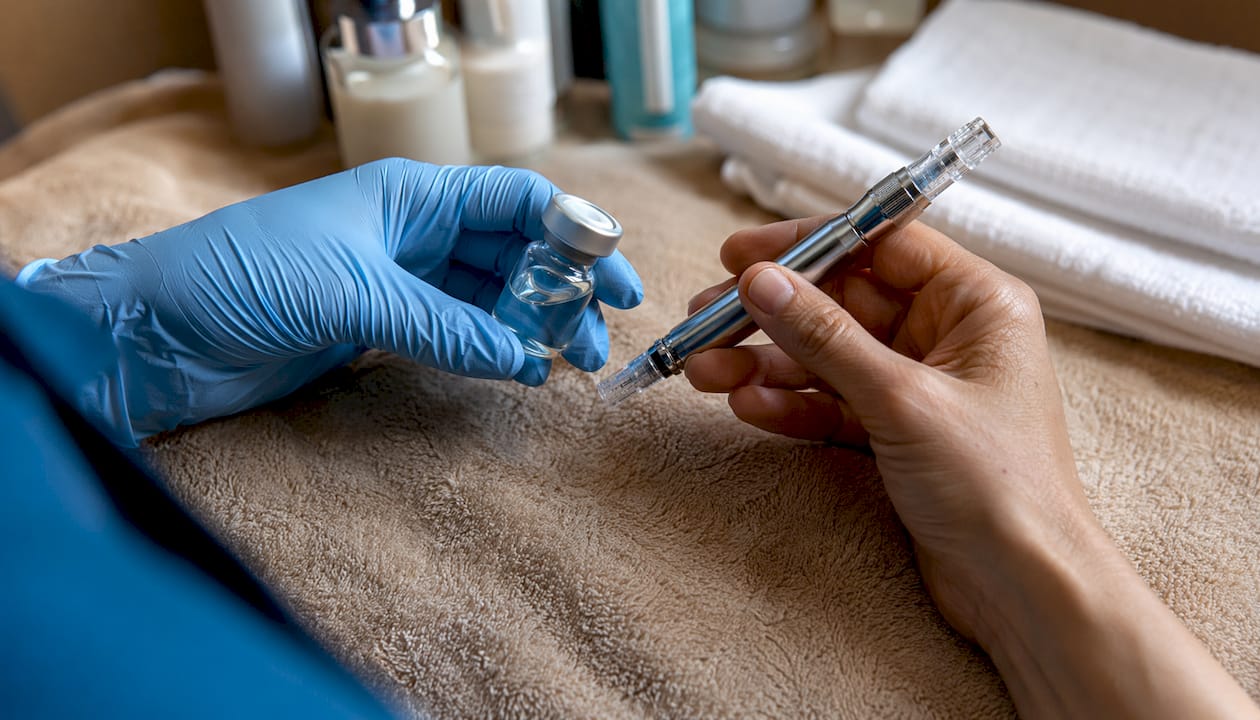
The menu at a well-run med spa goes well beyond facials. Chemical peels, microneedling, laser resurfacing, dermal fillers, Botox, and advanced facials are among the most requested procedures in the country. Each targets a specific trigger in the skin.
| Treatment | Primary Target | Mechanism |
|---|---|---|
| Chemical peels | Uneven tone, acne scars, fine lines | Acid exfoliation triggers cell turnover |
| Microneedling / RF microneedling | Texture, scars, laxity | Controlled micro-injuries stimulate collagen |
| Laser skin resurfacing | Sun damage, pigmentation, wrinkles | High-energy light removes damaged skin layers |
| Dermal fillers | Volume loss, deep folds | Hyaluronic acid or biostimulator restores structure |
| Botox / neurotoxins | Dynamic wrinkles | Relaxes overactive facial muscles |
| Ultherapy | Skin laxity, brow and jawline | Focused ultrasound stimulates deep collagen |
| HydraFacials | Congestion, dullness, dehydration | Cleanse, exfoliate, extract, and infuse in one pass |
| IPL (Intense Pulsed Light) | Redness, sun spots, vessels | Broad-spectrum light targets pigment and vessels |
| Laser hair removal | Unwanted hair | Targets follicle melanin to disable regrowth |
Laser resurfacing and Ultherapy use FDA-approved energy-based devices to promote collagen without surgery. The global dermal fillers market reached $3.3 billion in 2024, reflecting just how mainstream injectable volume restoration has become. HydraFacials are among the most popular med spa services nationwide. Elitelaserhair offers several of these at its Stony Brook location, including RF microneedling and HydraFacial MD.
How to choose the right treatment for your skin concern
The single most useful question to ask before booking anything: what is actually driving this concern? Identifying the root trigger — whether it is movement, volume loss, pigmentation, texture, or redness — shapes every decision that follows.
Here is a practical framework for working through it:
- Name the trigger first. Wrinkles from muscle movement call for a neurotoxin. Wrinkles from volume loss call for a filler. Treating the wrong one wastes money and time.
- Book a consultation before committing. A trained provider should assess your skin type, tone, and history before recommending anything. No reputable med spa skips this step.
- Ask about stacking. Combining treatments — such as pairing a chemical peel with injectables — often produces better results than any single procedure alone.
- Sequence matters. Resurfacing treatments generally come before injectables in a plan, not after. Ask your provider to explain the order and why.
- Know when to see a dermatologist first. Any new lesion, suspicious mole, persistent rash, or undiagnosed condition needs a board-certified dermatologist before a cosmetic treatment.
Pro Tip: Prioritize your single most pressing concern for the first visit. Providers can address multiple issues over time, but trying to fix everything at once often leads to longer recovery and muddier results.
What medical spas can and cannot do compared to dermatologists
Medical spas blend day spa experiences with medical-grade procedures, typically supervised by a physician or nurse practitioner. That supervision level varies by state, which is why checking credentials matters before you book.
What med spas do well:
- Cosmetic maintenance: facials, peels, dermaplaning, basic energy treatments
- Non-invasive rejuvenation: lasers, injectables, body contouring
- Personalized aesthetic plans for healthy skin
What they cannot do:
- Diagnose skin conditions, including cancers, eczema, or psoriasis
- Prescribe medications
- Manage systemic diseases with skin manifestations
Board-certified dermatologists advise using med spas for non-invasive cosmetic maintenance while reserving dermatologist visits for diagnosis, prescriptions, and high-risk procedures. Patient outcomes improve when treatments are performed by licensed professionals with specialized training under physician oversight. State regulations vary widely, so always confirm that your med spa has documented physician supervision and credentialed staff.
How medical spas are moving toward whole-body skin wellness
The industry is shifting away from single-treatment fixes toward something more considered. Medical spas are increasingly adopting a regenerative wellness model that focuses on restoring the skin's ability to heal and rebuild collagen at the cellular level, not just masking surface concerns.
What this looks like in practice:
- Combining somatic and fascial therapies with aesthetic treatments to support circulation and tissue health
- Integrating nutrition and lifestyle guidance alongside in-office procedures
- Using biostimulators like Sculptra or Radiesse that trigger the body's own collagen production rather than simply filling space
- Sequencing treatments across months to build lasting structural improvement
- Addressing hormonal and environmental triggers alongside topical concerns
The result is a care model that treats skin as a reflection of overall health, not just a surface to be corrected. Patients who engage with this approach tend to see more durable results because the underlying biology is being supported, not just the visible symptom.
Why Elitelaserhair sets the standard for medically supervised skin care
Elitelaserhair at Elite Laser Center in Stony Brook, NY operates on a straightforward principle: every treatment should produce a visible, real result under proper medical supervision. The center uses FDA-approved technology across its full service menu, from laser hair removal to CoolSculpting, and has been recognized as the top CoolSculpting facility in New York.
What sets Elitelaserhair apart is the combination of clinical rigor and a genuinely welcoming environment. Treatments are performed by experienced, trained professionals. Patients receive personalized plans, not off-the-shelf protocols. The three-year guarantee on laser hair removal packages reflects the center's confidence in its outcomes. For patients in Suffolk County looking for injectables or advanced facials and peels, Elitelaserhair offers the kind of medically supervised, luxury experience that produces results you can actually see.
Key Takeaways
Medical spas are most effective when treatments are matched to the specific trigger driving a skin concern, under qualified medical supervision.
| Point | Details |
|---|---|
| Identify the trigger first | Volume loss, movement, pigmentation, and texture each require a different treatment approach. |
| Stacking treatments works | Combining procedures like peels and injectables addresses multiple concerns more effectively than one treatment alone. |
| Med spas have real limits | They cannot diagnose skin conditions or prescribe medications; see a dermatologist for any undiagnosed concern. |
| Supervision matters | Patient outcomes improve when treatments are performed by licensed professionals under physician oversight. |
| Regenerative care lasts longer | Treatments that rebuild collagen at the cellular level produce more durable results than surface-only corrections. |
The case for slowing down before booking
The most common mistake people make at a medical spa is skipping the "why" and going straight to the "what." A patient books filler because they look tired, but the real driver is skin laxity, not volume loss. The filler helps temporarily, but the underlying issue keeps progressing. That gap between perceived concern and actual trigger is where most treatment disappointments originate.
The med spas doing this well, including Elitelaserhair, start every new patient relationship with a genuine assessment, not a menu. They ask what changed, when it changed, and what the patient actually wants to feel when they look in the mirror. That conversation is not a formality. It is the difference between a treatment that works and one that just gets done.
The regenerative shift in the industry is encouraging precisely because it pushes providers toward that longer view. Skin that is supported from the inside, treated with appropriate technology, and maintained over time looks different from skin that has been periodically corrected. The former has a quality that is hard to fake.