
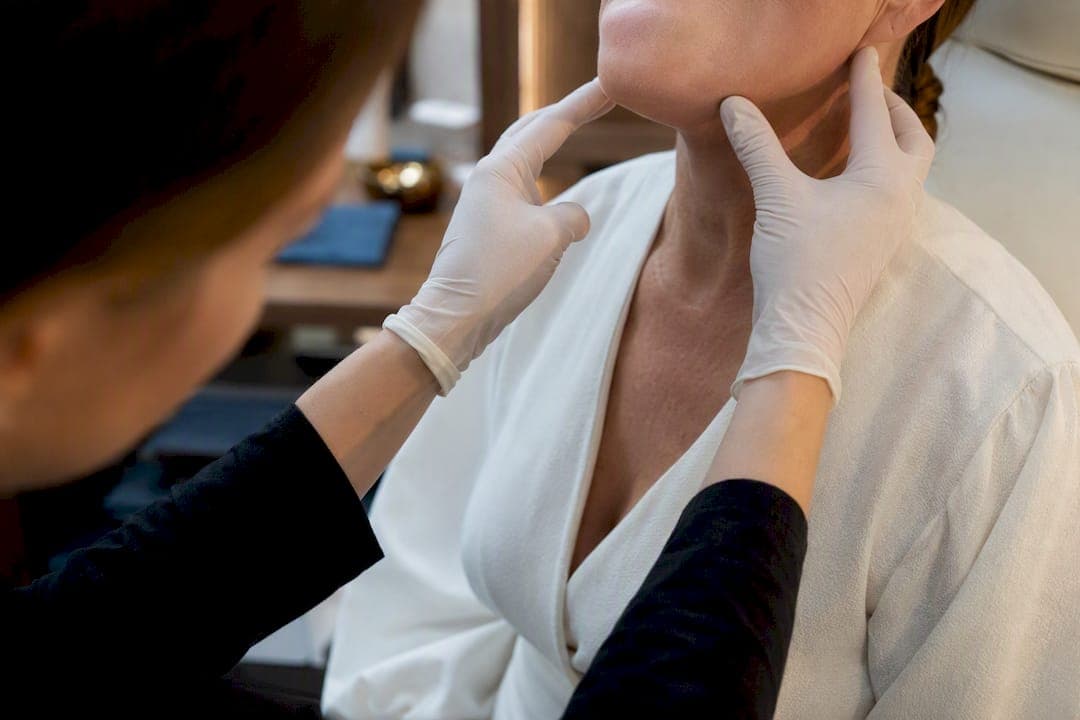
PDO thread lifts carry a genuine but generally low-to-moderate risk profile, not a risk-free one. Expect short-term swelling and bruising in most patients, and know that dimpling, visible or palpable threads, and infection are the procedure-specific problems that show up most often in clinical data. Risk climbs with age, with the number of threads placed, and with a practitioner's inexperience.
TL;DR:
- Most complications occur within the first four weeks and include skin dimpling, contour irregularities, visible threads, and mild infections, often resolving with simple measures.
- The overall complication rate is around 12.4%, with risks increasing for older patients and those with higher thread counts or less skilled practitioners.
- Persistent issues like deep dimpling, thread migration, or infection beyond the initial recovery period require clinical evaluation and possibly invasive treatment.
- Choosing a practitioner with proven experience, proper medical supervision, and clear complication management plans significantly reduces the risk of adverse outcomes.
- Proper aftercare, including avoiding strenuous activity, sleeping with elevated head, and following follow-up instructions, reduces the likelihood of complications and enhances results.
Table of Contents
- What Are the Real PDO Thread Lift Risks and Side Effects?
- How Common Are PDO Thread Lift Complications?
- Who Faces the Highest Risk of Complications?
- Early vs. Late Complications: What Timeline Should You Expect?
- How Do Providers Diagnose and Treat Thread Complications?
- How Do You Choose a Provider to Minimize Risk?
- What Aftercare Actually Reduces Complication Risk?
- What Happens If a PDO Thread Lift Goes Wrong?
- A Clinician's View on Safety and Consent
- Considering a Thread Lift? Here's What Medical Supervision Adds
- Sources
- FAQ
What Are the Real PDO Thread Lift Risks and Side Effects?
Most patients who undergo a PDO thread lift experience swelling, bruising, and tenderness at the insertion points, which generally resolve within several days, according to a Cleveland Clinic overview of thread lift procedures. That timeline matches what most patients report, and it's the baseline anyone considering the procedure should expect.
Beyond that normal recovery window, a specific set of procedure related complications shows up in clinical literature:
- Skin dimpling where the thread anchors, sometimes visible when you smile or move your face
- Contour irregularity or lumpiness along the thread path
- Visible or palpable threads under the skin, especially in thinner-skinned areas
- Thread extrusion or migration, where the thread works its way toward the skin surface or shifts from its original position
- Infection, ranging from mild redness to abscess formation
- Granuloma formation, an inflammatory nodule the body builds around the thread
- Asymmetry between the two sides of the face
A clinical analysis of 190 patients with complications reported skin dimpling, contour irregularity, visible threads, infection, and thread extrusion as the most frequent complications over follow-up periods ranging from one to 24 weeks, per a clinical analysis of PDO thread lift complications.
Pro Tip: Mild dimpling in the first two weeks often smooths out on its own as swelling resolves. Persistent dimpling past four weeks is a different story and worth a follow-up visit.
Most of these issues resolve with simple office measures: warm compresses for swelling, topical antibiotics for surface irritation, or gentle massage for early contour bumps. The complications that need more than reassurance are the ones covered further down.
How Common Are PDO Thread Lift Complications?
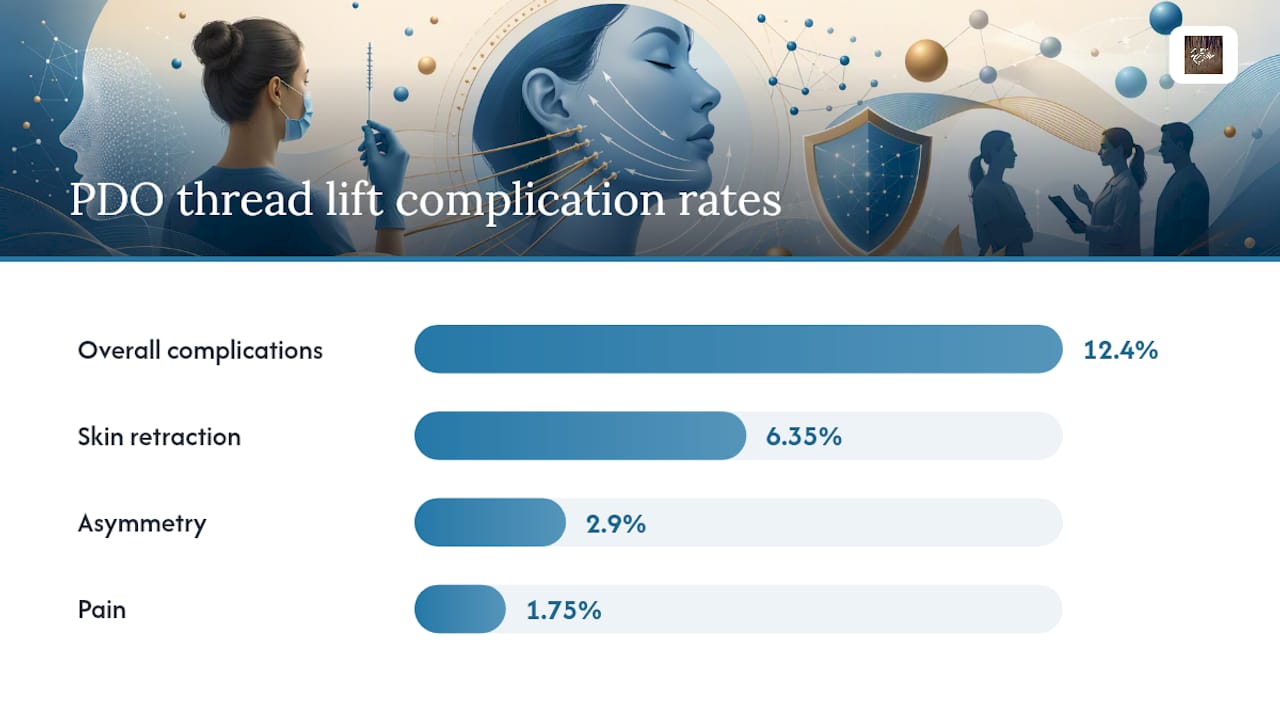
A large multicenter retrospective study puts the overall complication rate at 12.4%, with skin retraction the most frequent single event at 6.35%, followed by asymmetry at 2.9% and pain at 1.75%, according to research on predictors of complications after PDO thread lift. That study found that risk of complications increased with the number of threads placed and patient age, with older patients facing a notably higher risk.
Visible or palpable threads showed up in 10% of cases, and skin dimpling in 7%, per a meta-analysis of thread lifting complications.
Why the spread between studies? The meta-analysis authors flagged high heterogeneity across the 26 studies they reviewed, meaning differences in thread type, technique, patient population, and how strictly each study defined a "complication" all pull the numbers in different directions. A study counting any visible bruising as an event will report far higher rates than one only logging complications that required a return visit. Read pooled rates as a range of plausibility, not a single fixed probability for any one patient.
Who Faces the Highest Risk of Complications?
Four factors consistently influence complication risk:
- Patient age, with older individuals generally facing higher risk.
- The number of threads placed, where increased thread count corresponds to greater risk. More threads means more insertion points and more foreign material for the body to react to.
- Practitioner skill. Placement depth and technique matter enormously. A thread placed too superficially is far more likely to become visible or palpable; one placed without solid anatomical knowledge raises the odds of nerve irritation or asymmetry.
- Medical history. Bleeding disorders, blood thinner use, active skin infection, and uncontrolled diabetes or autoimmune disease all raise the odds of a poor outcome and should be disclosed before any consultation moves forward.
Pro Tip: If a provider recommends a high thread count without asking about your medications, skin history, or aesthetic goals first, that's a signal to slow down and ask more questions before booking.
Early vs. Late Complications: What Timeline Should You Expect?
Recovery from a PDO thread lift follows a fairly predictable arc, and knowing which phase you're in helps you tell normal healing from a problem worth calling about.
- Weeks 0 to 4 (early phase). Swelling, bruising, and transient tenderness are expected here and are usually self-limiting, resolving within about five days for most patients.
- Weeks 4 and beyond (late phase). Visible or palpable threads, persistent dimpling, thread migration, ongoing asymmetry, or deep infection can surface here and typically need clinical evaluation rather than time alone.
- Months 3 to 6. PDO threads themselves dissolve during this window as the body metabolizes the material, while the collagen stimulation they triggered continues remodeling tissue for some time after.
Contact your provider promptly if you notice a thread poking through the skin, a firm lump that isn't shrinking, spreading redness, fever, or pain that gets worse instead of better past the first week.
How Do Providers Diagnose and Treat Thread Complications?
Most evaluations start with a straightforward physical exam. A provider checks the thread path, palpates for lumps or extrusion points, and looks for signs of infection like warmth, redness, or drainage. Imaging is rarely needed but can help locate a deeply migrated thread when it isn't obvious on exam.
Treatment escalates based on severity:
- Conservative care covers massage for early dimpling, topical antiseptics, and short courses of oral antibiotics for superficial infection.
- Steroid injections can shrink granulomas and inflammatory nodules without further intervention.
- Thread repositioning addresses migration in cases where the thread hasn't fully anchored.
- Surgical removal becomes necessary for extrusion, deep infection, or an abscess that doesn't respond to antibiotics.
Removal is rarely simple. Case reports document threads breaking during extraction, since PDO material becomes fragile once it starts dissolving, sometimes forcing surgeons to make multiple small incisions to fully retrieve fragments, according to a case report on serious bacterial complications after PDO thread use. Delayed treatment of a bacterial complication can lead to a persistent visible deformity, which is exactly why early evaluation matters more than waiting to see if a lump resolves on its own.
How Do You Choose a Provider to Minimize Risk?
Practitioner skill and documented anatomical knowledge are the biggest modifiable factors separating a smooth outcome from a complicated one. That single variable matters more than thread brand, clinic decor, or price.
Before booking, look for:
- Medical supervision at the clinic performing the procedure
- A provider who can show real before and after photos of their own patients, not stock images
- A clear plan for what happens if a complication occurs, including thread removal if needed
- Documented experience specifically with PDO threads, not just fillers or Botox
- Sterile technique and single-use, properly stored thread packaging
At your consultation, ask directly: what thread material and gauge will be used, how many threads are planned for your specific goals, what the removal strategy looks like if something goes wrong, and whether the provider can describe a real complication they've managed. A provider who can't answer that last question plainly hasn't managed one, or isn't being honest about it.
Pro Tip: Walk away from anyone who pushes a high thread count before examining your skin, medical history, or medications, or who offers to start treatment the same day without a real consultation first.
Before the appointment, disclose all supplements and medications, follow your provider's guidance on stopping blood thinners, and avoid smoking and heavy alcohol use in the days beforehand. Both cut circulation to healing tissue and slow recovery.
What Aftercare Actually Reduces Complication Risk?
The days immediately following your PDO thread lift matter more than most patients expect, and simple habits make a measurable difference in outcomes.
- Sleep with your head elevated for the first several nights to limit fluid pooling and swelling.
- Avoid strenuous activity, facial massage, and dental work for the timeframe your clinic specifies, since jaw movement and pressure can shift threads before they anchor.
- Apply cold packs as directed to control the first 48 hours of swelling.
- Follow any massage or facial exercise guidance your provider gives for reducing dimpling as swelling resolves.
- Take antibiotics or pain relievers only as prescribed, and finish the full course if one is given.
- Return for follow-up on the schedule your clinic sets, and call sooner if you notice a firm lump, spreading redness, fever, or a thread breaking through the skin.
A structured recovery plan for the first six weeks, covering exactly which activities to avoid and when massage becomes safe, makes the difference between a smooth result and a preventable complication. Elite Laser Center's own six week PDO thread lift recovery plan walks through that timeline step by step, and its first weeks aftercare guide covers the specific red flags worth watching for early on.
What Happens If a PDO Thread Lift Goes Wrong?
Correcting a failed thread lift is harder than most patients assume. Threads that have started dissolving become brittle, so removal sometimes requires more than one small incision to retrieve every fragment rather than a single clean extraction.
- Persistent contour deformities may need reconstructive touch-up work after the initial thread issue resolves
- Full correction can take several months, since swelling from the corrective procedure itself needs to settle before anyone can judge the final result
- Realistic outcomes after correction are usually good but rarely identical to how the skin looked before any threads were placed
- Corrective care adds cost and time on top of the original procedure, and the emotional toll of a visible complication shouldn't be underestimated while you wait it out
None of this is a reason to assume the worst. It's a reason to choose your provider carefully the first time, since prevention is far simpler than correction.
A Clinician's View on Safety and Consent
PDO threads work because they provoke a controlled inflammatory response, and that same mechanism is what creates risk when placement, thread count, or patient selection is off. Safety comes down to individualized planning, not a standard protocol applied to everyone. Every patient deserves a real exam, honest disclosure of risk, and a clear aftercare plan before a single thread goes in.
— Sharon
Considering a Thread Lift? Here's What Medical Supervision Adds
PDO thread lifts performed under direct medical supervision benefit from individualized risk assessment, including review of age, skin quality, and medical history before recommending a thread count.

A structured aftercare plan covering recovery milestones supports patient care after the procedure. You can review the PDO thread lift services offered at Elite Laser Center to see how consultations work, or explore how medical supervision changes outcomes across aesthetic treatments generally. If you're also weighing other non-surgical options for skin texture or tightening, RF microneedling is worth asking about at the same visit. Schedule a consultation to get a personalized risk assessment before deciding whether a thread lift, or a different treatment entirely, fits your goals.
This article is general information, not a substitute for advice from a qualified doctor. Consult a qualified healthcare professional about your own circumstances before acting on anything here.
Sources
- Incidence and predictors of complications after polydioxanone thread lift: multicenter retrospective study (PubMed entry)
- Complication after PDO threads lift (clinical analysis) — PubMed
- Thread lift: What to expect, benefits & complications — Cleveland Clinic
- A meta-analysis of complications of thread lifting — Frontiers in Surgery (2026)
FAQ
Can a PDO Thread Lift Go Wrong?
Yes. Documented complications include dimpling, visible or migrating threads, infection, and granulomas, though the overall complication rate in large studies runs around 12.4%, and most events are mild and treatable.
Why Do Some Plastic Surgeons Avoid PDO Threads?
Some surgeons prefer surgical facelifts because thread lift results are more modest and temporary, and because removing a fragile, partially dissolved thread if a complication occurs is technically difficult compared to revising surgical work.
Are PDO Threads Risky?
PDO threads carry a low-to-moderate risk profile rather than a high-risk one. Risk increases with higher thread counts, greater patient age, and less experienced practitioners, making medical supervision and provider skill important factors.
How Many Times Can You Get a PDO Thread Lift?
There's no universal fixed limit, but most providers space repeat treatments a year or more apart to let tissue fully remodel and to avoid stacking too many threads in the same area, since higher thread counts are tied to higher complication odds.
Recommended
- Clinician Backed Six Week PDO Thread Lift Recovery Plan for Patients
- What to Do for PDO Thread Aftercare in the First Weeks
- 6–12 Months: PDO Thread Lift Brow Backed by Clinics
- PDO Thread Lift in Stony Brook NY | Elite Laser Center
This article was produced with AI assistance and reviewed for accuracy. It is provided for general information, and it is not professional advice.