
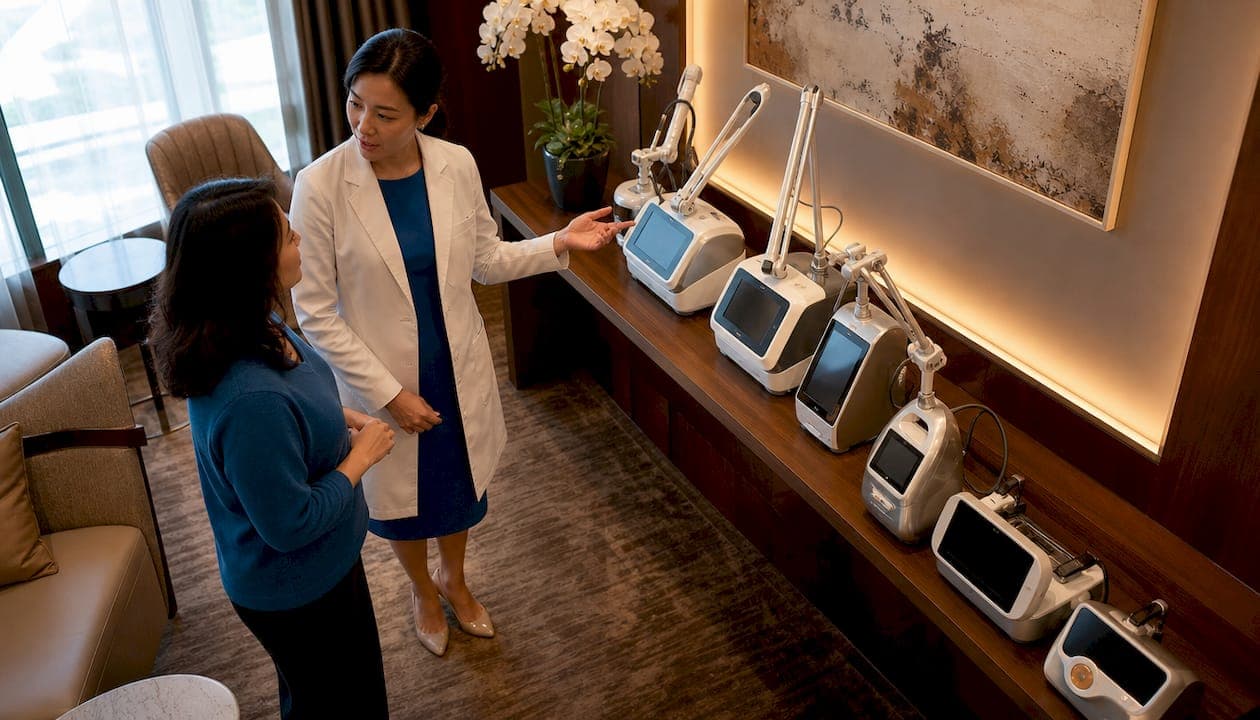
Laser skin rejuvenation is the use of targeted laser light to remove damaged skin layers and stimulate collagen production, resulting in smoother, firmer, and more even-toned skin. Clinically known as laser skin resurfacing, this treatment works through two primary modalities: ablative lasers, which vaporize the outer skin layer, and non-ablative lasers, which heat the deeper dermis while leaving the surface intact. A third category, fractional lasers, treats microscopic columns of skin to accelerate healing. Understanding how each type works, what recovery looks like, and what results are realistic gives you the foundation to make a confident, informed decision.
What are the types of laser skin rejuvenation and how do they differ?
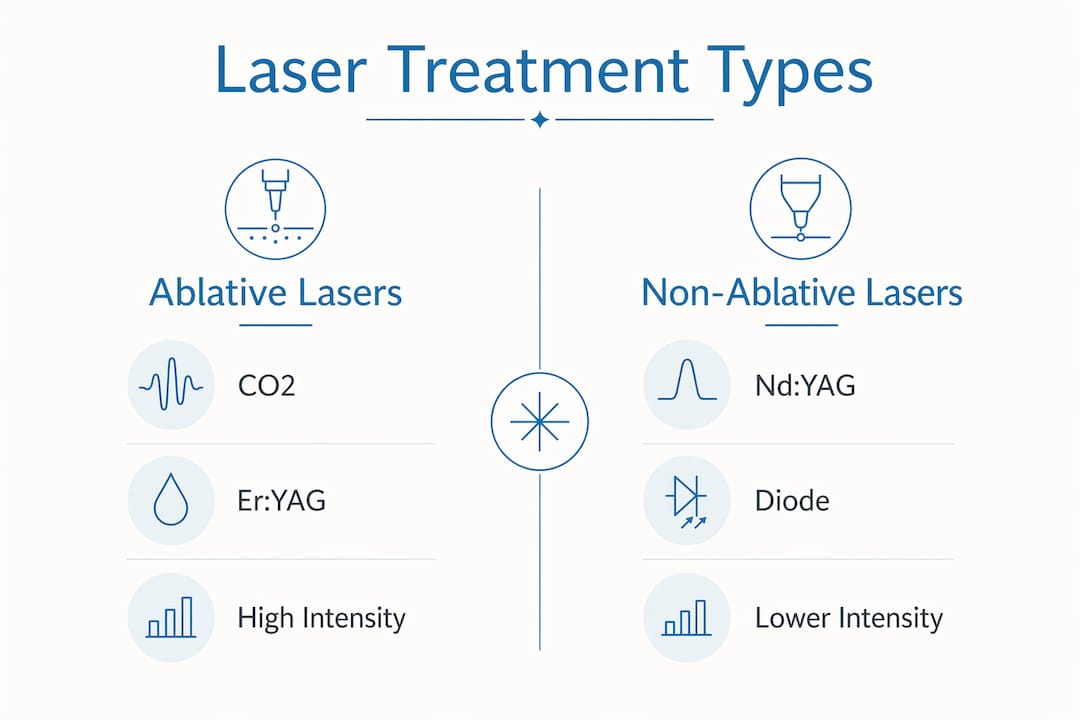
Laser skin rejuvenation is divided into ablative and non-ablative lasers, with fractional variants designed to reduce recovery time. Each category targets skin differently, and choosing the right one depends on your skin concern, tolerance for downtime, and lifestyle.
Ablative lasers
Ablative lasers, including CO₂ and Er:YAG devices, vaporize the outermost skin layer entirely. This approach produces the most dramatic results for deep wrinkles, significant sun damage, and acne scars. The trade-off is recovery: ablative treatments require 7–14 days of home recovery, during which skin is red, raw, and peeling.
Non-ablative lasers
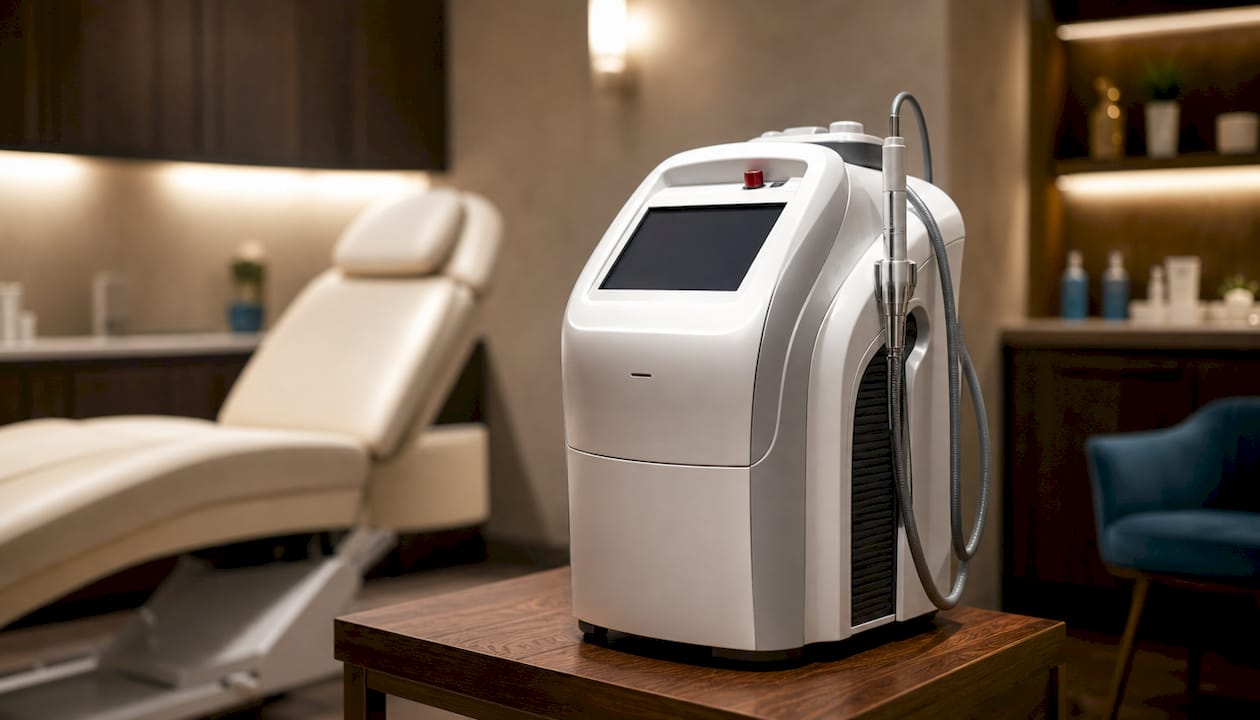
Non-ablative lasers, such as Nd:YAG and diode devices, heat the dermis without removing the surface. The skin stays intact, which means recovery is far shorter: non-ablative recovery runs 1–3 days of mild redness. The limitation is that results build gradually. Non-ablative treatments typically require 3–8 sessions to match the outcome of a single ablative session.
Fractional lasers
Fractional lasers treat microscopic skin zones while leaving surrounding tissue untouched, which speeds healing and allows providers to customize treatment density. Patients typically experience mild redness, and full benefits develop over several weeks as collagen remodeling progresses.
| Laser type | Common devices | Typical concerns treated | Recovery time |
|---|---|---|---|
| Ablative | CO₂, Er:YAG | Deep wrinkles, scars, sun damage | 7–14 days |
| Non-ablative | Nd:YAG, diode | Fine lines, mild pigmentation, tone | 1–3 days |
| Fractional ablative | Fractionated CO₂ | Moderate wrinkles, texture, scars | 5–10 days |
| Fractional non-ablative | Fractionated 1550nm | Mild to moderate aging, pigment | 2–5 days |
Pro Tip: Match the laser type to your actual lifestyle, not just your skin concern. If you cannot take a week off work, a non-ablative or fractional non-ablative approach gives you meaningful improvement with far less social downtime.
How does laser skin rejuvenation work biologically?
The scientific principle behind all laser skin treatments is selective photothermolysis, which means using a specific wavelength to heat a target chromophore in the skin without damaging surrounding tissue. The wavelength is chosen based on whether the target is water, melanin, or hemoglobin, and the pulse duration is kept shorter than the tissue's thermal relaxation time. This precision is what separates medical laser treatments from broad-spectrum light devices.
When the laser energy reaches the skin, two things happen simultaneously. Ablative devices vaporize the damaged outer layer, removing it entirely. Non-ablative and fractional devices heat the dermis, triggering fibroblasts to produce new collagen. That collagen remodeling is what drives the long-term improvements in skin tone, texture, and elasticity that patients notice over weeks and months.
Different wavelengths serve different purposes:
- 1064nm Nd:YAG: Targets hemoglobin and deeper melanin; safer for darker skin tones
- 10,600nm CO₂: Strongly absorbed by water; ablates tissue effectively for resurfacing
- 2940nm Er:YAG: Absorbed by water with less thermal spread; gentler ablation with faster healing
- 1550nm erbium fiber: Non-ablative fractional; stimulates collagen without surface removal
Pro Tip: Ask your provider which chromophore a device targets before your appointment. That single question tells you whether the treatment is designed for pigment, vascular issues, or structural collagen remodeling, and whether it suits your specific concern.
What can patients expect during sessions and recovery?
The process starts with a consultation lasting 30–120 minutes, during which a provider assesses your Fitzpatrick skin type, reviews your medical history, and identifies your aesthetic goals. Skin type classification is not a formality. It directly determines which wavelength and energy settings are safe and effective for your skin. Providers also review medications, recent sun exposure, and any history of cold sores, since laser treatments can trigger outbreaks in susceptible patients.
During the treatment session itself, anesthesia choice depends on laser intensity. Topical numbing cream is standard for non-ablative procedures. Ablative treatments may require local anesthesia or, in some cases, sedation. Most patients describe the sensation as a series of snapping or stinging pulses, followed by warmth.
Immediately after treatment, expect the following:
- Redness and swelling: Present after all laser types; more pronounced with ablative procedures
- Sandpaper texture: A characteristic feeling after fractional treatments that signals micro-column exfoliation is underway
- Peeling: Common with ablative lasers during the first week of recovery
- Tightness: Skin may feel tight as it heals and new collagen begins forming
| Session type | Anesthesia needed | Downtime | Key care steps |
|---|---|---|---|
| Non-ablative | Topical cream | 1–3 days | Gentle cleanser, SPF daily |
| Fractional non-ablative | Topical cream | 2–5 days | Moisturize, avoid sun, no picking |
| Fractional ablative | Topical or local | 5–10 days | Wound care, strict SPF, no makeup |
| Full ablative | Local or sedation | 7–14 days | Medical-grade wound care, follow-up visits |
Proper aftercare includes gentle cleansing, consistent moisturization, and strict sun protection. Picking at peeling skin is the single most common cause of post-treatment scarring and pigment changes. Resist the urge.
What results and benefits does laser skin rejuvenation offer?
Laser skin resurfacing delivers measurable improvements across several skin concerns. The benefits most patients report include:
- Wrinkle reduction: Both fine lines and deeper creases respond, with ablative treatments producing faster and more dramatic smoothing
- Texture improvement: Rough, uneven skin becomes noticeably softer as the outer damaged layer is removed or remodeled
- Pigmentation correction: Sun spots, melasma, and post-inflammatory marks fade as melanin-targeting wavelengths break up pigment deposits
- Scar smoothing: Acne scars and surgical scars flatten and soften as collagen fills in depressed areas
- Skin tightening: Collagen contraction during healing produces a firming effect, particularly around the jawline and under the eyes
The speed and magnitude of results vary by laser type. Ablative treatments produce visible change within two weeks of recovery. Non-ablative results build over three to six months as collagen matures. Results from laser rejuvenation typically last 3–5 years with proper maintenance, including consistent sunscreen use and follow-up treatments every 6–12 months.
One of the most persistent misconceptions about laser skin therapy is that a single session resolves all concerns permanently. Clinical experience shows that multi-session treatment plans produce more durable and natural-looking results than any single aggressive treatment. Cumulative collagen stimulation across multiple sessions builds a stronger structural foundation in the skin.
What safety considerations and aftercare practices should you know?
Improper energy settings risk burns or pigment changes, particularly in patients with darker skin tones. This is not a minor caveat. Fitzpatrick skin types IV through VI carry a higher risk of post-inflammatory hyperpigmentation because melanin in the skin competes with the laser's target chromophore. Using appropriate wavelengths such as 1064nm Nd:YAG combined with active cooling techniques significantly reduces this risk.
Common side effects across all laser types include:
- Redness and swelling, resolving within days to weeks depending on treatment intensity
- Temporary darkening of pigmented spots before they fade
- Peeling and crusting with ablative procedures
- Rare risk of scarring if aftercare instructions are not followed
- Reactivation of herpes simplex virus in susceptible patients, which providers typically prevent with antiviral medication
Strict sun protection reduces the risk of post-inflammatory hyperpigmentation, especially after fractional treatments. SPF 30 or higher applied daily is non-negotiable during the healing period and for months afterward. You can explore complementary skin care and facial treatments that support recovery and maintain results between laser sessions.
Seek medical advice immediately if you notice spreading redness, pus, fever, or worsening pain after treatment. These signs indicate infection, which requires prompt treatment.
Pro Tip: Provider skill matters more than device brand. A well-calibrated treatment from an experienced clinician on a standard device outperforms an aggressive setting from an undertrained operator on the most advanced machine available.
Key Takeaways
Laser skin rejuvenation works best when the laser type, wavelength, and treatment plan are matched to your specific skin type, concern, and recovery capacity.
| Point | Details |
|---|---|
| Two core modalities | Ablative lasers resurface aggressively; non-ablative lasers build collagen gradually with less downtime. |
| Fractional technology | Fractional lasers treat microscopic zones, speeding healing while still stimulating collagen remodeling. |
| Results last 3–5 years | Consistent sun protection and maintenance sessions every 6–12 months are required to sustain outcomes. |
| Provider skill is critical | Incorrect energy settings cause burns or pigment changes, especially in darker skin tones. |
| Multi-session plans win | Single sessions rarely resolve all concerns; cumulative treatments produce more durable, natural results. |
What I've learned from watching patients choose laser treatments
The biggest gap between patient expectation and clinical reality is downtime. People consistently underestimate how much recovery ablative treatments require, and they overestimate how fast non-ablative results appear. I've seen patients book an ablative CO₂ treatment two weeks before a major event, which is not enough buffer. I've also seen patients abandon a non-ablative series after two sessions because they expected faster change. Neither outcome is the laser's fault.
The second pattern I notice is that patients focus almost entirely on the device and almost not at all on the provider. The question "Do you use CO₂ or Er:YAG?" matters far less than "How many treatments has this clinician performed on my skin type?" Higher laser power is not necessarily better. Matching wavelength and heat profile to the patient's skin type drives outcomes, not raw energy output.
Post-treatment discipline is where most long-term results are won or lost. Patients who apply SPF daily, avoid direct sun during healing, and return for maintenance sessions at the recommended intervals consistently look better at the two-year mark than those who had more aggressive initial treatments but skipped aftercare. The laser does the work. Your habits protect it.
The technology is genuinely improving. Fractional devices now offer more granular control over treatment density and depth than was possible five years ago. That means providers can calibrate more precisely for darker skin tones, reduce complication risk, and still deliver meaningful collagen stimulation. If you were told years ago that laser treatment wasn't suitable for your skin tone, that assessment may no longer apply. A current consultation with a qualified provider is worth having.
— Sharon
Professional laser skin rejuvenation at Elitelaserhair
Elitelaserhair at Elite Laser Center in Stony Brook, NY offers medically supervised laser and skin rejuvenation treatments tailored to individual skin types and goals. Every treatment plan starts with a thorough consultation to assess your Fitzpatrick skin type, discuss realistic outcomes, and select the right modality for your lifestyle.
Whether you want a non-surgical skin firming option with minimal downtime or a more intensive resurfacing approach, the center's experienced team guides you through every step. Elitelaserhair uses FDA-approved technology and has been recognized as the top CoolSculpting facility in New York, reflecting its commitment to clinical standards across all treatments. Schedule a consultation at Elite Laser Center to get a personalized assessment and find out which laser approach fits your skin and your schedule.
FAQ
What is laser skin rejuvenation?
Laser skin rejuvenation is a medical procedure that uses targeted laser light to remove damaged skin layers and stimulate collagen production, improving texture, tone, and signs of aging.
How long do laser skin rejuvenation results last?
Results typically last 3–5 years with proper aftercare, including daily sunscreen use and maintenance treatments every 6–12 months.
How many sessions does laser skin rejuvenation require?
Non-ablative treatments generally require 3–8 sessions to achieve results comparable to a single ablative treatment, while ablative and fractional ablative procedures may produce significant improvement in one to two sessions.
Is laser skin rejuvenation safe for darker skin tones?
Yes, when the correct wavelength is selected. The 1064nm Nd:YAG laser combined with active cooling is the standard approach for Fitzpatrick skin types IV through VI, significantly reducing the risk of pigment changes.
What is the recovery time after laser skin resurfacing?
Recovery ranges from 1–3 days for non-ablative treatments to 7–14 days for full ablative procedures, depending on laser type and treatment intensity.