
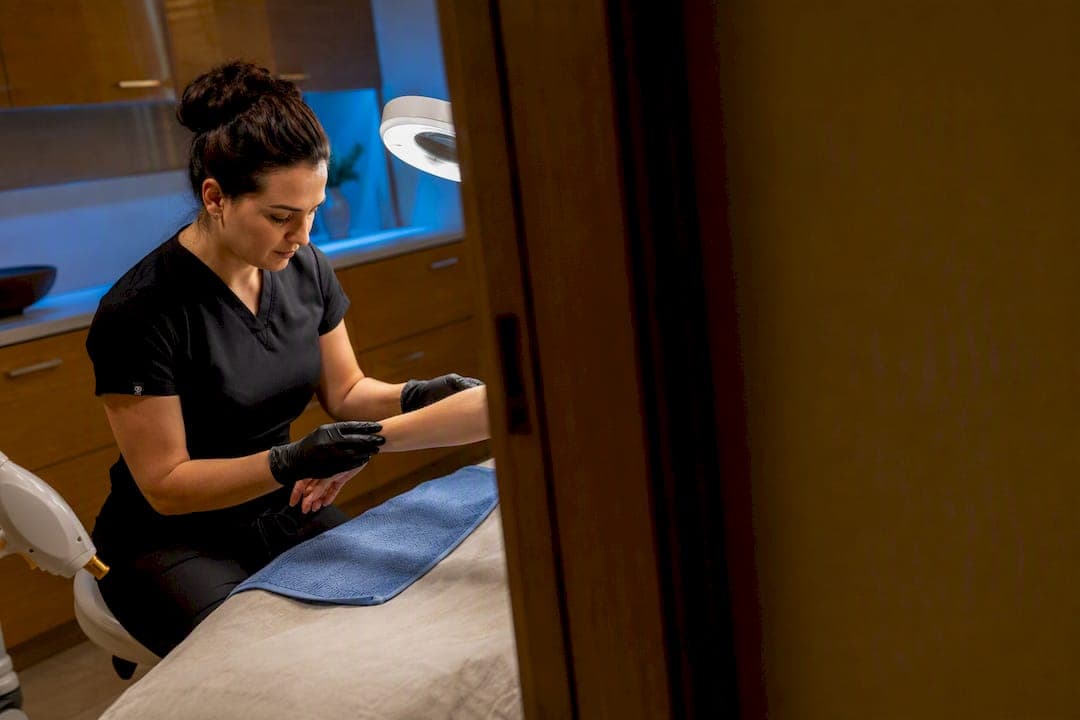
Yes, but only with real caveats: a fresh tan from sun, tanning beds, or self-tanner raises your risk of burns, dark or light patches, and weaker results, so most clinics will patch-test first or push your session back until your skin settles. If you've been tanning, tell your provider before you book. Waiting until your skin settles often beats risking a burn.
TL;DR:
- Tanning methods like sun exposure, tanning beds, or self-tanners increase melanin in the skin, raising the risk of burns, hyperpigmentation, and incomplete follicle targeting during laser hair removal.
- Waiting at least two weeks after UV exposure or self-tanning is essential before treatment, with longer delays needed for darker skin or recent burns.
- Patch testing and a thorough consultation are crucial to ensure skin safety, especially for tanned or sensitive skin types, with device choice tailored to skin tone.
- Post-treatment, avoiding sun and tanning beds for about two weeks and using broad-spectrum sunscreen can prevent discoloration and promote proper healing.
- Planning around your tanning schedule and confirming your provider’s policies can avoid delays, burns, or uneven results and improve overall treatment success.
Table of Contents
- What Laser Hair Removal Tan Risk Actually Means
- Sun, Tanning Beds, or Self-Tanner: Does the Source Matter?
- How Long Should You Wait Before and After a Session?
- How Do Providers Check If Your Skin Is Safe to Treat?
- What Should You Do Before and After Your Appointment?
- What Should You Ask Before Booking a Session?
- What Elite Laser Center Does Differently for Tanned or Sun-Exposed Skin
- A Clinician's Honest Take on Tanning and Laser Timing
- Ready to Plan Your Laser Sessions Around Your Skin?
- Where This Guidance Comes From
- Sources
- FAQ
What Laser Hair Removal Tan Risk Actually Means
Laser hair removal targets melanin, the pigment in your hair follicle, using heat to disable the follicle without damaging surrounding skin. A tan adds melanin to your skin itself, not just the hair, so the laser has a harder time telling the two apart.
That confusion is where the trouble starts. With more melanin in the skin, the laser is more likely to dump heat into the skin rather than the follicle. The clinical fallout includes burns, post-inflammatory hyperpigmentation (dark patches that can linger for months), hypopigmentation (light patches, sometimes permanent), and follicles that don't get fully targeted, meaning regrowth shows up faster than it should.
Here's the part people miss: your skin doesn't have to look obviously tan for this to matter. Recent UV exposure can leave skin in a mildly inflamed, sensitized state even when the color change is subtle. A practitioner scanning for an obvious bronze glow can miss that hidden vulnerability, which is exactly why a real consultation beats a quick visual check every time.
Sun, Tanning Beds, or Self-Tanner: Does the Source Matter?
It does, and not equally. Each tanning method changes your skin's risk profile in a different way, which is why a blanket "wait two weeks" rule doesn't tell the whole story.
- Natural suntan or sunburn: Raises melanin and often brings inflammation with it, especially with sunburn. Clinics commonly ask for two or more weeks of healed, unburned skin before treating.
- Tanning beds: Deliver concentrated UV in a short session, which tends to trigger a stronger melanin response than casual sun exposure. Many providers ask for a longer buffer here than for a mild beach tan.
- Spray tans and self-tanner: Sit on the surface of the skin as pigment, and that pigment absorbs laser energy the same way a real tan does. Clinics routinely refuse same-day treatment until every trace of bronzer is gone.
If you've used a self-tanner, a gentle exfoliating scrub and a few days of regular cleansing usually clears it. Skipping that step is one of the most common reasons appointments get rescheduled on the spot.
How Long Should You Wait Before and After a Session?
Timing is where most of the confusion (and most of the wasted appointments) happens. The safe windows aren't arbitrary. They're built around how long it takes melanin and inflammation from UV exposure to settle back down.
- Before treatment: Plan on avoiding tanning for at least two weeks before your appointment, and closer to three or four weeks if you have darker skin, a fresh sunburn, or used a tanning bed.
- At your appointment: If you show up tanned or sunburned, expect your provider to either delay treatment or run a patch test before committing to a full session.
- After treatment: Keep skin out of direct sun and away from tanning beds for a period following treatment, often about two weeks, and maintain sun protection throughout your treatment course, not just the first session.
- Across the full course: A missed or delayed session because of tanning doesn't just push back one appointment. It can stretch your entire treatment cadence, since follicles need to be caught at the right growth phase for the laser to work.
That last point matters more than people realize. A laser hair removal course is a series, not a one-off, and one poorly timed tan can knock the whole schedule off track.
How Do Providers Check If Your Skin Is Safe to Treat?
A real consultation and patch test are the two things separating a careful clinic from a rushed one. During a patch test, a small area gets treated at your intended settings and then gets checked over the following day or two for burns or early signs of pigment change. It's a quick step that catches problems before they spread across a whole treatment area.
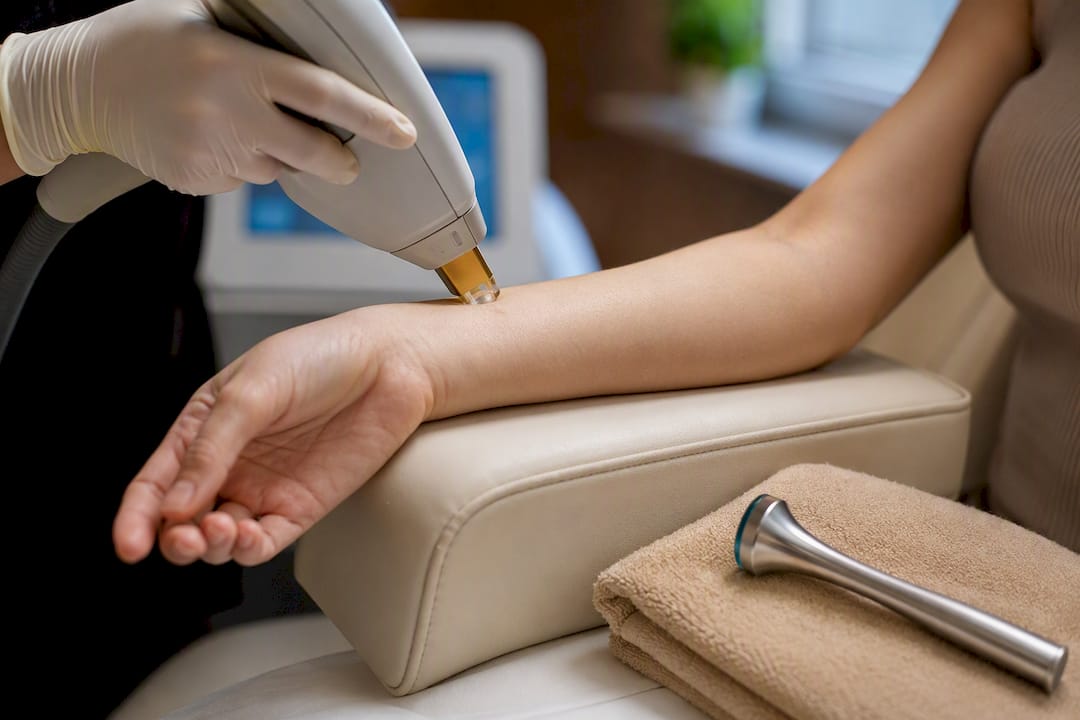
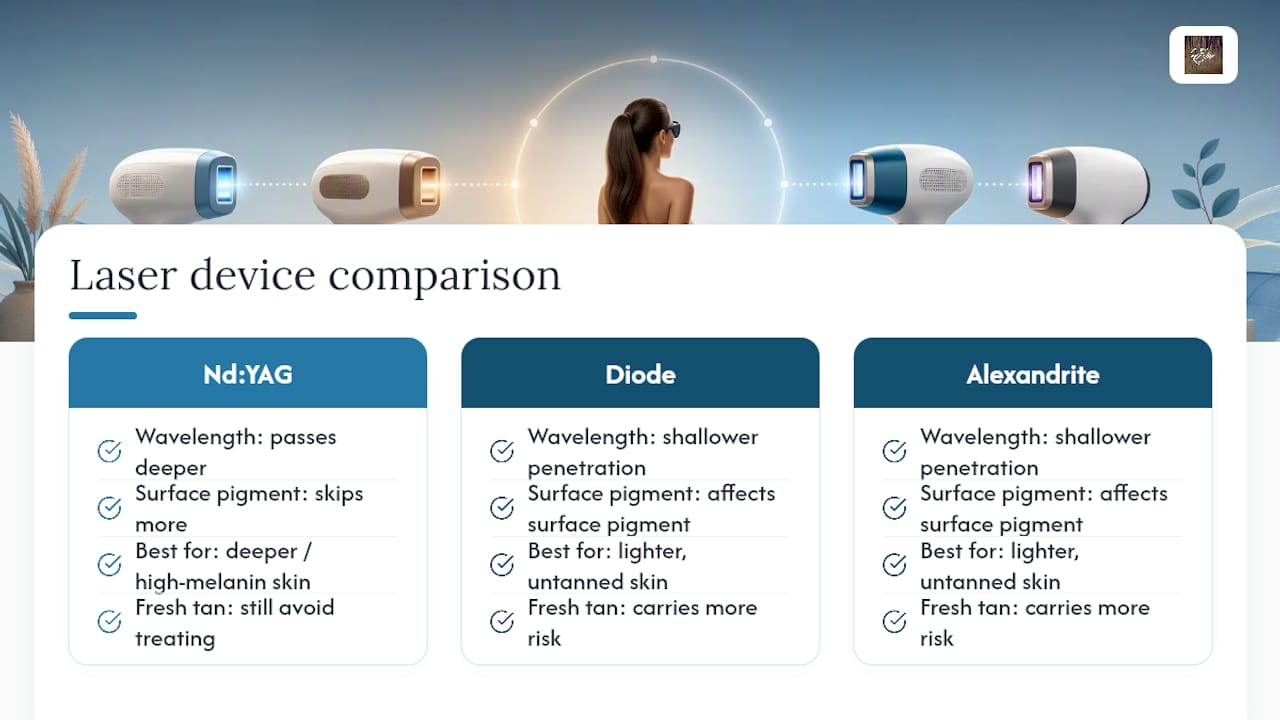
Device choice matters too. Nd:YAG lasers tend to be a safer option for deeper skin tones and higher-melanin skin because their wavelength passes deeper and skips more of the surface pigment. Diode and Alexandrite lasers work well on lighter, untanned skin but carry more risk when skin is freshly tanned, regardless of your baseline tone. Even with the right device, an experienced practitioner won't treat skin with fresh UV exposure just because the laser is technically capable of it. Judgment matters as much as the equipment.
What Should You Do Before and After Your Appointment?
Preparation on your end makes a bigger difference than most people expect, and it's mostly about avoiding the mistakes that cause rescheduling.
- Stop UV tanning (sun and beds) sufficiently ahead of treatment, generally around two weeks, and skip waxing or plucking, since the laser needs the hair root intact.
- Shave the treatment area exactly as your provider instructs, usually the night before or morning of your session.
- Exfoliate a few days ahead if you've used self-tanner, so no residual pigment is left to interfere with the laser.
- After treatment, apply a broad-spectrum physical sunscreen (look for zinc oxide or titanium dioxide) and reapply every two hours if you're outdoors.
- Avoid tanning beds and direct sun for a period post-treatment, often around two weeks, and keep skincare gentle while the area heals.
Pro Tip: If you're prone to dark spots, a tinted mineral sunscreen adds a layer of visible-light protection that plain SPF doesn't cover, which can meaningfully lower your risk of post-treatment discoloration.
What Should You Ask Before Booking a Session?
A few direct questions at consultation tell you a lot about how seriously a clinic takes safety.
- Ask how they typically treat your specific skin tone and what device or wavelength they'd use for it.
- Ask about their patch-test policy and how long they'd ask you to wait if you show up tanned.
- Ask what their standard recommendation is after sun exposure, sunburn, or a tanning bed session.
Treat a few responses as hard red flags. If a provider offers to treat you immediately despite a visible sunburn, skips the patch test entirely, or has non-medical staff running the laser unsupervised, walk away. Those shortcuts are exactly how burns and permanent pigment changes happen.
What Elite Laser Center Does Differently for Tanned or Sun-Exposed Skin
Every treatment at Elite Laser Center Medical Spa runs under medical supervision, using FDA-approved laser technology matched to your skin tone and history, not a one-size-fits-all setting. A consultation and patch test come before any full session, especially if you mention recent sun exposure, tanning bed use, or self-tanner.
Some laser hair removal packages come with a multi-year guarantee, worth confirming in detail at your consultation. Bring up your tanning history honestly at that visit, including anything from the past month. It's the single fastest way for your provider to build a safe, effective plan around your actual skin, not a guess.
A Clinician's Honest Take on Tanning and Laser Timing
Most people don't ask "can I tan during my laser course," they ask "can I still go on vacation." Those are different questions, and treating them the same is where scheduling goes wrong. If you've got a beach trip planned, book it around your treatment calendar, not the other way around. Push a session by a week rather than showing up tanned and hoping for the best.
The harder trade-off is cosmetic: wanting a summer glow while running a laser course that depends on pale, settled skin. I'd rather see someone skip the tan for a few months and get clean results than rush a session and end up with a burn or a dark patch that outlasts the unwanted hair ever did. Protecting your skin across the whole course, not just the first appointment, is what actually determines whether you like your results a year from now.
— Sharon
Ready to Plan Your Laser Sessions Around Your Skin?
If you've got a tan, a vacation on the calendar, or just questions about timing, the smartest move is a real conversation with someone who treats skin like yours regularly, not a guess based on a blog post. Some medical spas build every laser hair removal plan around a consultation and patch test first, so you're never guessing whether your skin is ready.

Before booking, read through Laser Hair What to Expect for a full walkthrough of the consultation, patch-test process, and what a typical session looks like. If you've got a tan now or one coming up, reach out and ask about device options and timing. A quick conversation about your sun exposure history can save you a rescheduled appointment and a lot of frustration later.
Where This Guidance Comes From
This guidance draws on patient-safety information from the Mayo Clinic, a peer-reviewed review on photoprotection after laser procedures, and clinic-level timing guidance from sk:n clinics. Together they cover the mechanism, the aftercare science, and the practical scheduling clinics use every day.
This article is general information, not a substitute for advice from a qualified doctor. Consult a qualified healthcare professional about your own circumstances before acting on anything here.
Sources
- Laser hair removal - Mayo Clinic
- Review: sunscreen and photoprotection after light/laser procedures (Life journal review)
- Sun safety and laser treatments - Olansky Dermatology
- Everything you wanted to know about tanning and laser hair removal - Hinsdale Vein and Laser
FAQ
What happens if I get laser hair removal with a tan?
You face a higher risk of burns, dark or light patches, and weaker follicle targeting, since the laser struggles to distinguish tanned skin from the hair it's meant to treat.
Can you wear a tan after laser hair removal?
Avoid tanning beds and direct sun for at least two weeks after treatment, and keep using broad-spectrum sunscreen throughout your whole treatment course to protect healing skin.
How long after laser should I wait to tan?
Most clinics recommend waiting a safe healing period after your last session before UV exposure or tanning bed use, often about two weeks or longer depending on circumstances.
Is laser hair removal safe for tan skin?
It can be, with the right precautions: a patch test, an appropriate device like an Nd:YAG laser for higher-melanin skin, and a provider willing to delay treatment if your tan is fresh or your skin looks irritated.
Recommended
- Laser Hair Removal in Summer: Safety, Timing & Tips
- Laser Hair Removal Sessions: How Many and How Often
- Laser Hair What to Expect
- Laser Hair Removal Guarantee: What It Really Covers
This article was produced with AI assistance and reviewed for accuracy. It is provided for general information, and it is not professional advice.