
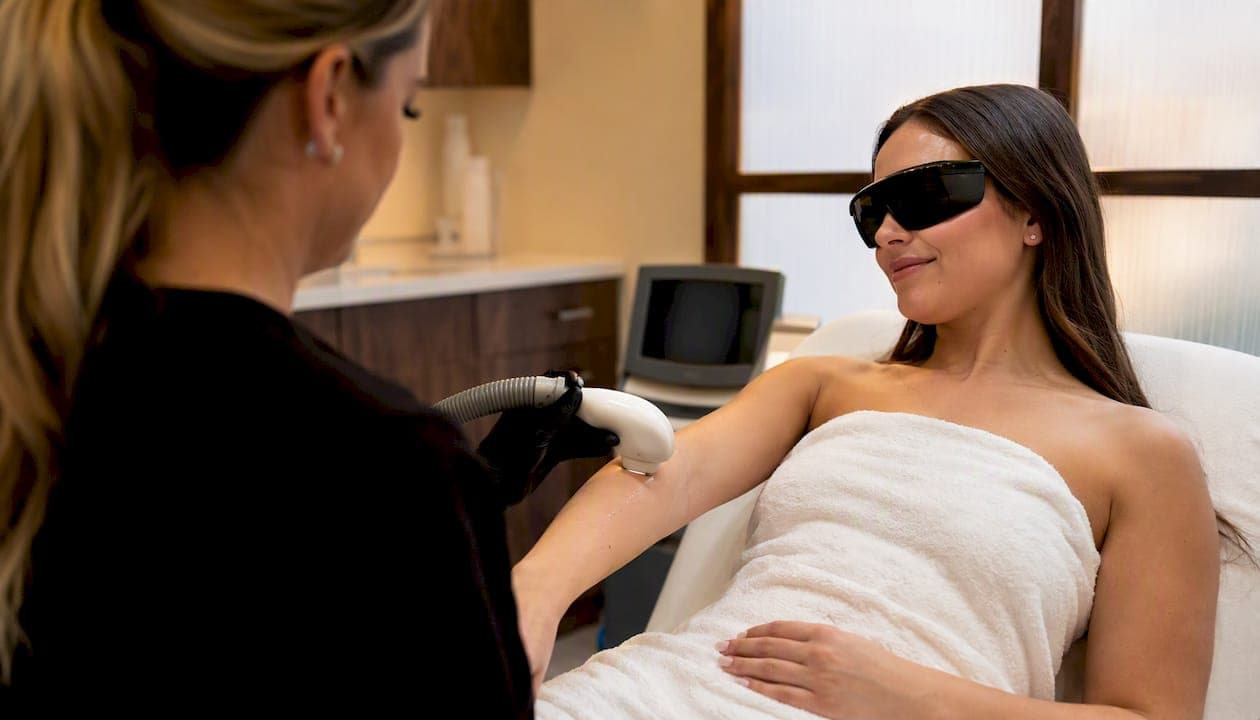
Yes, you can start laser hair removal in summer. The season itself is not the problem. What matters is whether your skin is tanned, burned, or recently exposed to UV, because that is what raises the risk of burns, blistering, and post-inflammatory hyperpigmentation (PIH). Follow the rules below and summer becomes a perfectly workable time to start.
The non-negotiables:
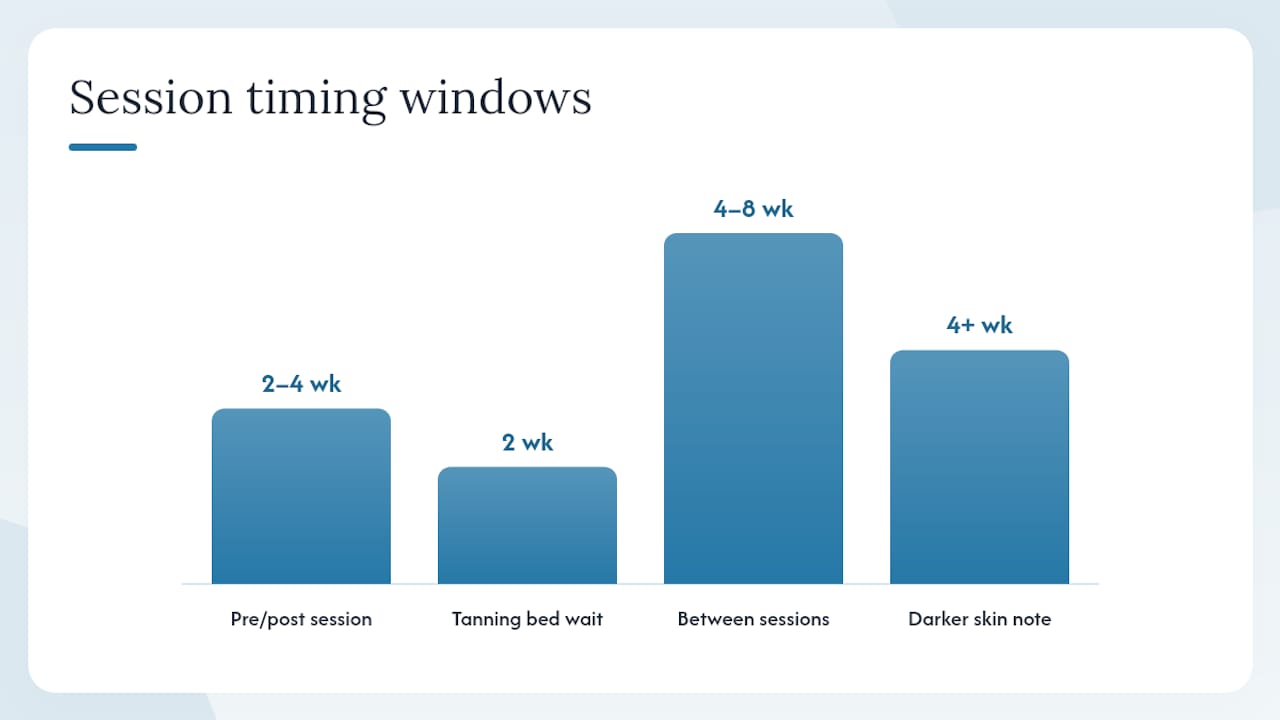
- Avoid tanning (sunbeds, sunbathing, self-tanner) for 2–4 weeks before and after every session, per American Academy of Dermatology guidance.
- Apply broad-spectrum SPF 30+ daily to treated areas, as Mayo Clinic aftercare guidance recommends.
- Tell your provider about any recent sun exposure, spray tan, or sunburn before every appointment.
- Because lasers only target follicles in the active growth phase, a full series typically requires 6–8 sessions spaced weeks apart. Starting earlier in summer gets you closer to finished results before next season.
Elitelaserhair backs its laser hair removal packages with a three-year guarantee and performs every treatment under medical supervision, which matters when you are navigating summer skin conditions.
Table of Contents
- Summer laser hair removal myths you should stop believing
- Why sun exposure changes what the laser does to your skin
- How to time your sessions around summer sun exposure
- Daily summer skin care habits that protect treated areas
- Which laser systems are safer for summer-treated skin?
- What to expect on treatment day and how to recover in summer
- How to choose a provider who handles summer treatments safely
- What Elitelaserhair does differently for summer treatments
- Key Takeaways
- The case for starting sooner than you think
- Elitelaserhair: safe summer laser hair removal in Suffolk County
- Useful sources
Summer laser hair removal myths you should stop believing
The most damaging myth is the blanket one: "You can't get laser in summer." Clinicians who say that are really warning against treating recently tanned or burned skin. The season is a proxy, not the actual contraindication.
Myth 1: Any tan is fine as long as you wear SPF. Wrong. Sunscreen protects your skin going forward; it does not reverse the elevated melanin already in your epidermis from last weekend's beach trip. That surface pigment competes with the hair follicle for laser energy, reducing contrast and increasing the chance of an epidermal burn. A tan that looks mild to you can still be clinically significant.
Myth 2: You must avoid the sun completely for the entire treatment course. The actual requirement is a 2–4 week avoidance window around each individual session, not a six-month indoor sentence. With good scheduling, most people can treat, recover, protect, and still enjoy summer activities between appointments.
Myth 3: Spray tan is safe because it's not real UV exposure. Self-tanner deposits dihydroxyacetone (DHA) on the skin's surface, creating a pigment layer that behaves exactly like a natural tan under a laser. It must be completely gone for the full 2–4 week pre-treatment window. Residue you can barely see can still interfere.
Pro Tip: Planning a beach vacation? Schedule your session at least 2–4 weeks before you leave, then skip the session that falls during or right after your trip. Rebook once your skin returns to its natural baseline. A short delay beats a complication.
Why sun exposure changes what the laser does to your skin
Laser hair removal works by targeting melanin in the hair follicle. The laser's energy converts to heat inside the follicle, damaging it enough to stop regrowth. When your skin is tanned, the epidermis contains more melanin than usual, and the laser cannot cleanly distinguish between follicle pigment and surface pigment. The result: energy meant for the follicle gets absorbed by the skin instead.
That misdirected energy causes real problems. Burns and blistering are the acute risks. Longer-term, the heat triggers an inflammatory response that can produce PIH, dark patches that take months to fade, or in some cases hypopigmentation, permanent light spots where melanin was destroyed. Reduced treatment effectiveness is the third consequence: less energy reaches the follicle, so the session is less likely to produce lasting hair reduction.
"Elevated surface melanin from sun, tanning beds, or self-tanner competes with hair follicle pigment for laser energy, reducing efficacy and increasing burn risk." — American Academy of Dermatology
One detail most guides skip: you do not need a visible tan to be at elevated risk. Repeated low-level UV exposure, the kind you accumulate just commuting or running errands, causes subclinical dermal inflammation that raises skin sensitivity even when you look untanned. If you have been spending significant time outdoors without consistent sun protection, tell your provider even if your skin looks fine.
How to time your sessions around summer sun exposure
The 2–4 week rule applies in both directions: before each session and after each session. That window is not arbitrary. It reflects how long the epidermis takes to clear elevated melanin and return to its natural baseline after UV exposure.
| Situation | Recommended action |
|---|---|
| No recent sun exposure, natural skin tone | Proceed with scheduled session |
| Mild, fading tan (2–3 weeks ago) | Assess with provider; patch test may clear you |
| Fresh tan or recent sunburn | Reschedule; wait until skin returns to baseline |
| Active spray tan or self-tanner residue | Remove completely; wait full 2–4 weeks |
| Tanning bed use in past 2 weeks | Reschedule; tanning beds produce concentrated UV |
Skin tone also affects the window. Lighter Fitzpatrick types (I–III) typically clear faster; deeper tones (IV–VI) carry more baseline melanin and may need the full four weeks or longer. A visible, active tan is always a reason to wait, regardless of how many calendar days have passed. Practitioners prioritize what they see at the consultation over a fixed number.
Scheduling around travel:
- Book your session at least 2–4 weeks before any trip to a sunny destination.
- Skip the session that falls within 2 weeks of your return if you were in the sun.
- Resume once your skin has returned to its natural tone, confirmed at a brief provider check.
- Space sessions 4–8 weeks apart to align with the hair growth cycle and allow full recovery between appointments.
Pro Tip: Take a photo of your untreated skin in natural light before summer starts. Use it as your baseline reference when deciding whether your skin has returned to normal after sun exposure. It removes the guesswork.
Daily summer skin care habits that protect treated areas
Sunscreen is not optional after a laser session. It is the single most effective thing you can do to prevent PIH and protect the result. The CDC recommends broad-spectrum sunscreen as a daily habit for sun-exposed skin, and on freshly treated areas, that recommendation becomes non-negotiable.
Sunscreen specifics:
- Use broad-spectrum SPF 30 at minimum on treated areas; SPF 50 is better for high-UV summer months.
- Mineral formulas (zinc oxide or titanium dioxide) sit on the skin's surface rather than absorbing into it, making them gentler on freshly treated, sensitized skin.
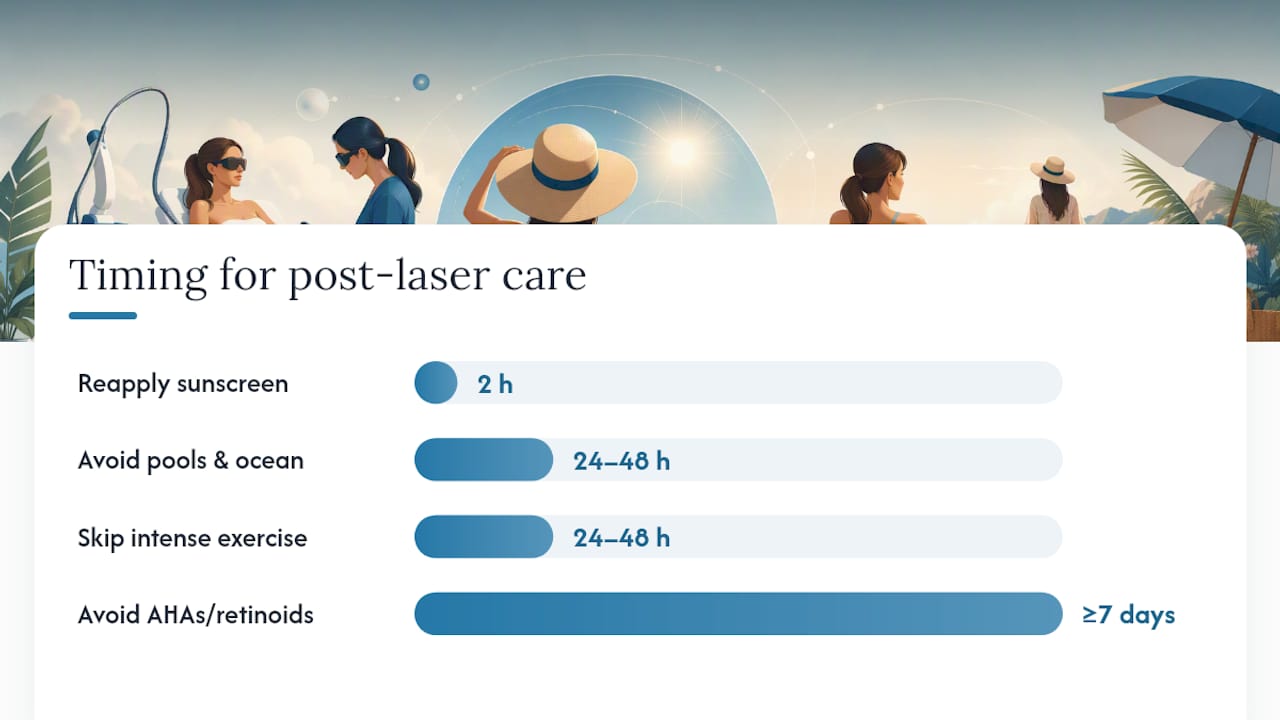
- Reapply every two hours when outdoors, and immediately after swimming or sweating.
Physical protection:
- Wear UPF-rated clothing or tightly woven fabric over treated areas when outdoors.
- A wide-brim hat covers the face, neck, and upper chest if those areas were treated.
- Schedule outdoor activities before 10 AM or after 4 PM when UV index is lower. The EPA's monthly UV index data shows peak UV intensity in the continental US typically runs June through August, with midday readings that can exceed index 10 in southern states.
Activity changes after a session:
- Avoid pools, hot tubs, and ocean water for 24–48 hours. Chlorine and salt irritate sensitized skin.
- Skip intense exercise for 24–48 hours. Sweat and body heat prolong inflammation.
- Moisturize with a fragrance-free, gentle formula. Avoid AHAs, retinoids, and physical scrubs for at least one week post-treatment.
Pro Tip: Keep a travel-size mineral SPF 50 in your bag from the day you start treatment. Applying it takes 30 seconds and prevents the kind of pigment complications that can set your results back by months.
Which laser systems are safer for summer-treated skin?
Not all laser platforms carry the same risk on sun-exposed or darker skin. The wavelength determines how deep the energy penetrates and how much of it gets absorbed by surface melanin before reaching the follicle.
| Wavelength | Type | Safety on tanned/darker skin | Common use case |
|---|---|---|---|
| 1064 nm | Nd:YAG | Highest among common options | Darker skin tones, tanned skin |
| — | Diode | Moderate; versatile | Most skin types, large areas |
| — | Alexandrite | Lower on tanned/darker skin | Lighter skin tones, fine hair |
Research supports the Nd:YAG's advantage for tanned or darker skin: its 1064 nm wavelength penetrates deeper into the dermis and is less absorbed by epidermal melanin, so more energy reaches the follicle with less risk of surface heating. For summer treatments on any skin type, it is the most conservative choice.
Cooling technology matters too. Epidermal heating is the primary mechanism behind burns and PIH. Cooling systems reduce that risk by protecting the skin surface during energy delivery:
- Contact cooling (a chilled sapphire tip pressed against the skin) provides continuous protection throughout the pulse.
- Cryogen spray cooling delivers a brief cold burst immediately before each pulse.
- Air cooling blows chilled air over the treatment area and is often used alongside other methods.
Pro Tip: At your consultation, ask specifically: "What cooling method does your device use, and how does it protect the epidermis during summer treatments?" A provider who can answer that clearly is one who understands the risk they are managing.
Quick device terms your clinician may use:
- SHR (Super Hair Removal): a diode-based in-motion technique that delivers lower fluence across multiple passes, reducing peak heat.
- Fluence: the energy density delivered per pulse, measured in J/cm². Providers lower fluence for tanned skin.
- Fitzpatrick scale: a six-point skin-type classification used to set treatment parameters.
What to expect on treatment day and how to recover in summer
Before your appointment:
- Shave the treatment area 24 hours before. Do not wax, thread, or pluck; the follicle must be intact.
- Arrive with clean, product-free skin. No self-tanner, lotion, or deodorant on the area.
- Stop topical retinoids and AHAs at least one week before, or as directed by your provider.
- Disclose any sun exposure, spray tan, or sunburn since your last session, even if it seems minor.
At the clinic:
Your provider should perform a test spot on a small area before treating a full region, especially if your skin tone has changed since the last session. Settings may be adjusted downward if recent sun exposure is reported. Cooling will be applied throughout. Communicate any unusual heat or pain during the session.
Immediate aftercare:
- Apply a cool compress or aloe vera gel to calm redness and heat.
- Use a gentle, fragrance-free moisturizer for the first 48 hours.
- Avoid heat sources: steam rooms, saunas, hot showers, and direct sun for at least 24–48 hours.
- Apply SPF 30+ to any treated area that will be exposed to daylight, starting the same day.
"Avoid sun exposure after laser hair removal. If sun exposure is unavoidable, use a broad-spectrum sunscreen with an SPF of at least 30." — Mayo Clinic
Contact your provider immediately if you notice: blistering, spreading redness beyond the treated area, persistent pain after 48 hours, or rapid pigment changes (darkening or lightening of the skin).
How to choose a provider who handles summer treatments safely
The provider matters as much as the technology. A clinic with the right device but careless screening protocols can still cause complications on summer skin.
Credential checklist:
- Medical supervision on-site (physician or nurse practitioner overseeing treatments)
- Staff trained and certified in the specific device being used
- FDA-cleared equipment with documented maintenance records
- Written safety protocols including patch testing and sun-exposure screening
Clinic behaviors that signal safety:
- They ask about recent sun exposure at every appointment, not just the first one.
- They are willing to reschedule if your skin is tanned or burned, without pressure to proceed.
- They set parameters specific to your skin type and current condition, not a one-size protocol.
- They provide written aftercare instructions that address summer-specific risks.
Questions to ask at your consultation:
- Which wavelength will you use for my skin type and current condition?
- Do you perform a test spot before treating a full area?
- What is your policy if I come in with a fresh tan or sunburn?
- What cooling method does your device use?
- What SPF and aftercare products do you recommend after summer sessions?
Pro Tip: If a clinic pressures you to proceed despite a visible tan, or gives vague answers about their device's wavelength and cooling system, walk out. Those are not minor oversights. They are the exact conditions that produce burns and PIH.
Red flags:
- No patch testing offered
- No questions about recent sun exposure
- Unwillingness to discuss device specifications
- Pressure to book immediately without a skin assessment
What Elitelaserhair does differently for summer treatments
Elitelaserhair operates as a medical spa under experienced medical supervision, which means every laser hair removal treatment is evaluated and performed with clinical oversight, not by aestheticians working without a supervising provider. That distinction matters most in summer, when skin conditions change session to session.
Trust signals and clinic standards:
- FDA-cleared laser devices with cooling technology
- Individualized skin assessments at every appointment, including sun-exposure screening
- Patch testing before full-area treatment
- Conservative settings when recent sun exposure is reported
- Mineral sunscreen aftercare recommendations for sensitized summer skin
- Three-year guarantee on laser hair removal packages
- Recognized as the top CoolSculpting facility in New York, reflecting the clinic's broader commitment to clinical standards
Elitelaserhair serves clients in Suffolk County and surrounding areas. The LED light therapy and other adjunctive treatments available at the clinic can also support skin recovery between laser sessions during summer months.
Key Takeaways
Summer laser hair removal is safe when you follow strict 2–4 week sun-avoidance windows before and after each session and apply broad-spectrum SPF 30+ daily to treated areas.
| Point | Details |
|---|---|
| Sun avoidance window | Avoid tanning, sunbeds, and self-tanner for 2–4 weeks before and after every session. |
| Daily SPF is required | Apply broad-spectrum SPF 30+ to treated areas every day, reapplying every two hours outdoors. |
| Fresh tan means reschedule | A visible active tan or recent sunburn is always a reason to postpone, regardless of calendar days. |
| Nd:YAG is the safest wavelength | At 1064 nm, it penetrates deeper and is less absorbed by surface melanin, reducing burn risk on tanned skin. |
| Elitelaserhair for local care | Elitelaserhair provides medically supervised, FDA-cleared laser hair removal in Suffolk County with a three-year package guarantee. |
The case for starting sooner than you think
The conventional advice to "wait until fall" has a real cost that rarely gets stated plainly: every month you delay is a month added to the end of your treatment course. A full series of 6–8 sessions spaced 4–8 weeks apart takes the better part of a year regardless of when you start. Starting in summer, done correctly, means you are finished sooner.
What I find underappreciated is how much of the summer risk is behavioral, not seasonal. The UV index in July is not inherently incompatible with laser treatment. What is incompatible is walking into a clinic two days after a beach weekend and expecting the same results and safety margin as someone who has been diligent about sun protection. Those are two completely different clinical situations that happen to occur in the same calendar month.
The patients who do best in summer are the ones who treat sun protection as part of the treatment protocol, not an afterthought. They apply SPF before leaving the house, they wear a hat, they reschedule without drama when a vacation disrupts the timeline. That discipline is not complicated. It just requires deciding in advance that the result is worth the habit.
The other thing worth saying: a good provider should make this easier, not harder. If you leave a consultation without a clear answer about wavelength, cooling, and sun-exposure policy, that is not a minor gap in communication. It is a sign the clinic is not thinking carefully about your specific situation. Ask the questions in the section above. The answers tell you everything.
Elitelaserhair: safe summer laser hair removal in Suffolk County
Skipping summer to avoid complications is the wrong call when the real issue is finding a clinic that manages the risk properly. Elitelaserhair offers medically supervised laser hair removal with FDA-cleared devices, individualized skin assessments, and a three-year package guarantee, so you are not starting over if life gets in the way.

At a consultation, you get a full skin assessment, a patch test, and a personalized session schedule built around your summer plans. The clinic screens for recent sun exposure at every visit and adjusts settings accordingly, which is exactly the kind of clinical oversight that makes summer treatment safe rather than risky. Packages come with the three-year guarantee, and the team will work around your travel calendar rather than against it.
Book your consultation at Elitelaserhair and get a clear plan for starting this summer, on your timeline.
Useful sources
- American Academy of Dermatology — Laser hair removal FAQs
- Mayo Clinic — Laser hair removal overview and aftercare
- PubMed — Laser wavelength and skin interactions (example study reference)
- CDC — Sun safety and skin cancer prevention
- EPA — Sun safety monthly average UV index (2006–2023)
- NCBI Bookshelf — Hair removal and hair growth cycle overview