

Most laser hair removal side effects are minor and clear up within a few days. Redness, mild swelling, and a sunburn-like sensation are the most common reactions, and they typically resolve on their own within 1–3 days. Serious complications like burns, scarring, or permanent pigment changes do occur, but they are uncommon when treatment is performed correctly. A 2024 study of 16,900 patients reported an overall complication incidence of just 0.69%. Two things matter most: following your provider's pre- and post-care instructions, and choosing a qualified clinic that uses the right device for your skin type.
What to know right now:
- Minor effects (redness, swelling, mild irritation) are expected and short-lived
- Serious complications are uncommon but real, especially without proper device matching
- Seek medical attention if you notice spreading redness, open blisters, signs of infection, or vision changes after periocular treatment
Key Takeaways
| Point | Details |
|---|---|
| Overall complication rate | A 2024 study of 16,900 patients found a 0.69% overall complication incidence. |
| Most common complications | Petechia/purpura/ecchymosis (31.66%) and pigment changes (20.0%) top the complication list. |
| Highest-risk profile | Darker skin types treated with short-wavelength lasers carry the greatest burn and pigment-change risk. |
| Key preparation step | A patch test before the first full session validates settings and catches unexpected skin reactions early. |
| Elitelaserhair | Elite Laser Center offers medically supervised, FDA-approved laser hair removal in Stony Brook, NY with a three-year package guarantee. |
Table of Contents
- How laser hair removal works and why side effects happen
- Common laser hair removal side effects and how to manage them
- Less common but serious complications you should know about
- Who is at higher risk for complications?
- Pre-treatment steps that cut your risk significantly
- What to expect during a session and in the days after
- Red flags that mean you need to call your clinic or a doctor
- What a safety-focused clinic actually does
- What the evidence actually tells us about risk
- Laser hair removal at Elitelaserhair
- Sources
How laser hair removal works and why side effects happen
Laser hair removal targets melanin, the pigment in hair follicles. The laser emits concentrated light that the follicle absorbs as heat, damaging the follicle enough to slow or stop future growth. Because melanin in the surrounding skin also absorbs some of that energy, the risk of collateral skin effects is real, particularly when settings are not matched to the patient's skin tone.
Device choice shapes that risk considerably. The four main categories used in the U.S. are Alexandrite (755 nm), diode (800–810 nm), Nd:YAG (1064 nm), and IPL (intense pulsed light, a broadband device rather than a true laser). Shorter wavelengths like Alexandrite penetrate less deeply and are absorbed more aggressively by melanin, making them effective on lighter skin but riskier on darker tones. A literature review on adverse effects found that shorter-wavelength lasers are associated with higher rates of pigmentary changes, while longer wavelengths like Nd:YAG reduce that risk in patients with darker skin.
One expectation worth setting early: laser treatment is better described as long-term hair reduction than permanent removal. Many patients need maintenance touch-ups, and results vary by hair color, thickness, and hormonal factors.
Common laser hair removal side effects and how to manage them
The effects most people experience after a session are predictable and manageable. StatPearls clinical guidance identifies perifollicular edema and erythema as expected, common reactions. In plain terms, that means the skin around each treated follicle puffs slightly and turns red, similar to a mild sunburn.
Typical short-term effects include:
- Redness and warmth at the treatment site
- Mild swelling or puffiness around follicles
- Itching or a tingling sensation
- Skin that feels tender to the touch for a day or two
These effects usually resolve within 1–3 days. Managing them is straightforward: apply a cool compress for 10–15 minutes at a time, use a gentle fragrance-free cleanser, keep the area out of direct sun, and wear SPF 30 or higher if the treated area is exposed. Over-the-counter hydrocortisone cream can reduce itching if needed.
Pro Tip: Wear loose, breathable clothing to your appointment and for the first 24 hours after. Friction from tight fabric on freshly treated skin amplifies irritation and can extend redness.
Less common but serious complications you should know about
Serious adverse effects are uncommon, but they deserve clear-eyed attention. The 2024 large-cohort study of 16,900 patients found an overall complication rate of 0.69%, with the most frequent complications being petechia, purpura, or ecchymosis (31.66% of all complications) and pigment changes (20.0%).
| Complication | Notes |
|---|---|
| Petechia/purpura/ecchymosis | Most common complication type; usually resolves without treatment |
| Pigment changes (hypo- or hyperpigmentation) | Among the common complications; often transient but can persist |
| Burns and blistering | Risk rises with improper settings or recent tanning |
| Scarring | Rare; more likely when blisters are not managed properly |
| Paradoxical hypertrichosis | Rare increased hair growth; more reported with IPL systems |
| Ocular injury | Rare but serious; requires proper eye protection during treatment |
Burns and blistering occur when laser energy is too high for the patient's skin tone or when skin has been recently tanned. Blisters should never be popped; they need clinical management to prevent scarring.
Pigment changes are among the more persistent complications. Hypopigmentation (light patches) tends to be harder to reverse than hyperpigmentation (dark patches). Both are more likely when the device wavelength is poorly matched to the patient's Fitzpatrick skin type.
Paradoxical hypertrichosis is a counterintuitive outcome where treated areas actually grow more hair. StatPearls notes it is rare but documented, with IPL systems showing a higher association in some reports. It should be disclosed during the informed-consent process.
Ocular injury is rare but potentially severe. Any treatment near the eyes requires properly fitted protective eyewear for both the patient and the provider.
The American Academy of Dermatology states that burns, permanent color changes, and scars can occur and recommends treatment by a board-certified dermatologist or under their direct supervision to reduce these risks.
Who is at higher risk for complications?
Certain factors meaningfully raise the probability of a serious reaction. Knowing your own risk profile before booking is one of the most useful things you can do.
Higher-risk factors include:
- Darker Fitzpatrick skin types (IV–VI): More melanin in the skin competes with follicle melanin for laser energy. Penn Medicine notes that patients with darker skin tones are still candidates but must work with providers experienced in treating those skin types, because the burn risk rises sharply when the laser is not matched properly.
- Recent tanning: Natural sun exposure or tanning beds temporarily darken the skin, narrowing the contrast between skin and hair melanin. Most clinics require a 4–6 week tanning-free window before treatment.
- Certain medications: Isotretinoin (Accutane) and some photosensitizing drugs increase skin sensitivity. Cleveland Clinic guidance lists active use of certain acne medications as a contraindication.
- Pregnancy: Treatment is generally avoided during pregnancy due to insufficient safety data.
- History of keloid scarring: Patients who form keloids are at higher risk of abnormal scar formation if the skin is damaged.
- Active skin infections or skin cancer in the treatment area: Both are contraindications until resolved.
- History of cold sores or genital herpes: Laser treatment can trigger outbreaks; prophylactic antiviral medication is sometimes prescribed before treatment in these cases.
The interaction between risk factors compounds the danger. Darker skin combined with a short-wavelength laser is a particularly high-risk pairing. Disclose your full medical history at your consultation, including medications, recent sun exposure, and any history of abnormal scarring.
Pre-treatment steps that cut your risk significantly
Preparation is where most preventable complications are avoided. A few weeks of discipline before your first session makes a measurable difference.
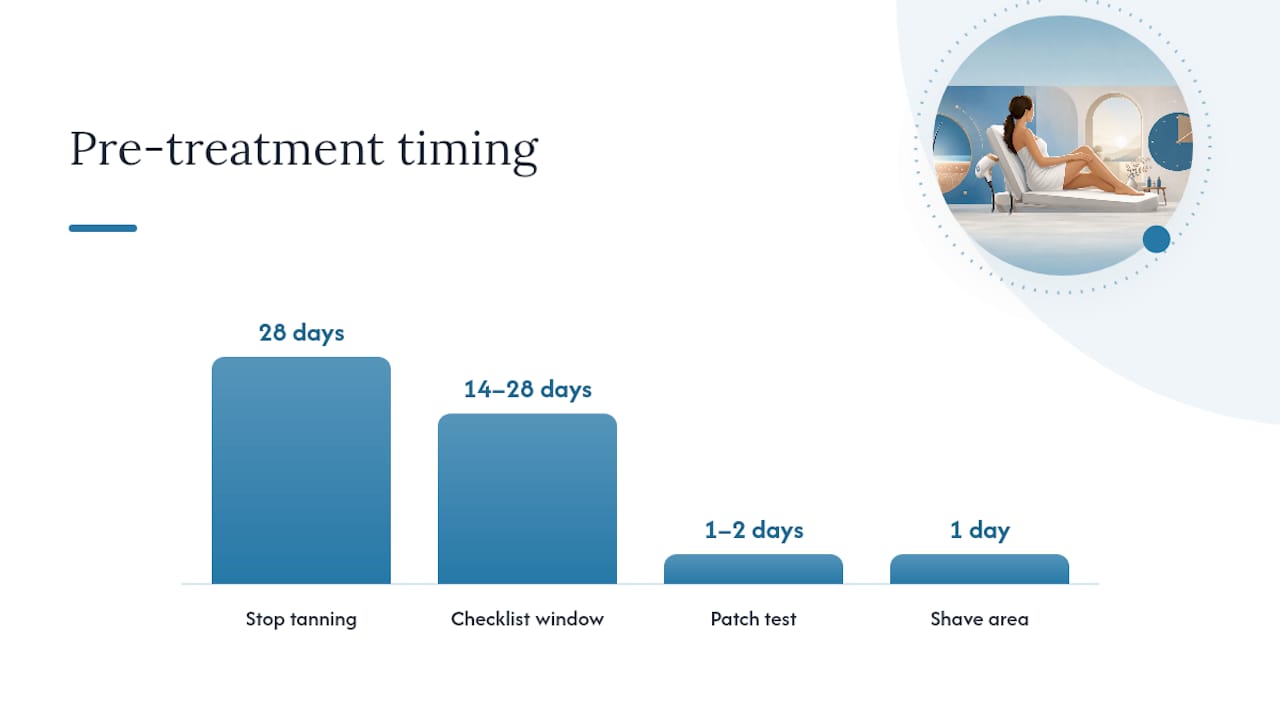
The patch test is the single most important pre-treatment step. A small area of skin is treated with the planned settings 24–48 hours before the full session to check for unexpected reactions. It validates both the device settings and your skin's response. Any clinic skipping this step for a new patient is cutting a corner.
Pre-treatment checklist (2–4 weeks before your session):
- Stop tanning, including self-tanner, at least 4 weeks out
- Avoid waxing, plucking, or electrolysis (shaving is fine and actually recommended)
- Discuss any medications with your provider, particularly isotretinoin, antibiotics, or photosensitizers
- Disclose any history of cold sores, keloids, or skin cancer
- Shave the treatment area 24 hours before your appointment
On the day of treatment: skip lotions, deodorants, and perfumes on the area. Arrive with clean, dry skin.
Pro Tip: Before booking, ask the clinic two direct questions: "What device do you use, and what is its wavelength?" and "Are your providers trained and supervised by a board-certified dermatologist or physician?" A clinic that cannot answer both clearly is not ready to treat you.
What to expect during a session and in the days after
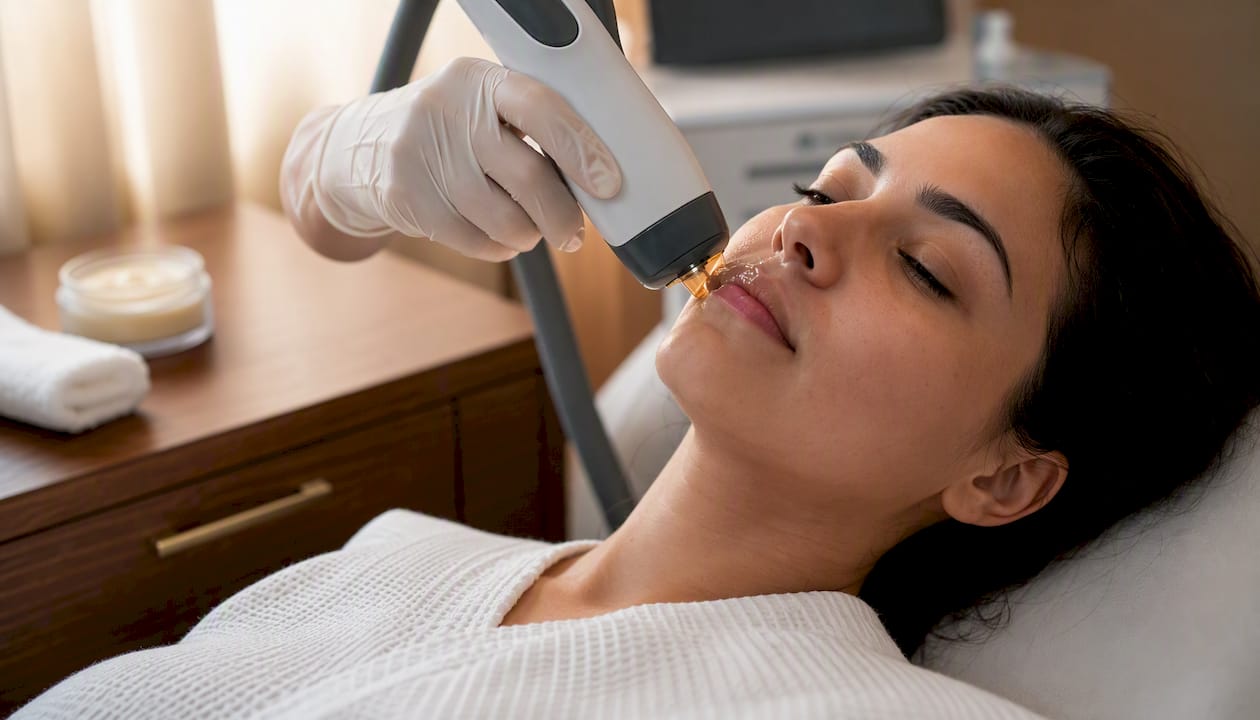
A typical session lasts anywhere from a few minutes (upper lip) to an hour (full legs or back), depending on the area. Most people describe the sensation as a rubber band snapping against the skin, sometimes accompanied by warmth. Topical numbing cream can be applied beforehand for sensitive areas.
Cleveland Clinic notes that most people need around six sessions to achieve significant reduction, spaced 4–8 weeks apart to align with the hair growth cycle. Hair in the active growth phase (anagen) responds best to treatment, which is why a single session never catches every follicle.
Post-treatment timeline:
- Hours 0–24: Redness and mild swelling peak, then begin to subside. Avoid heat (hot showers, saunas, exercise) and direct sun.
- Days 2–3: Most minor effects resolve. Treated hairs may appear to grow before they shed.
- Days 7–14: Treated hairs shed. This looks like regrowth but is actually the follicle pushing out the damaged hair shaft. Do not wax or tweeze.
- Weeks 4–8: Next session is typically scheduled. Hair regrowth between sessions is usually finer and lighter.
For sensitive areas like the face, bikini line, or underarms, providers should use more conservative settings. Facial treatments near the eyes require fitted protective eyewear without exception.
Red flags that mean you need to call your clinic or a doctor
Most post-treatment reactions are minor and self-limiting. A small number of signs indicate something more serious is developing and need prompt attention.
Contact your treating clinic immediately if you notice:
- Redness that spreads beyond the treatment area or worsens after 48 hours
- Severe or increasing pain that does not respond to cool compresses
- Open blisters or skin that begins to weep
- Pus, increasing warmth, or swelling consistent with infection
- Rapidly expanding dark or light patches in the treated area
Go to urgent care or an emergency room if you experience:
- Any change in vision after treatment near the eye area
- Signs of a systemic reaction (fever, chills, widespread rash)
- A blister that has opened and shows signs of deep tissue involvement
The AAD's guidance on burns and permanent color changes underscores why early intervention matters: complications caught and treated early are far less likely to result in permanent changes.
What a safety-focused clinic actually does
Knowing what a reputable clinic looks like in practice helps you ask the right questions before you commit.
A safety-focused clinic will:
- Perform treatment under medical supervision (physician or nurse practitioner oversight)
- Disclose the specific device used, including its wavelength and FDA-clearance status
- Conduct a patch test before the first full session
- Document your Fitzpatrick skin type and treatment parameters in a written record
- Provide before-and-after documentation
- Walk you through a full informed-consent discussion that includes realistic outcomes and complication risks
- Give written aftercare instructions before you leave
- Have a clear protocol for managing adverse reactions
Questions to ask at your consultation:
- What laser or device do you use, and what wavelength?
- Are treatments performed or supervised by a licensed medical professional?
- Do you conduct patch tests for new patients?
- How many sessions should I expect, and what is your follow-up policy?
- What is your protocol if I have a reaction?
StatPearls is direct on this point: matching wavelength and fluence to Fitzpatrick skin type is the critical determinant of safety, and practitioner skill matters more than device brand. A clinic that uses a single device for every skin type, or that cannot explain why they chose it for you, is a red flag.
What the evidence actually tells us about risk
The clinical picture on laser hair removal side effects is more reassuring than most people expect, but only under the right conditions. What that number obscures is the concentration of risk: complications cluster in patients with darker skin treated on the wrong device, patients who tanned recently, and patients treated by providers who did not adjust settings appropriately.
The gap between "safe procedure" and "safe for you specifically" is where most complications live. Informed consent is not a formality. It is the moment when a provider should walk you through your personal risk profile, the device they plan to use, and why that combination is appropriate. If that conversation does not happen, the procedure has not been set up safely regardless of how good the equipment is.
Laser hair removal at Elitelaserhair
Elitelaserhair at Elite Laser Center in Stony Brook, NY offers laser hair removal performed under experienced medical supervision using FDA-approved technology. Every treatment plan is customized to your skin type and hair characteristics, with device settings selected to match your Fitzpatrick type rather than a one-size-fits-all protocol. Packages come with a three-year guarantee, and the consultation process includes a full discussion of your medical history, realistic outcome expectations, and aftercare instructions before any treatment begins. To take the next step, request a consultation and get a personalized assessment of your skin type, the right device for your needs, and a clear picture of what to expect.
Sources
The following sources were used throughout this article. Bringing them to your consultation gives you a foundation for evidence-based discussion with your provider.
- Laser hair removal complications and the associated risk factors at a tertiary dermatology center: a case-control study - PubMed
- Laser Hair Removal - StatPearls - NCBI Bookshelf
- Laser Hair Removal: How it Works & What to Expect
- A review of the adverse effects of laser hair removal - PubMed
- Laser hair removal: FAQs - American Academy of Dermatology
- Laser Hair Removal | Penn Medicine
This article is general information, not a substitute for advice from a qualified doctor. Consult a qualified healthcare professional about your own circumstances before acting on anything here.