

Most people need 4 to 8 laser hair removal sessions, with appointments spaced roughly 4–8 weeks apart. Run the math and you're looking at a treatment series that spans anywhere from four months to over a year, depending on the area. The exact number shifts based on your hair color, skin tone, the body area being treated, your hormone levels, and the laser technology your provider uses. After the initial series, many patients also need maintenance touch-ups periodically to keep results looking clean.
Key Takeaways
Most people complete a laser hair removal series in 4–8 sessions spaced 4–8 weeks apart, with maintenance touch-ups every 6–12 months keeping results long-term.
| Point | Details |
|---|---|
| Session count and spacing | Most patients need 4–8 sessions spaced 4–8 weeks apart; small facial areas often need fewer, large areas more. |
| First-session results | Expect a moderate hair reduction after session one; meaningful density change typically shows after a few sessions. |
| Maintenance is normal | Plan for periodic touch-ups after the initial series to address hormonal regrowth or reactivated follicles. |
| Provider qualifications matter | Choose a board-certified dermatologist or medically supervised clinic with FDA-cleared devices to minimize burn and pigment risks. |
| Elitelaserhair's approach | Elite Laser Center offers medically supervised packages with a three-year guarantee and individualized settings for every skin tone. |
This article is general information, not a substitute for advice from a qualified doctor. Consult a qualified healthcare professional about your own circumstances before acting on anything here.
Table of Contents
- Why do laser hair removal sessions require multiple visits?
- How many sessions does each treatment area typically need?
- How long should you wait between laser sessions?
- What happens during a session and how should you prepare?
- When will you actually see results?
- What factors change how many sessions you'll need?
- How do you choose a safe, qualified provider?
- How does Elitelaserhair structure a medically supervised laser series?
- Ready to build your laser hair removal treatment plan?
- Sources
Why do laser hair removal sessions require multiple visits?
Laser energy destroys hair follicles only when they're in the active growth phase, called anagen. That's the core reason a single session can never clear everything: at any given moment, only a fraction of your follicles are in anagen. The rest are resting or transitioning, and the laser simply can't reach them effectively.
Hair cycles through three stages:
- Anagen (active growth): The follicle is producing a hair shaft and is rich in melanin, the pigment the laser targets. This is the only phase where treatment is effective.
- Catagen (transition): A short phase lasting a week or two where growth stops and the follicle shrinks. Laser treatment during this window produces minimal results.
- Telogen (resting): The hair sits dormant before shedding. The follicle has little melanin and won't respond to laser energy.
On the scalp, anagen can last years. On the legs or back, it's far shorter, which is part of why those areas sometimes need more sessions to catch enough follicles in the right phase. ASLMS notes that because anagen duration varies by body site, clinics often standardize intervals at 4–8 weeks to balance biology with scheduling practicality.
Pro Tip: Never wax, pluck, or use electrolysis for at least six weeks before your first session and throughout the series. Those methods remove the hair shaft the laser needs to target, making your treatment far less effective.
How many sessions does each treatment area typically need?
Small facial areas like the upper lip often land toward the lower end of the clinical range. Large areas like the full legs or back tend to require more visits, partly because of surface area and partly because follicle density is higher.
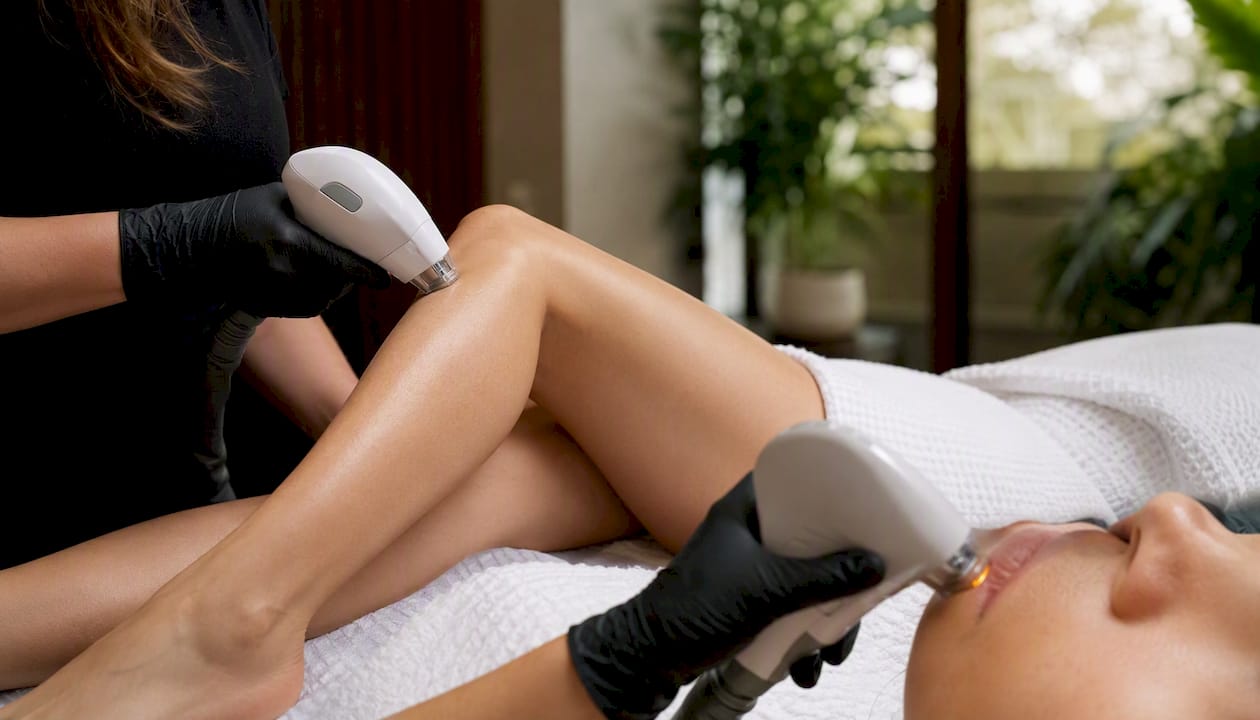
Costs vary significantly by clinic, region, and device type. These ranges reflect common U.S. pricing and are meant as planning benchmarks, not quotes.
Pro Tip: Package pricing almost always beats per-session rates. Many clinics bundle 6–8 sessions at a discount of 20–30% compared to paying individually. Elitelaserhair, for example, offers multi-session packages with a three-year guarantee, which means you're protected if you need additional sessions beyond the initial plan.
How long should you wait between laser sessions?
The standard recommendation is 4–8 weeks between appointments, though the right interval depends on the body area and your provider's protocol. Facial hair tends to cycle faster, so 4–6 weeks is common for the upper lip or chin. Legs and back, where the hair cycle is slower, often work better on a 6–8 week schedule.
Clinics face a real trade-off here. Shorter intervals catch more follicles in anagen but can increase skin sensitivity, especially after multiple treatments. Longer intervals are gentler and more convenient but stretch the total series timeline. Most providers land on a standardized interval that works reasonably well across patients rather than customizing it per follicle cycle, which would be logistically impossible.
Here's what sample schedules look like in practice:
- Upper lip only: 5 sessions at 4-week intervals. Total series: approximately 4–5 months.
- Bikini line only: 6 sessions at 5-week intervals. Total series: approximately 6–7 months.
- Full legs: 7 sessions at 6-week intervals. Total series: approximately 9–10 months.
- Combined plan (underarms + bikini + lower legs): 6–8 sessions, all areas treated at the same appointment every 5–6 weeks. Total series: approximately 7–10 months, with one appointment covering multiple zones.
The combined-area approach is worth considering if your schedule is tight. Treating three areas in a single visit adds maybe 30–45 minutes but eliminates the need for separate appointment blocks.
What happens during a session and how should you prepare?
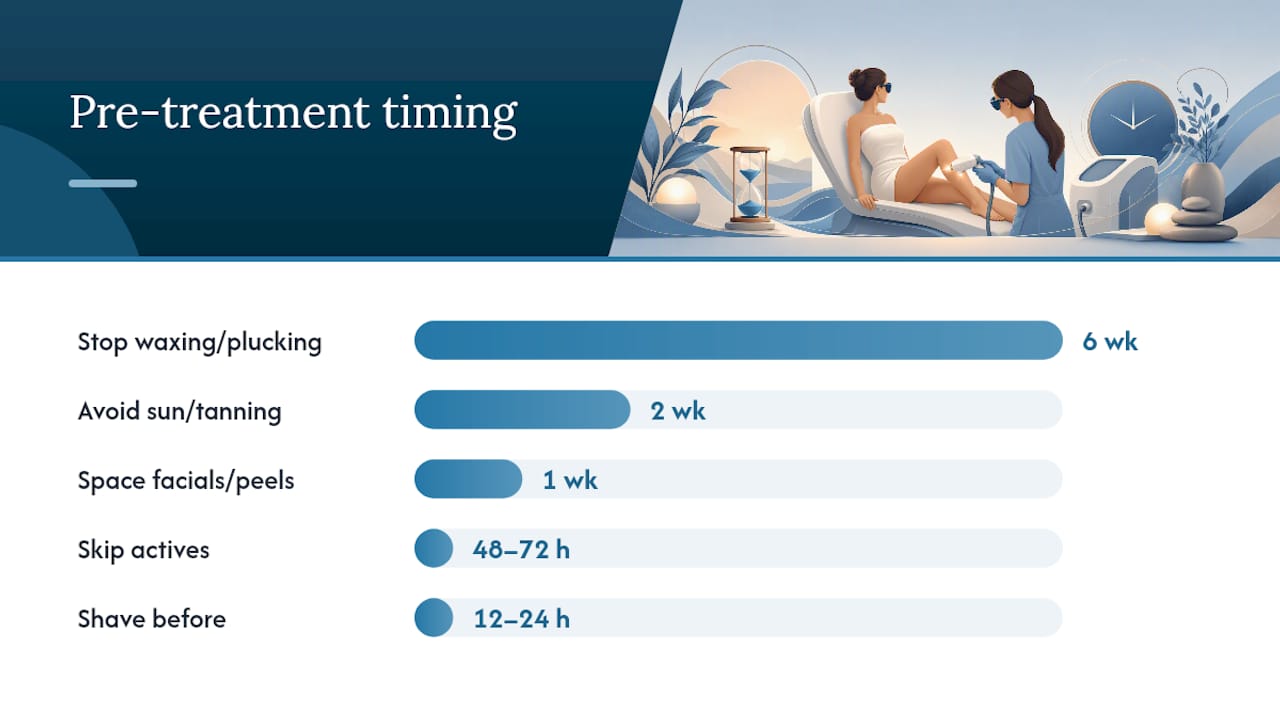
A typical appointment starts with a brief check-in and skin assessment. If you didn't shave the area beforehand, the technician may do it in-office, though most providers ask you to shave 12–24 hours before your visit. You'll put on protective eyewear, and a cooling gel or built-in device cooling will be applied to the skin. The laser handpiece passes over the treatment zone in methodical rows. Small areas like the upper lip take under 10 minutes; a full back can run 90 minutes.
Pre-treatment checklist:
- Shave the area 12–24 hours before your appointment (not the day of, to avoid irritation).
- Avoid sun exposure, tanning beds, and self-tanner for at least two weeks prior. Tanned skin raises the risk of burns and pigment changes.
- Stop waxing, plucking, threading, or using electrolysis at least six weeks before starting.
- Tell your provider about any medications, especially retinoids, antibiotics, or hormonal treatments, as some increase photosensitivity.
- Skip exfoliating acids and active skincare ingredients (retinol, AHAs, BHAs) for 48–72 hours before treatment. If you're also scheduling facials or peels, time them at least a week apart from laser sessions.
Aftercare dos and don'ts:
- Apply a gentle, fragrance-free moisturizer or aloe vera gel to soothe redness.
- Avoid sun exposure for at least two weeks post-treatment and use SPF 30 or higher daily.
- Skip hot showers, saunas, and intense exercise for 24–48 hours.
- Don't pick or exfoliate treated skin while it's healing.
- Call your clinic if you notice blistering, significant swelling, or any sign of infection.
Pain management: Most patients describe the sensation as a rubber band snap or mild heat. Topical numbing cream (lidocaine-based) applied 30–45 minutes before the session reduces discomfort significantly for sensitive areas like the bikini line. Many devices also have built-in cooling systems that make the experience more tolerable. If you're particularly sensitive, ask your provider about pre-treatment options at your consultation.
Quick answers to common post-session questions:
- Can I shave after a session? Yes, once redness subsides, usually after 24–48 hours.
- Is shedding or peeling normal? Yes. Treated hairs shed over 1–3 weeks post-session. This is the process working, not a side effect to worry about.
- Can I work out the same day? Skip it for 24 hours. Sweat and heat can irritate treated skin.
When will you actually see results?
Progress is gradual, and the first session rarely produces dramatic change. Cleveland Clinic reports that patients typically see a 10%–25% reduction in hair after the first treatment. That number climbs with each subsequent session as more follicles are caught in anagen and permanently disabled.
By session three or four, most patients notice a meaningful difference: slower regrowth, finer texture, and noticeably less density. After completing a full series, the ASLMS classifies the outcome as hair reduction rather than guaranteed permanent removal. Total clearance is uncommon. What most patients achieve is a substantial, lasting reduction that makes daily grooming far simpler.
Maintenance sessions are a normal part of the long-term plan. StatPearls clinical guidance notes that most patients need follow-up treatments every 6–12 months after the initial series. Hormonal changes, medications, or simply dormant follicles reactivating can bring back some hair over time. A single touch-up session once or twice a year is usually enough to keep things in check.
If you're three sessions in and seeing no reduction at all, that's worth discussing with your provider. It may signal a protocol adjustment is needed, whether that's a different laser wavelength, higher fluence, or a closer look at your hair and skin profile.
What factors change how many sessions you'll need?
Several variables push the session count up or down, and knowing yours before you start helps set realistic expectations.
- Hair color: Dark brown and black hair responds best because it contains the most melanin for the laser to target. Blonde, red, and gray hair absorbs far less laser energy, often requiring more sessions with less predictable results.
- Hair thickness: Coarse hair responds faster than fine hair. Fine hair, especially on the face, can be stubborn.
- Skin tone: Lighter skin with dark hair is the most straightforward combination. Darker skin tones require lower energy settings and specialized devices (Nd:YAG lasers are commonly used) to avoid burns or pigment changes. ASLMS confirms that this conservative approach is necessary for safety but can mean more sessions to reach equivalent reduction.
- Body area: Hormonal areas like the chin, upper lip, and bikini line tend to be more resistant because androgen-sensitive follicles can reactivate.
- Hormonal conditions: Polycystic ovary syndrome (PCOS) and other hormonal imbalances drive ongoing hair growth that can require more sessions and more frequent maintenance.
- Medications: Some drugs, including certain hormonal therapies and photosensitizing antibiotics, affect treatment timing or outcomes.
- Laser type and operator skill: Device quality and the technician's experience with settings calibration matter more than most patients realize.
What to tell your provider at consultation:
- Current medications and supplements, especially hormonal or photosensitizing ones.
- Any history of PCOS, thyroid conditions, or other hormonal diagnoses.
- Recent tanning, including self-tanner use.
- Previous hair removal methods (waxing, electrolysis, threading) and when you last used them.
- Any history of cold sores in the treatment area (antiviral pre-treatment may be recommended).
How do you choose a safe, qualified provider?
Laser hair removal is generally safe when performed by trained medical professionals, but the risks of burns, scarring, and permanent pigment changes are real when it isn't. The AAD recommends choosing a board-certified dermatologist or a provider working under direct medical supervision. UCSF Health similarly emphasizes that medical supervision and experienced operators are the primary factors in minimizing complications, particularly for darker skin tones and higher-energy treatments.
Trust signals to verify before booking:
- Board-certified dermatologist on staff or as medical director.
- FDA-cleared laser devices (ask which specific device they use).
- Written aftercare protocols provided to every patient.
- A formal consultation and patch test before the first full session.
- Transparent pricing with no pressure to commit before the consultation.
Red flags to walk away from:
- No medical supervision or licensed oversight of any kind.
- Promises of 100% permanent hair removal guaranteed.
- Prices dramatically below market rates with no explanation.
- No consultation offered before the first session.
- Staff who can't name the device they're using or explain how it's calibrated for your skin tone.
Questions worth asking at your consultation:
- Which laser or device do you use, and is it FDA-cleared?
- What settings will you use for my skin tone and hair type?
- What's your protocol if I experience a reaction?
- How many sessions do you estimate for my specific areas?
- Do you offer package pricing, and what does it include?
- Who is the medical director overseeing treatments?
How does Elitelaserhair structure a medically supervised laser series?
Elite Laser Center delivers laser hair removal under full medical supervision, with individualized energy settings and a documented treatment plan covering both the initial series and long-term maintenance. Every patient starts with a consultation and patch test to assess skin tone, hair type, and any contraindications before a single laser pass is made.
From there, the process follows a structured pathway:
- Consultation and assessment: Skin tone classification, hair color and thickness evaluation, medical history review, and patch test to confirm device settings are appropriate.
- Personalized session plan: Session count, interval, and energy settings are documented and adjusted based on how your skin and hair respond over time.
- Progress reviews: Between sessions, the team evaluates reduction rate and adjusts protocol if needed. This is where darker skin tones especially benefit from ongoing clinical oversight rather than a one-size approach.
- Maintenance follow-up: After the initial series, patients are guided on a maintenance schedule, typically every 6–12 months, to address any regrowth.
Elitelaserhair's packages include a three-year guarantee, meaning if additional sessions are needed beyond the initial plan, patients are covered. Protocol adjustments are signed off by the medical director, not left to individual technician judgment.
What patients often miss when planning their sessions
Consistency beats speed every time. The patients who get the best results aren't the ones who try to compress their schedule. They're the ones who show up to every appointment, don't skip sessions when life gets busy, and follow the pre- and post-care instructions without shortcuts.
A few practical things worth knowing before you start: combining multiple areas in one visit is almost always more efficient than booking separate appointments for each zone. If you're planning around a vacation or a big event, start your series at least four to five months before, not two. Showing up with a fresh tan right before a session is one of the most common reasons appointments get rescheduled.
Maintenance is also easier to manage when you stay ahead of it. If you notice regrowth picking up, booking a touch-up at six months rather than waiting until twelve usually means one session instead of two. The clinic's role doesn't end after the last session in your package. Adjustments, reassessments, and honest conversations about what's working are part of what medically supervised care actually means.
Ready to build your laser hair removal treatment plan?
Elitelaserhair offers medically supervised laser hair removal packages in Stony Brook, NY with a three-year guarantee and individualized protocols for every skin tone and hair type. The difference from a standard spa setting is straightforward: every treatment plan is reviewed by a medical director, energy settings are calibrated to your specific profile, and you're not left guessing if something looks off between sessions.
To get started, book a consultation and bring your medication list, a brief medical history, and any notes about previous hair removal methods. The consultation covers your treatment areas, estimated session count, package options, and a patch test to confirm your settings before the first full session. Patients planning multiple areas can often schedule them together, which cuts down on total appointment time significantly.
Book your consultation at Elitelaserhair and get a personalized laser hair removal schedule built around your goals.
Sources
- Laser hair removal - Mayo Clinic
- StatPearls / NCBI Bookshelf - Laser Hair Removal
- American Society for Laser Medicine and Surgery (ASLMS) - Laser hair removal
- American Academy of Dermatology (AAD) - Laser hair removal: FAQs
- Cleveland Clinic - Laser Hair Removal: How it Works & What to Expect
- UCSF Health - Laser hair removal