
Preparing for laser hair removal starts before treatment day. Your provider needs to know about your skin, recent tanning, hair-removal routine and medications before choosing an appropriate plan. Shaving, sun protection and clear communication all matter.
At Elite Laser Center & Med Spa in Stony Brook, this guide can help you organize questions for your consultation. Follow the instructions given for your own treatment rather than assuming one checklist applies to every skin type, body area or laser.
Elite Laser Center
Prepare for Laser Hair Removal
Learn about Lumenis LightSheer and Alma Soprano treatments, personalized preparation and long-term hair reduction at Elite Laser Center.
Your Laser Hair Removal Preparation Checklist
-
Confirm when to shave and when to stop waxing, tweezing or epilating.
-
Avoid tanning and disclose recent sun exposure or self-tanner.
-
Share all medications, supplements and products used on the treatment area.
-
Tell the office about cuts, rashes, irritation or changes since your consultation.
-
Ask about clean-skin instructions, comfort measures and aftercare.
In This Article
Start With a Consultation and Updated Health History
The American Academy of Dermatology's preparation guidance highlights medical history, recent tanning, scarring tendencies, cold sore history and medication use. Bring a complete list rather than trying to decide which information is relevant yourself.
Mention pregnancy or breastfeeding, skin conditions, previous laser reactions and any new prescriptions. Disclose current or previous isotretinoin use. Your clinician should assess timing individually; this article does not establish a waiting period or tell you to stop a medication.
Questions worth asking include:
-
Is my hair color and treatment area suitable for laser?
-
What experience does the provider have with my skin tone?
-
Which device and comfort measures are proposed?
-
What should I do if my skin changes before the appointment?
Shaving, Waxing and Hair-Removal Creams: What Is Different?
Waxing, tweezing and epilating pull hair out of the follicle, removing the pigmented hair that laser treatment needs to target. They do not remove the follicle itself, and they do not reverse damage already produced by an earlier laser session. They can interfere with the next session's target.
Mayo Clinic's preparation guidance describes stopping root-removal methods at least four weeks before treatment and shaving the day before. Confirm Elite's instructions for your treatment area and appointment.
When Should You Shave?
Ask for the exact timing recommended for you. If shaving causes razor burn, bumps or cuts, contact the office before treatment. Shaving two hours beforehand does not automatically mean an appointment must be canceled; the skin needs assessment.
Do not repeatedly shave irritated skin just to make it completely smooth. Tell your provider if the area is difficult to reach or you are unsure how closely to shave.
What About Depilatory Creams?
Hair-removal creams dissolve hair rather than pulling it out by the root. Their concern is different: they may irritate the treatment area. Ask before using them, and report any burning, rash or sensitivity.
Protect Your Skin From Tanning and Discuss Active Products
Natural skin tone and a recent tan are different considerations. Avoid deliberate tanning and sunless tanning products, and tell your provider about sunburn or recent exposure even if the skin looks normal to you.
AAD advises daily broad-spectrum, water-resistant SPF 30 or higher before going outdoors. Clothing and shade also help protect exposed areas. Sun protection remains important throughout a treatment series, not just for a day or two around each visit.
Bring the names of retinoids, exfoliating acids, scrubs and other active products you use. Your provider may adjust your routine according to the area and skin response. Do not stop prescribed skincare or other medicine without guidance from the appropriate clinician.
Darker Skin, Device Selection and Test Patches
A darker skin tone is not the same as being ineligible for laser hair removal. However, settings and treatment selection need particular care because the surrounding skin also contains pigment.
Elite uses Lumenis LightSheer and Alma Soprano systems. Ask which platform is proposed for your skin and hair and why. A device brand alone does not guarantee safety, and this article should not be read as a promise that every hair color or skin condition will respond.
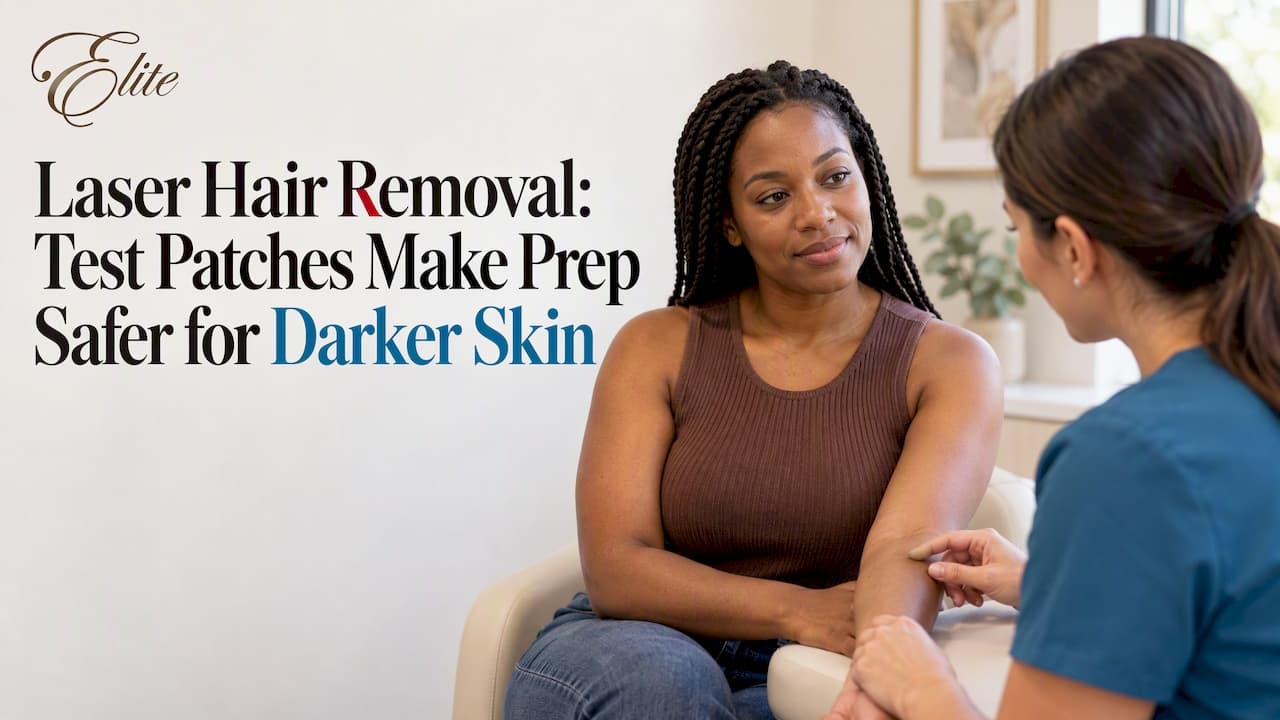
Ask whether a test patch is appropriate and how long the provider wants to observe the response. Reactions can develop after the test is performed. A patch test does not eliminate risk or replace an updated skin assessment before a full session. We do not assume that every test patch is followed immediately by treatment.
What to Do on Appointment Day
Follow the office's instructions for arriving with the treatment area clean and free of makeup, deodorant, lotion or other products. Continue protecting exposed skin during travel; ask how sunscreen will be removed before treatment rather than leaving skin unprotected outdoors.
Wear comfortable clothing that allows access to the area. Tell the team about any new tan, product reaction, medication change or recent hair removal before the session starts.
Use numbing products only as specifically instructed. The FDA has warned about certain topical pain-relief products marketed for cosmetic procedures, including laser hair removal. High-concentration lidocaine and inappropriate application can cause serious harm. Do not self-apply an online numbing cream to a large area or cover it with plastic wrap.
Protective eyewear is essential during treatment. Sensations vary by device and area; tell your provider about intense or increasing discomfort so treatment can be paused and assessed.
Aftercare and Symptoms to Report
Temporary redness, swelling around hair follicles or tenderness can occur. Follow your provider's instructions on gentle cleansing, moisturizer and cold compresses. Do not apply ice directly to skin or pick at a reaction.
Ask when to resume vigorous exercise, hot baths, saunas and active skincare. Timing depends on your response. Continue sun protection between sessions.

Contact your provider promptly for blistering, severe or worsening pain, crusting, spreading redness, drainage, or unexpected skin-color changes. Burns, infection and pigment changes need assessment; they should not be dismissed as routine redness. Seek urgent care for a severe reaction or eye symptoms.
Hair Shedding, Session Timing and Realistic Results
Treated hair may shed over days to weeks. Do not pull or scrub it out. Ask when you can resume shaving if the skin remains sensitive.
Laser treatment is most effective during the active growth phase, and follicles are not all at the same stage together. Multiple visits are usually needed, with spacing selected for the area and response. Treatment aims for long-term reduction, not a guarantee that every hair disappears forever.
Elite's three-year Laser Hair Removal Package includes nine initial treatments and up to nine additional follow-up treatments when needed, at no additional charge, for up to 18 total. The package provides treatment opportunities; it is not a guarantee of a particular result. See the laser hair removal page for details.
Frequently Asked Questions
When should I shave before laser hair removal?
Follow the timing provided for your appointment. Shaving the day before is common guidance, but irritation, cuts and sensitive areas may require a different plan. Contact the office if you are unsure.
Does waxing undo earlier laser treatments?
No. Waxing removes hair from the follicle rather than removing the follicle itself. It can reduce the target available for the next laser session, so avoid root-removal methods for the period your provider specifies.
Should I stop my medication or retinoid before treatment?
Do not stop prescribed medication on your own. Share your medication and skincare list so your clinician can assess whether treatment or product timing needs adjustment.
Does a test patch guarantee that laser treatment is safe?
No. A test patch may help assess skin response, but reactions can be delayed and risks remain. Ask whether testing is appropriate and how long the response should be observed.
How soon does hair shed after treatment?
Treated hair may shed over days to weeks. Do not pluck or scrub it out, and ask when shaving can resume if your skin is still sensitive.
Get a Personalized Preparation Plan at Elite
If you are planning laser hair removal in Stony Brook or nearby Suffolk County communities, start with questions about your skin, hair and routine. A useful consultation should explain candidacy, preparation, potential risks and realistic expectations before you commit.

Request a consultation at Elite Laser Center & Med Spa or call (631) 675-2500.
Sources and Further Reading
Prepared with AI assistance. Elite's treating clinician should review this draft for clinical accuracy before publication. This article provides general education and does not replace personalized medical advice. Suitability, results and recovery vary. Follow your treating provider's instructions.