

Most clinicians recommend pausing elective laser hair removal during pregnancy, and that guidance holds regardless of trimester. The reason isn't documented harm. It's a lack of pregnancy-specific safety data. If you were treated before you realized you were pregnant, stop future sessions and call your OB-GYN to talk through what happened and when.
TL;DR:
- No large or robust studies confirm laser hair removal's safety during pregnancy, and existing data is limited to small, observational reports.
- Hormonal changes during pregnancy alter hair growth and skin sensitivity, increasing unpredictability and the risk of skin discoloration.
- Most clinics follow a standard protocol: pause treatments upon pregnancy discovery, document details, and reschedule after postpartum recovery.
- Shaving, waxing, threading, and depilatories are considered safe alternatives, while professional energy-based treatments are generally advised against until after pregnancy.
- Most health and obstetric authorities recommend postponing laser hair removal until hormone levels stabilize postpartum for better safety and efficacy.
Table of Contents
- Is Laser Hair Removal Safe During Pregnancy? What the Research Actually Shows
- Why Do Doctors Recommend Waiting? The Science Behind the Caution
- What Do Doctors and Pregnancy Resources Recommend?
- What Hair Removal Methods Are Actually Safe During Pregnancy?
- What if You Had Laser Hair Removal Before Knowing You Were Pregnant?
- When Can You Restart Laser Hair Removal After Pregnancy?
- How a Responsible Clinic Handles Pregnancy and Laser Treatments
- A Straight Answer for an Anxious Nine Months
- Planning Ahead: What Comes After Delivery
- Sources
- FAQ
Is Laser Hair Removal Safe During Pregnancy? What the Research Actually Shows
The honest answer is that nobody knows for certain, because nobody has run the trial that would tell us. A systematic review published in PMC looked at the existing literature on elective laser therapy during pregnancy and found the evidence base thin. Most available data comes from retrospective chart reviews and small observational cohorts, not randomized controlled trials. That distinction matters more than it sounds.
One frequently cited example is a retrospective study of Nd:YAG laser hair removal in pregnant women, which reported no fetal deformities among the small group of patients tracked. On its face, that sounds reassuring. But a retrospective study with a limited sample size can't rule out rare complications, can't control for confounding variables, and can't establish causation either way. It's a data point, not a verdict.
Here's what the current literature actually supports:
- No large randomized controlled trials exist testing laser hair removal safety in pregnant patients, for ethical reasons discussed below.
- Small retrospective cohorts have not reported fetal anomalies, but sample sizes are too limited to generalize.
- Dermatologic guidance, including a 2022 review in JCAS, recommends avoiding cosmetic energy-based devices during pregnancy specifically because the safety data doesn't meet the bar clinicians want before recommending an elective procedure.
- Side effect data (redness, temporary hyperpigmentation, occasional blistering) exists from general laser hair removal literature, but pregnancy-specific side effect rates aren't well documented.
That absence of data is the entire basis for the standard advice to wait.
Why Do Doctors Recommend Waiting? The Science Behind the Caution
Laser hair removal works through a process called selective photothermolysis: the laser targets melanin in the hair follicle, heats it, and damages the follicle enough to slow regrowth. That energy is designed to stay in the skin and hair shaft rather than penetrate to deeper tissue. In theory, that containment is why many dermatologists consider the mechanism itself low risk to a fetus.
Theoretical safety isn't the same as demonstrated safety. Nobody has tested whether accumulated heat, occasional deeper penetration in thinner or more vascular skin, or an unpredictable reaction unique to pregnancy carries any risk. That uncertainty is precisely why the JCAS guidance draws a hard line on cosmetic procedures during pregnancy.
Pregnancy hormones complicate things further. Rising estrogen and progesterone push more hair follicles into the active growth phase, called anagen, which means you may notice more hair than usual. It also means the laser's usual pattern of predictable results gets scrambled, since efficacy depends on catching hair in the right growth phase. Pregnancy hormones also increase skin pigmentation and sensitivity, which raises the odds of temporary discoloration or a stronger reaction to the same laser setting that felt fine before pregnancy. Many providers also avoid treating the abdomen and breasts during later pregnancy simply because those areas are stretching, more sensitive, and harder to treat comfortably.
There's also a practical reason large trials will likely never happen: it's difficult to justify exposing pregnant volunteers to an elective, non-essential procedure purely for research purposes. That ethical constraint means the evidence gap is probably permanent, not temporary.
- Selective photothermolysis targets hair follicles, not deep tissue, which is reassuring in theory but unverified in pregnancy.
- Hormone-driven changes in hair growth cycles reduce treatment predictability and results.
- Increased skin sensitivity and pigmentation raise the risk of discoloration or discomfort.
- Ethical limits on pregnancy research mean controlled trials are unlikely to ever close this gap.
Pro Tip: If you're mid-course on a laser package when you find out you're pregnant, ask the clinic to note your last treatment date and area in your chart. That record matters if you resume after delivery and want to track your original starting point.
What Do Doctors and Pregnancy Resources Recommend?
The American Pregnancy Association states plainly that no studies have evaluated the safety of laser hair removal during pregnancy, and most providers recommend avoiding it as a result. That's the consensus you'll find across obstetric and dermatologic sources: not a warning about confirmed harm, but a precaution built on missing information.
It helps to separate those two things clearly. "We recommend avoiding this" is not the same statement as "this causes harm." Clinicians are applying the same logic they use for a lot of elective care during pregnancy: when there's no compelling reason to take on unknown risk, they'd rather you wait.
If you're mid-treatment when you learn you're pregnant, a well-run clinic follows a fairly consistent process:
- Pause all remaining sessions immediately, even if you're near the end of a package.
- Document the date, treatment area, and device settings used in your most recent session.
- Communicate with your OB-GYN, either directly or through notes the clinic provides for your prenatal record.
- Reschedule remaining sessions for after delivery rather than canceling the package outright.
When you see your OB-GYN, it's worth raising the specific area you were treating, how many sessions you'd completed, and whether you've noticed any unusual skin changes since. That gives your provider the full picture rather than a vague mention of "I was doing laser."
What Hair Removal Methods Are Actually Safe During Pregnancy?
Skipping energy-based treatments doesn't mean you're stuck. Several options carry no pregnancy-specific safety concerns at all.
- Shaving and clippers are the safest default: no chemicals, no heat, nothing absorbed through the skin. The main downside is frequency, not risk.
- Waxing and threading work well for most people, though Healthline's guidance notes it's worth checking a facility's hygiene standards and skipping the abdomen and breasts late in pregnancy, when skin is stretched and more sensitive.
- Chemical depilatories are generally considered lower risk, but pregnancy can make skin more reactive than usual, so patch-test a small area first and stop if you notice irritation.
- Electrolysis and at-home laser or IPL devices fall into the same "not recommended" category as professional laser hair removal, for the same reason: no pregnancy-specific safety data exists for either.
Pro Tip: If waxing has always left you red and irritated, pregnancy is not the time to test whether that changes. Sensitized skin during pregnancy tends to react more, not less, so stick with what your skin already tolerates well.
What if You Had Laser Hair Removal Before Knowing You Were Pregnant?
Take a breath first. Available evidence suggests a single treatment early in pregnancy, before you knew, is unlikely to have caused fetal harm, and there's no evidence linking laser hair removal to fertility problems or pregnancy complications. That doesn't mean ignore it. It means handle it calmly and correctly.
- Write down the exact date of your session and which area was treated, while it's still fresh in your memory.
- Call your OB-GYN's office and mention the treatment at your next appointment, or sooner if you have specific concerns.
- Stop any additional sessions until after delivery, even if you're mid-package.
- Ask your OB-GYN whether your specific case (trimester, treatment area, number of sessions) warrants any additional monitoring, though most situations won't need extra follow-up.
Clinics that take medical screening seriously will also want this information for your file. A responsible provider's consult process typically asks about pregnancy status upfront specifically to avoid this scenario, but it happens, especially in early pregnancy before symptoms show up.
When Can You Restart Laser Hair Removal After Pregnancy?
There's no universal countdown clock, but most providers wait until hormone levels have had real time to normalize, which is often several months postpartum rather than a few weeks. If you had a C-section, any treatment area near the incision needs full healing first, not just surface closure.
Breastfeeding doesn't automatically rule out laser hair removal, but it's worth mentioning at your consult since hormone levels during lactation can still affect skin pigmentation and hair growth patterns. Waiting until things stabilize tends to produce more predictable results anyway, since pregnancy hormones scramble the hair growth cycle that made your original treatment plan work in the first place.
Before restarting, bring these questions to your postpartum consult:
- Has enough time passed since delivery for my hormones and skin pigmentation to stabilize?
- If I had a C-section, is the treatment area fully healed?
- Does breastfeeding change anything about my treatment plan or timing?
- Based on my treatment history, how many sessions will I realistically need to pick back up where I left off?
Pro Tip: Bring your old treatment log, if you kept one, to your first postpartum consult. It saves time and helps your provider judge how your skin and hair have changed since your last session.
How a Responsible Clinic Handles Pregnancy and Laser Treatments
A properly run clinic treats pregnancy screening as a standard part of intake, not an afterthought. That means asking about pregnancy status before every new package, documenting the answer, and building a plan for what happens if that status changes mid-course.
Clinics that operate on a safety-first model perform medical intake, ask pregnancy screening questions before treatment begins, and log post-treatment follow-up notes in the patient's chart. That paper trail protects the patient and gives the provider a clear record to work from if pregnancy is discovered later in a treatment package.
If a patient discovers she's pregnant mid-package, the standard response is straightforward: pause remaining sessions, document the last treatment date and area, and encourage the patient to loop in her OB-GYN. From there, a typical postpartum pathway looks like a consult once healing and hormone levels have settled, followed by a reassessment of the treatment plan and a restart once everyone agrees it's the right time. That's the model worth asking about if you're evaluating where to book after delivery.
A Straight Answer for an Anxious Nine Months
Pregnancy already comes with a long list of things to worry about, and I don't think laser hair removal needs to be one of them if you simply wait. The advice to defer isn't a red flag about your particular treatment or your particular clinic. It's a reflection of how little data exists, full stop, and how unwilling most clinicians and researchers are to run the kind of trial that would close that gap.
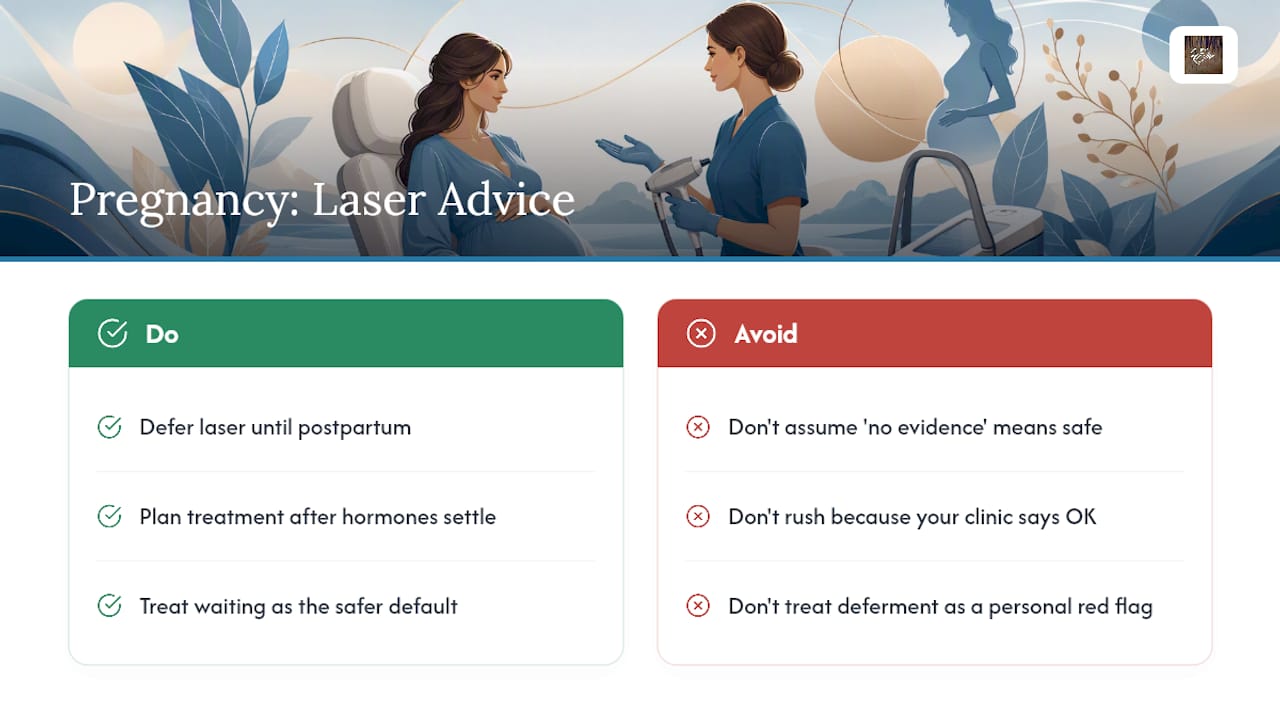
What I'd push back on is the framing some people default to, that "no evidence of harm" is basically the same as "proven safe." It isn't, and treating it that way during pregnancy isn't worth the trade. The upside of waiting is small. The downside of not knowing is not.
The good news is that postpartum isn't some far-off consolation prize. It's a real plan, and a better one, since your body will actually cooperate with the treatment once your hormones settle down.
— Sharon
Planning Ahead: What Comes After Delivery
If you're pausing treatment now, the smartest move is deciding what your postpartum plan looks like before you're in the thick of a newborn's schedule. Some clinics work with patients through this kind of transition: pausing a package mid-pregnancy, documenting where you left off, and rebuilding a treatment plan once your body is ready.

Some laser hair removal packages come with medical supervision at each visit and a guarantee, so restarting after delivery doesn't mean starting from zero or guessing whether your results will hold. Visit the Laser Hair What to Expect page to see how the post-treatment process works and what a postpartum consult typically covers. If you're not sure whether you're ready yet, book a consult once you've gotten medical clearance and we'll help you figure out the right timing from there.
This article is general information, not a substitute for advice from a qualified doctor. Consult a qualified healthcare professional about your own circumstances before acting on anything here.
Sources
- A Systematic Review of Elective Laser Therapy during ... - PMC
- Laser Hair Removal: Pregnancy, Recommendations, and Tips - Healthline
- Laser Hair Removal and Pregnancy - American Pregnancy Association
FAQ
Is It Safe to Get Laser Hair Removal Before Getting Pregnant?
Yes. There's no evidence that laser hair removal affects fertility, though it's still worth mentioning to your doctor if you're actively trying to conceive so your treatment timeline lines up with your plans.
Is It Safe to Do Laser Hair Removal While Trying to Conceive?
There's no known risk to fertility from laser hair removal itself, but many providers suggest pausing once you're actively trying, simply because early pregnancy can go undetected for a few weeks.
Can I Get a Wax or Similar Treatment Late in Pregnancy?
Waxing is generally considered safe throughout pregnancy, though most guidance recommends avoiding the abdomen and breasts late in pregnancy due to increased skin sensitivity and stretching.
How Should I Remove Hair Safely During Pregnancy?
Shaving and clippers are the lowest-risk options, followed by waxing and threading with attention to hygiene and skin sensitivity. Chemical depilatories work for some people but deserve a patch test first, since pregnancy skin can react differently than it used to.
What if I Had Laser Hair Removal Before I Knew I Was Pregnant?
A single treatment early in pregnancy is unlikely to have caused harm. Document the date and area treated, stop future sessions, and mention it to your OB-GYN at your next visit.
Recommended
- Laser Hair What to Expect
- Laser Hair Removal Side Effects: What to Expect
- Types of Laser Hair Removal Treatments: 2026 Guide
- Guide to Laser Consults
This article was produced with AI assistance and reviewed for accuracy. It is provided for general information, and it is not professional advice.