
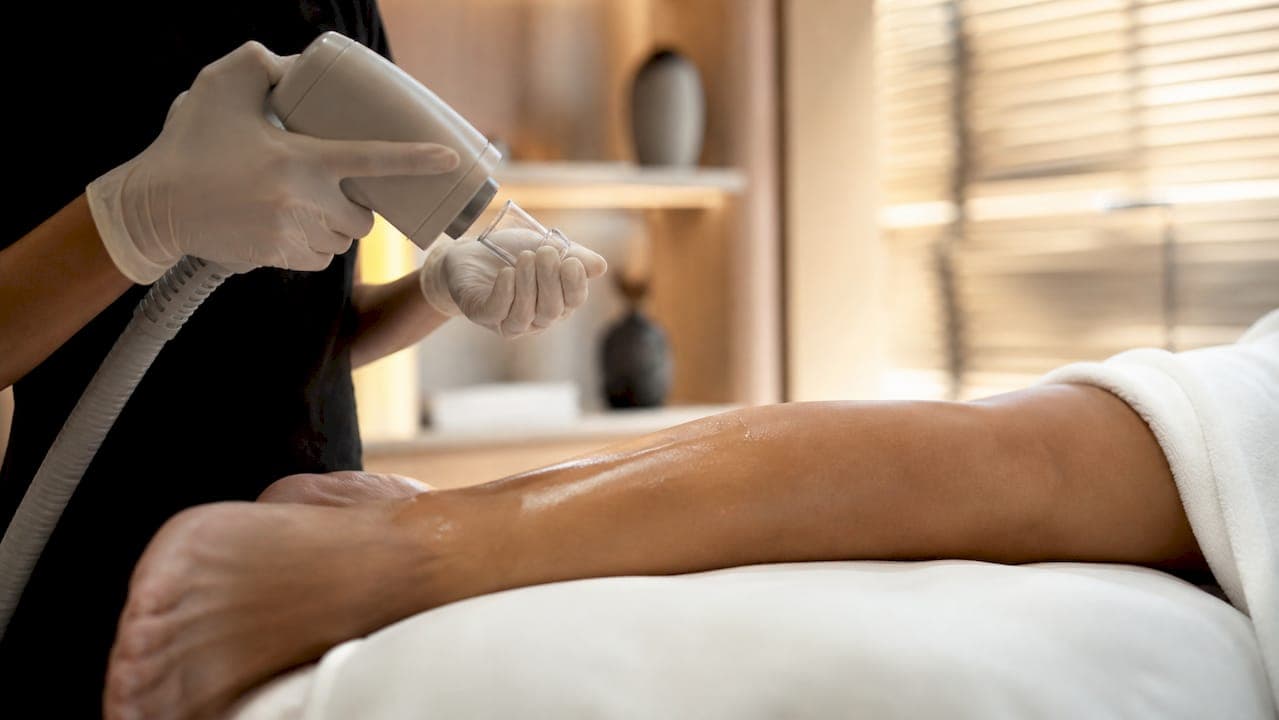
Most people rate laser hair removal pain as mild to moderate on a subjective scale. That number shifts a lot depending on where you're being treated, what device the clinic uses, and whether numbing cream is in the picture. The upper lip and bikini line tend to be more sensitive, while legs and arms are usually less so. Clinical literature documents discomfort as typically mild to moderate across patient-reported scales, and Mayo Clinic notes that cooling devices and numbing creams are standard tools for managing it. The FDA recommends consulting a professional about device safety and topical anesthetic use before treatment.
The factors that move that number most:
- Treatment area: Thin-skinned, nerve-dense zones (upper lip, bikini, underarms) hurt more than thicker-skinned areas like the legs.
- Device cooling: Built-in chilled tips or cryogen spray can cut perceived heat significantly.
- Topical numbing: Applied 30–45 minutes before the session, a prescription-strength cream can drop discomfort by several points.
- Provider settings: An experienced clinician adjusts fluence and pulse width to your skin and hair type, which directly affects how much you feel.
At Elitelaserhair, every treatment is performed under medical supervision with FDA-approved devices, so those settings are calibrated from the first session.
Key Takeaways
Most people experience laser hair removal as mild to moderate discomfort, typically around 3–5 out of 10, with modern cooling technology and topical numbing making it manageable for the vast majority of patients.
| Point | Details |
|---|---|
| Typical pain range | Most people rate sessions at 3–5/10; upper lip and bikini line sit higher, legs and arms lower. |
| Area matters most | Thin-skinned, nerve-dense zones (upper lip, bikini, underarms) consistently rate more sensitive than thicker areas. |
| Cooling and numbing work | Built-in device cooling and topical anesthetic cream are the two most effective tools for reducing discomfort during treatment. |
| Prep reduces pain | Skipping caffeine, scheduling away from your period, and staying hydrated all meaningfully lower perceived intensity. |
| Elitelaserhair | Offers medically supervised sessions with FDA-approved cooling devices, patch testing, topical numbing, and a three-year package guarantee in Stony Brook, NY. |
Table of Contents
- What does laser hair removal actually feel like?
- Pain levels by treatment area
- Key factors that change how much it hurts
- How clinics reduce pain during treatment
- How to prepare and manage pain before, during, and after
- Normal side effects and when to call your provider
- What modern devices and clinical technique actually do for pain
- What a typical session feels like in practice
- Laser hair removal at Elitelaserhair: what to expect at your consultation
- Sources
What does laser hair removal actually feel like?
The honest answer: it feels like a rubber-band snap against warm skin, repeated in short bursts. Cleveland Clinic describes it as a quick snapping or zinging sensation during each pulse, and notes that the faint smell of singed hair is completely normal. It means the laser is heating the follicle the way it's supposed to.
Here's the sensory timeline most people experience:
- During a pulse: A sharp, brief zing or snap, sometimes a prickling warmth. Each pulse lasts a fraction of a second.
- Between pulses: The sensation fades almost immediately. Most people describe a residual warmth, not pain.
- Right after the session: A mild sunburn feeling on the treated area, usually gone within a few hours.
WebMD reports that most people find laser hair removal less painful than waxing overall, partly because the discomfort is so brief per pulse rather than a sustained pull. Professional diode and Nd:YAG lasers tend to feel milder than older devices because of better cooling integration. IPL (intense pulsed light) covers a broader spectrum and can feel similar, though laser is typically more targeted.
Pro Tip: If a pulse feels too intense, say so immediately. Ask your technician to lower the fluence, add a cooling break, or apply extra topical numbing. A good clinic will adjust without hesitation.
Pain levels by treatment area
Healthline confirms that pain varies significantly by body area, with the upper lip, underarms, and bikini line being the most sensitive due to thin skin and higher nerve density. Here's a practical breakdown:
| Area | Pain Level | Why it hurts more or less |
|---|---|---|
| Upper lip | 5–7 | Thin skin, dense nerve endings, small area |
| Bikini / Brazilian | higher pain levels | Thin, sensitive skin; coarse, dense hair |
| Underarms | moderate pain levels | Thin skin, high nerve density |
| Face (cheeks, chin) | mild to moderate pain levels | Moderate nerve density, varies by zone |
| Chest / back | mild to moderate pain levels | Thicker skin, but large area means longer sessions |
| Arms | lower pain levels | Moderate skin thickness, lower nerve density |
| Legs | lower pain levels | Thicker skin, large surface area, generally tolerable |
Compared to waxing, laser typically wins on comfort: waxing rips hair from the root across a wider strip, and the pain lingers. Laser pulses are over in milliseconds, and the skin calms quickly between them.
Key factors that change how much it hurts
Some of these you can control. Others you can't, but knowing them helps you set realistic expectations.
Non-modifiable factors:
- Hair thickness and color: Coarse, dark hair absorbs more laser energy, which can mean more sensation. Fine or light hair requires different settings.
- Skin tone: Clinicians adjust wavelength and fluence based on Fitzpatrick skin type to balance efficacy and comfort.
- Body area and nerve density: Already covered above. The bikini line is just more sensitive than the calf, full stop.
Modifiable factors you can act on:
- Topical numbing cream: Applied 30–45 minutes before your appointment, it meaningfully reduces sensation. Ask your clinic whether they provide it or whether you should bring your own.
- Device and cooling technology: A PMC clinical review identifies cooling and technique choices as significant determinants of procedural comfort. Clinics using modern devices with integrated cooling give you a real advantage.
- Menstrual cycle timing: Skin sensitivity tends to increase in the days before and during menstruation. Scheduling sessions in the week after your period often means a noticeably easier experience.
- Caffeine and stimulants: Caffeine heightens nerve sensitivity. Skipping coffee the morning of your appointment is a small change with a real effect.
- Hydration and skin condition: Well-hydrated skin conducts laser energy more evenly. Dry, flaky skin can feel more irritated.
- Recent tanning or exfoliation: Both compromise the skin barrier and raise sensitivity. Avoid both for at least a week before treatment.
Provider experience matters more than most people realize. An experienced clinician reads your skin's response in real time and adjusts settings accordingly, which reduces both discomfort and the risk of adverse effects.
Pro Tip: Schedule your most sensitive-area sessions (bikini, underarms) in the week after your period ends. You'll likely notice a meaningful difference in how much you feel.
How clinics reduce pain during treatment
Modern clinics have several tools for managing discomfort, and the best ones layer them.
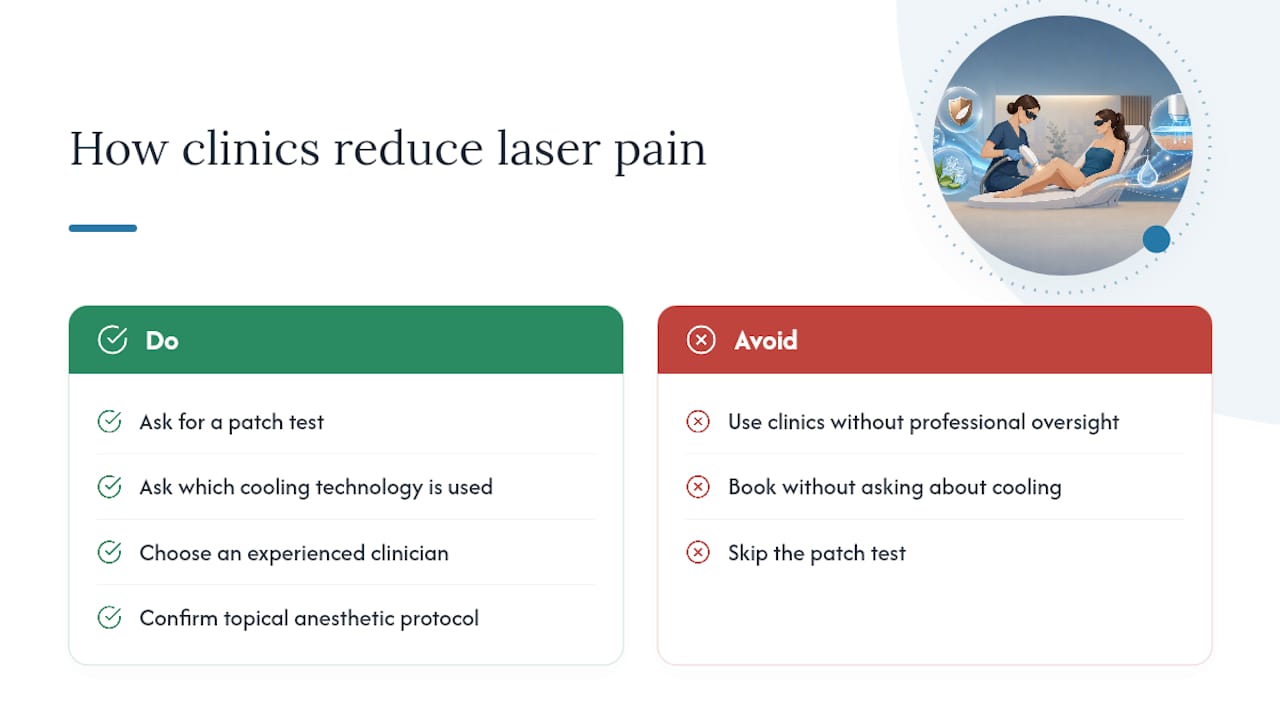
Topical anesthetic creams are the most commonly used option. Applied before the session, topical anesthetic creams numb the skin surface and reduce the sharpness of each pulse. Prescription-strength formulas (like EMLA or LMX) are more effective than over-the-counter versions. The FDA cautions that topical anesthetics should be used under professional guidance, since improper application over large areas carries absorption risks.
Built-in cooling technology is the other major lever. Most professional laser systems now integrate one of three cooling methods:
- Contact cooling: A chilled sapphire tip presses against the skin just before and during each pulse, drawing heat away from nerve endings.
- Cryogen spray: A brief burst of cold spray immediately before the laser pulse pre-cools the skin surface.
- Air cooling: A cold air stream directed at the treatment area throughout the session.
Dermatologists quoted in Glamour report that modern lasers with built-in cooling make the sensation "exceedingly minimal" for many patients. That's not marketing language. It reflects a genuine shift in device technology over the past decade.
| Comfort method | Onset | Typical effectiveness | Common clinic use |
|---|---|---|---|
| Topical numbing cream | pre-session application | High (surface anesthesia) | Common clinic use |
| Contact cooling tip | Immediate | High (nerve heat reduction) | Integrated into device |
| Cryogen spray | Immediate | Moderate–high | Integrated into device |
| Air cooling fan | Immediate | Moderate | Adjunct during session |
| Ice pack / cold compress | 5–10 min | Moderate | Pre- or post-session |
Vibration devices (which disrupt pain signals through competing sensation) are occasionally used as an adjunct. In-office sedation is rarely needed and generally not offered for laser hair removal.
How to prepare and manage pain before, during, and after
Before your appointment:
- Shave the treatment area 12–24 hours before your session. Shaving shortly before is generally acceptable and often preferred by clinics, but follow your specific clinic's guidance. Shaving removes surface hair so the laser targets the follicle, not the shaft above the skin.
- Skip tanning (sun or self-tanner) for at least two weeks beforehand.
- Avoid retinoids, AHAs, and exfoliants for 5–7 days before treatment.
- Hold caffeine the morning of your appointment.
- Ask your clinic about topical numbing cream and whether you should apply it at home before arriving.
- Stay well-hydrated in the days leading up to your session.
During the session:
- Communicate with your technician throughout. If a pulse feels sharper than expected, say so.
- Request a cooling break between areas if you need one.
- Breathe steadily. Tensing up raises perceived pain.
Aftercare do's and don'ts:
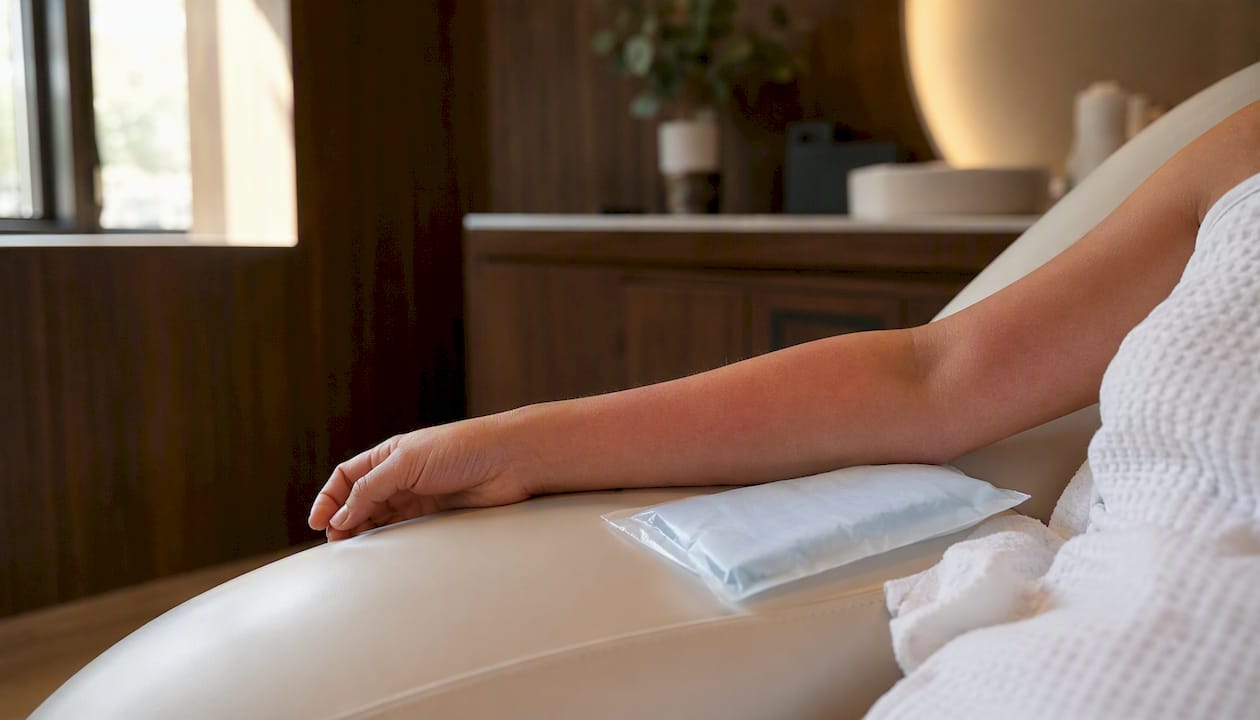
- Apply a cold compress or chilled gel pack to the treated area immediately after.
- Use a gentle, fragrance-free moisturizer. A body care routine designed for sensitive skin can help soothe irritation and support recovery in the days following treatment.
- Avoid hot showers, saunas, and strenuous exercise for a day or two after treatment to reduce irritation risk. Mayo Clinic's aftercare guidance is clear that skipping these reduces the chance of mild sensitivity becoming lasting irritation.
- Stay out of direct sun and apply SPF 30+ to treated areas.
- Skip exfoliation and active skincare ingredients for at least a week.
On shaving timing: Most clinics ask you to shave 12–24 hours before, not the morning of, to avoid micro-irritation on freshly shaved skin. Two hours before is usually fine if that's what fits your schedule, but check with your provider.
Normal side effects and when to call your provider
Most reactions after laser hair removal are minor and short-lived. Knowing what's normal prevents unnecessary worry, and knowing the red flags means you won't ignore something that needs attention.
Normal, expected reactions:
- Redness and mild swelling around the treated follicles, typically resolving within a few hours
- Small "goosebump" bumps or a perifollicular reaction (the skin around each follicle looks slightly raised)
- A mild sunburn sensation that fades within 24 hours
- Temporary darkening of treated hairs before they shed
Contact your provider if you notice:
- Severe or worsening pain that doesn't improve after 24 hours
- Blistering or open sores on the treated area
- Spreading redness or warmth that suggests infection
- Persistent pigment changes (darkening or lightening of skin) lasting more than a few weeks
- Any sign of an allergic reaction to numbing cream (hives, swelling beyond the treated area)
Healthline notes that blistering, scabbing, and lasting pigment changes are rare and usually the result of improper device use or settings. At a medically supervised clinic, the risk of these outcomes is substantially lower because clinicians are trained to recognize and respond to skin reactions in real time.
For any reaction that looks like an infection (spreading redness, warmth, pus, fever), seek prompt medical evaluation rather than waiting for a callback.
What modern devices and clinical technique actually do for pain
The short version: today's clinical lasers, used by experienced providers, make this procedure genuinely manageable for most people. That's not a reassurance line. It reflects real changes in device technology.
Cooling reduces the heat that nerve endings register during a pulse. When the skin surface is pre-cooled, the laser energy reaches the follicle without triggering the same sharp sensation at the skin's surface. Clinical review evidence supports cooling and technique as the primary determinants of both comfort and adverse-event risk.
Mayo Clinic's guidance on laser hair removal confirms that cooling devices and numbing creams are standard parts of the procedure, not optional extras. The FDA's consumer safety guidance reinforces that professional oversight is the right frame for any laser treatment, particularly when topical anesthetics are involved.
An experienced clinician also customizes settings for your specific combination of skin tone and hair color. That customization isn't just about results. It directly affects how much energy your skin absorbs and, therefore, how much you feel.
Pro Tip: Before booking, ask the clinic whether they offer a patch test and what cooling technology their device uses. A clinic that can answer both questions specifically is one that takes comfort and safety seriously.
What a typical session feels like in practice
The first pulse is usually the most surprising. There's a quick snap, a flash of warmth, and then it's over. By the third or fourth pulse, most people have mentally calibrated to the rhythm and it becomes almost routine. The treated area feels warm between pulses, not painful. There's often a faint smell, which Cleveland Clinic confirms is a normal part of the process. After the session, the skin looks a little pink and feels like it caught too much sun, but that usually settles within a few hours. Most people go straight back to their day.
Sessions tend to feel no worse over time, and many people find later sessions easier as the hair becomes finer and less dense with each treatment.
Laser hair removal at Elitelaserhair: what to expect at your consultation
Pain management at a medical spa is only as good as the people running the equipment and the protocols behind them. At Elitelaserhair's laser hair removal center in Stony Brook, NY, every treatment is performed under experienced medical supervision using FDA-approved devices with integrated cooling technology.
What that means practically: your consultation includes a skin and hair assessment, a discussion of your sensitivity and any areas of concern, and a patch test to confirm how your skin responds before a full session begins. Topical numbing is available, aftercare guidance is built into every appointment, and the clinic's three-year guarantee on laser hair removal packages means you're not left managing results on your own. For anyone who wants to protect and support their skin between sessions, pairing aftercare with products designed to strengthen the skin moisture barrier can reduce post-treatment sensitivity.
To schedule a consultation or patch test at Elitelaserhair, visit Elitelaserhair or book directly through the laser hair removal page.
Sources
- Laser hair removal - Mayo Clinic
- Does Laser Hair Removal Hurt? Tolerating the Procedure
- Laser Hair Removal: Benefits, Side Effects, and Cost
This article is general information, not a substitute for advice from a qualified doctor. Consult a qualified healthcare professional about your own circumstances before acting on anything here.