
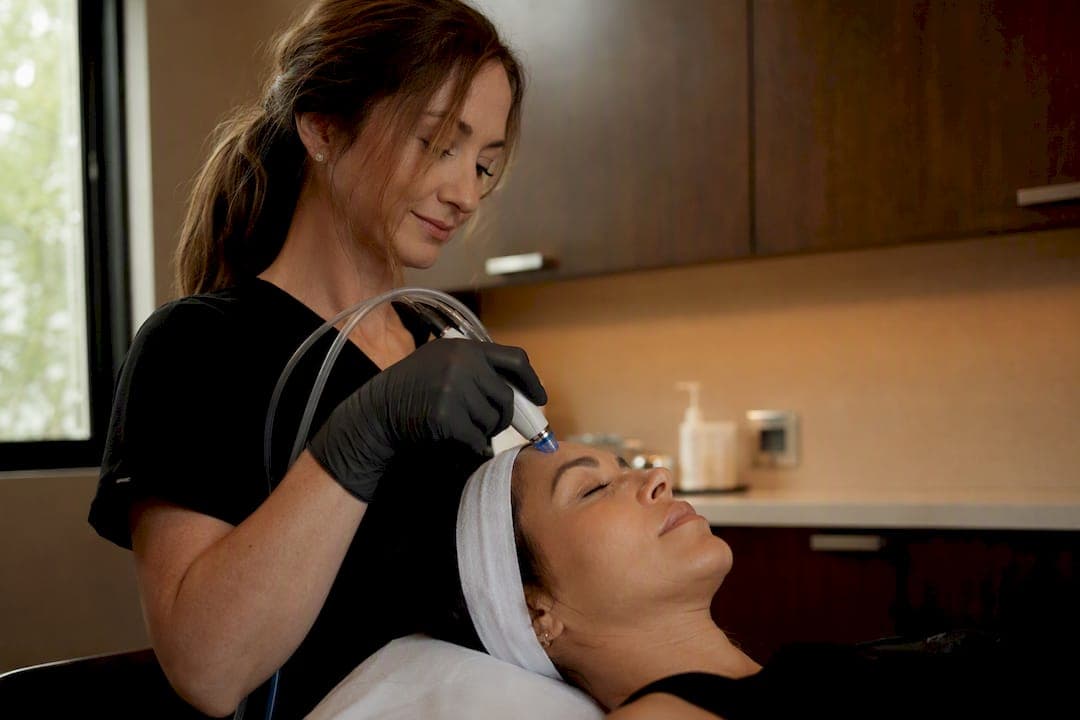
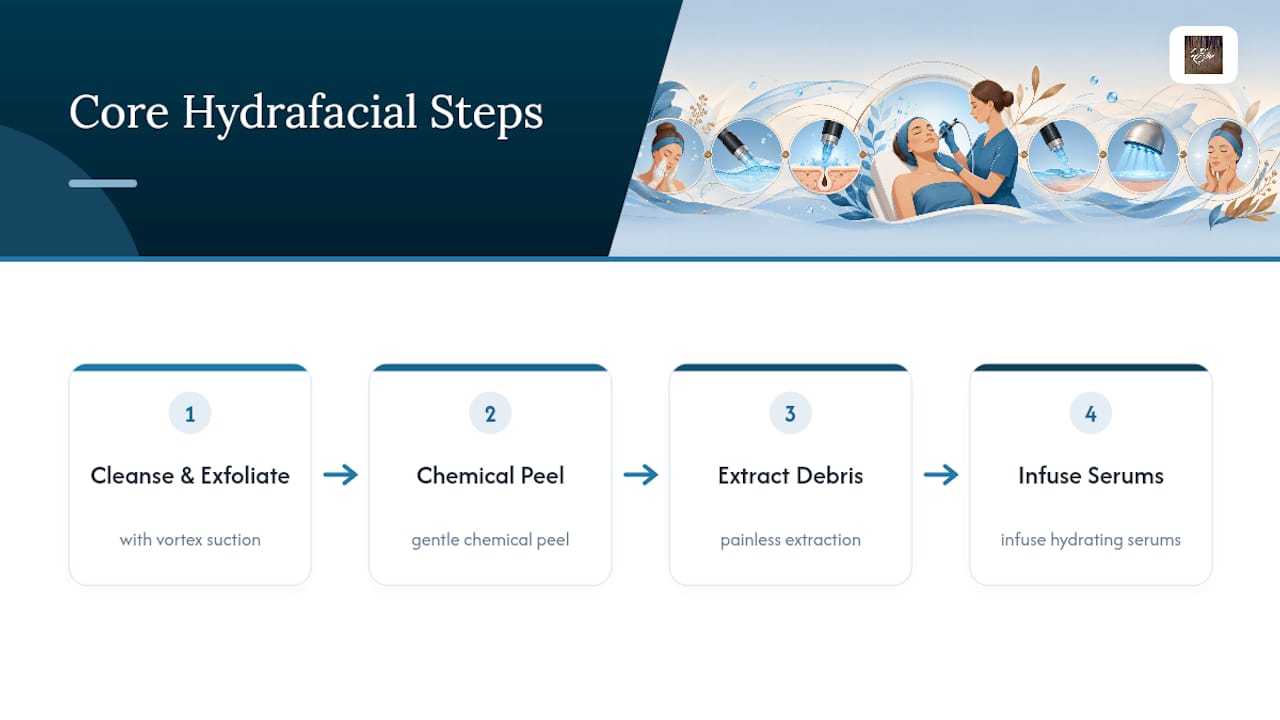
A Hydrafacial cleanses and exfoliates the skin with vortex suction, applies a mild chemical peel, painlessly extracts debris from pores, then infuses hydrating serums, all in one continuous device pass. A typical session runs 30 to 45 minutes, longer if you add Deluxe or Platinum boosters. Every step is customizable: providers adjust peel strength, HydroPeel tips, and serums using patented Vortex-Fusion technology based on your skin's actual needs that day.
Key Takeaways
Hydrafacial results come from a fixed four-step sequence, cleanse, peel, extract, hydrate, customized through boosters, tip selection, and add-on therapies chosen for your specific skin.
| Point | Details |
|---|---|
| Core sequence stays constant | Every Hydrafacial follows cleanse and exfoliate, peel, extract, then hydrate, regardless of tier. |
| Duration runs 30 to 45 minutes | Signature sessions typically finish in under an hour; Deluxe and Platinum take longer with add-ons. |
| Aftercare is simple but strict | Skip makeup for 12 to 24 hours, avoid heat and heavy sweat for 24 to 48 hours, and wear SPF daily. |
| Repeat every 4 to 6 weeks | Cumulative results for acne, tone, and fine lines build with consistent maintenance sessions. |
| Elite Laser Center customizes each session | HydraFacial MD is offered across three tiers under medical supervision, with boosters chosen per skin assessment. |
Table of Contents
- What Is a Hydrafacial, and Why Do the Step Counts Differ?
- What Are the Hydrafacial Treatment Steps in Order?
- How Do Boosters and Add-On Therapies Change the Sequence?
- How Should You Prepare, and What Happens Right After?
- How Often Should You Get a Hydrafacial, and When Do You See Results?
- When Should You Skip or Delay a Hydrafacial?
- What Does an Experienced Med Spa Check Before Treating You?
- Why We Recommend Hydrafacial to Patients Who Want Fast, Visible Results
- How Elite Laser Center Delivers a Hydrafacial That's Actually Tailored to You
- Sources
- FAQ
What Is a Hydrafacial, and Why Do the Step Counts Differ?
A Hydrafacial is a noninvasive hydradermabrasion treatment that combines exfoliation, extraction, and hydration through a single handheld device. Medical News Today describes it in three practical stages: cleanse, extract, hydrate. Most clinics expand that into four Signature steps by separating exfoliation from cleansing. HydraFacial's own brand materials go further, listing seven personalized therapies, including lymphatic drainage, microdermabrasion, a customized peel, vortex extraction, targeted serums, LED light, and hydration infusion.
Neither framing is wrong. They describe the same treatment at different zoom levels:
- 4-step Signature flow: the core mechanical sequence every Hydrafacial follows.
- 7-therapy model: the full menu of add-ons available in Deluxe and Platinum tiers.
Think of the 4 steps as the skeleton and the 7 therapies as what gets layered onto it based on your skin goals.
What Are the Hydrafacial Treatment Steps in Order?
Here's what actually happens once you're in the chair, step by step.
-
Cleanse and vortex exfoliation. The provider attaches a specialized tip and glides it across your skin using gentle suction. This lifts dead skin cells and surface debris while a cleansing solution flows through the device simultaneously. It feels like a light, wet massage, almost like a soft-bristled brush with water behind it. This step goes first because clean, exfoliated skin absorbs everything that follows far better.
-
Gentle chemical peel. A blend typically built around glycolic and salicylic acid gets applied next, loosening buildup inside pores without the harsh burn of a standalone peel. Most people feel mild tingling for a minute or two, then nothing. Providers time this step carefully and may dilute the acid concentration for sensitive or reactive skin. It's chemical exfoliation without the multi-day peeling that stronger in-office peels can cause.
-
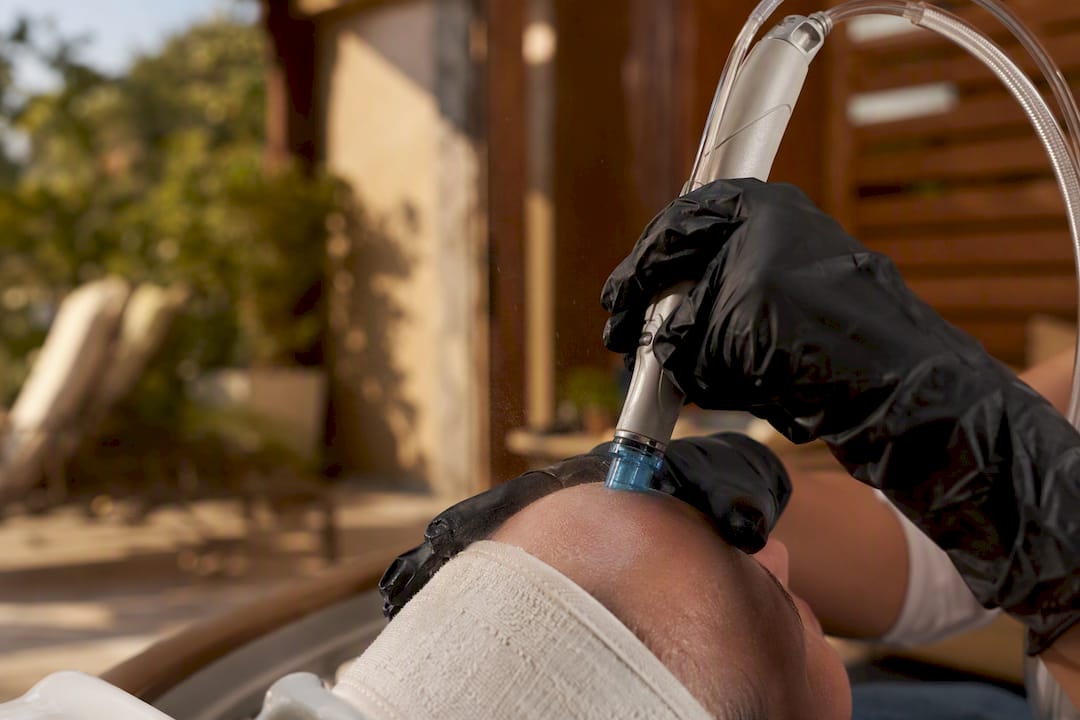
Vortex extraction. This is the step people talk about most, because it replaces manual pore extraction with painless suction. The device's spiral tip creates a vortex effect that pulls blackheads, oil, and debris out of pores without pinching or squeezing. Areas like the nose, chin, and forehead often show visible improvement immediately, less congestion, smaller-looking pores, an evener surface.
-
Serum infusion and hydration. The final pass delivers actives directly into freshly cleared pores: hyaluronic acid for hydration, antioxidants like vitamin C, and peptides depending on the serum chosen. The device essentially pushes these ingredients deeper than a topical application would achieve on its own. Most sessions end with a cooling, soothing finish that leaves skin calm rather than inflamed.
A quick reality check on sensation: most people describe the entire process as relaxing rather than uncomfortable. Mild redness and a plumped, dewy look are normal immediately afterward and usually fade within a few hours. Persistent stinging, swelling, or breakout-like bumps that last more than a day or two are not typical and worth mentioning to your provider.
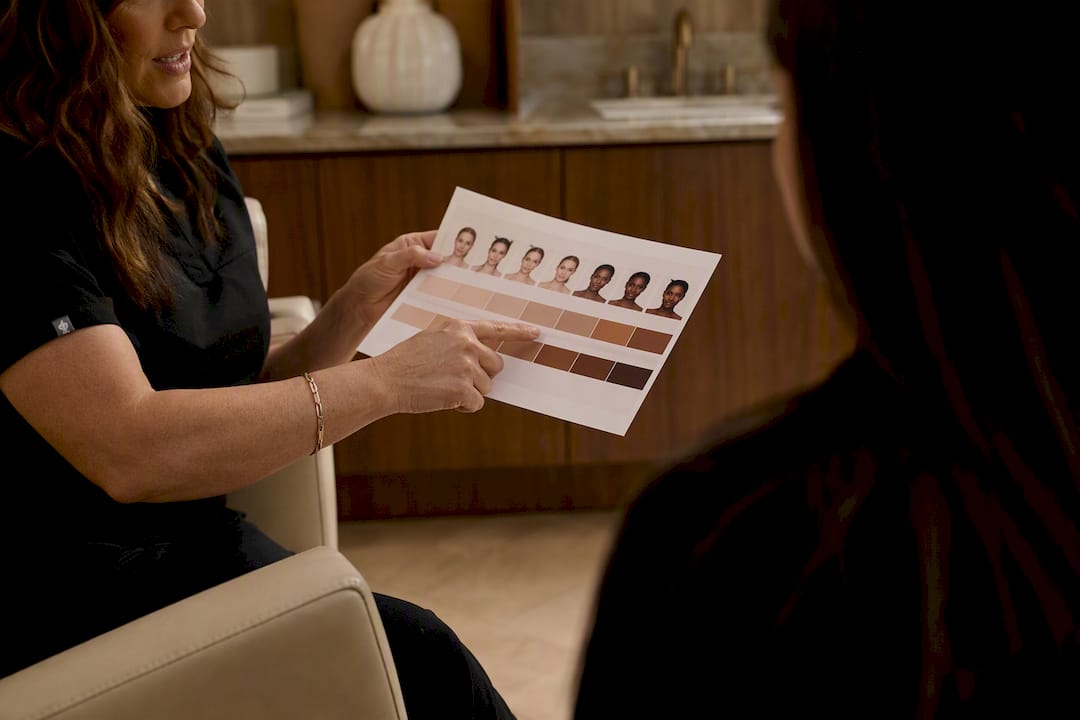
Pro Tip: Ask your provider to factor in your Fitzpatrick skin type before they pick a peel strength or booster. Darker skin tones are more prone to post-inflammatory pigmentation, so a slightly gentler acid concentration with a brightening booster often gets better results than pushing for maximum exfoliation in one visit.
How Do Boosters and Add-On Therapies Change the Sequence?
Deluxe and Platinum tiers layer additional therapies onto the core four steps rather than replacing them. Lymphatic drainage attachments reduce puffiness before extraction begins. LED light panels, red for anti-aging, blue for acne-prone skin, typically finish the session after hydration. Targeted boosters get infused during step four instead of a generic serum:
- Brightening boosters (often vitamin C based) for dullness or uneven tone.
- Clarifying boosters for acne-prone or congested skin.
- Anti-aging boosters with peptides or growth factors for fine lines.
- Hydration boosters with extra hyaluronic acid for dry or dehydrated skin.
Pro Tip: A good provider chooses your HydroPeel tip size and booster combination after a quick visual skin assessment, not from a fixed menu. If you have specific concerns, mention them at check-in so the treatment gets built around them.
How Should You Prepare, and What Happens Right After?
Skip retinoids and exfoliating acids for 48 to 72 hours before your appointment, and come in with a clean face if possible. Mention any recent injectables, laser treatments, or a history of isotretinoin use during your consultation so your provider can adjust peel strength accordingly.
During the appointment, expect a brief consultation, then roughly half an hour of the four-step process itself. Most people can return to normal activities immediately afterward.
For aftercare:
- Avoid makeup for 12 to 24 hours if you can, since freshly extracted pores benefit from breathing room.
- Apply broad-spectrum SPF 30+ daily, skin is more sun-sensitive right after treatment.
- Skip saunas, hot yoga, and intense workouts for 24 to 48 hours to avoid triggering irritation from heat and sweat.
- Hold off on retinoids and strong actives for several days before easing back into your normal routine.
How Often Should You Get a Hydrafacial, and When Do You See Results?
The instant plumping and glow you notice on the way out the door is real, and it can last anywhere from several days to a couple of weeks depending on your skin. But the bigger wins, evened tone, reduced congestion, softer fine lines, come from consistency.
- Immediate effect: hydration and smoother texture visible right away.
- Maintenance cadence: most clinics recommend a repeat session every 4 to 6 weeks.
- Cumulative results: acne congestion and discoloration typically need several sessions to show measurable change, since each treatment builds on the last rather than resetting from scratch.
When Should You Skip or Delay a Hydrafacial?
Certain situations call for waiting or choosing a different treatment entirely:
- Active infections, cold sores, or open wounds on the treatment area.
- Recent chemical peels, laser resurfacing, or microneedling (ask your provider about the specific waiting window for your procedure).
- Active sunburn or a recent history of isotretinoin use.
- Pregnancy in some cases, since certain acids and boosters aren't recommended; always disclose this during consultation.
Pro Tip: Fill out your medical history form completely, including current medications and recent cosmetic procedures. A provider can't tailor peel strength or booster choice safely without the full picture.
What Does an Experienced Med Spa Check Before Treating You?
A reputable provider doesn't just plug in the device and start. Before your first pass, they'll examine your skin under proper lighting to assess your Fitzpatrick phototype, active breakouts, sensitivity, and any recent procedures that might affect timing. Many clinics document this with before photos and a signed consent form, particularly when boosters or stronger peel concentrations are involved.
The safety margin in a Hydrafacial comes almost entirely from customization done right: the correct peel strength for your skin type, the correct HydroPeel tip size, and honest disclosure of anything you've had done in the past few weeks.
That assessment determines everything downstream, whether lymphatic drainage gets added first, which booster goes in during infusion, and whether LED light closes out the session. Elite Laser Center offers HydraFacial MD with treatments performed under experienced medical supervision, which matters most when a provider needs to make a judgment call on peel strength for reactive or melanin-rich skin.
Why We Recommend Hydrafacial to Patients Who Want Fast, Visible Results
Patients keep coming back to Hydrafacial because it delivers a visible difference in one visit without downtime. Most people can go straight back to work or errands afterward, no peeling, no redness that lingers for days. What patients mention most often is how comfortable the vortex extraction feels compared to manual extractions they've had elsewhere, and how well it adapts to different skin types and concerns. It's one of the few treatments that works equally well as a one-off refresh before an event and as a monthly maintenance routine.
How Elite Laser Center Delivers a Hydrafacial That's Actually Tailored to You
Elite Laser Center offers Hydrafacial across three tiers, Signature, Deluxe, and Platinum, so you're not locked into a one-size treatment when your skin needs something more specific. Add-ons like LED light therapy and targeted boosters get built into your session based on an actual skin assessment, not a fixed package.
Every treatment happens under experienced medical supervision, which means peel strength, booster selection, and HydroPeel tip choice get adjusted for your specific skin type and history rather than applied the same way to everyone in the chair. If you're curious what your skin actually needs, browse the facials and peels menu and book a consultation to get a treatment plan built around your goals instead of guessing which tier fits.
Sources
- How Does Hydrafacial Work? | 7 Steps to Glowing Skin
- What is a Hydrafacial? – Medical News Today
- Your Complete Step-by-Step HydraFacial Experience Guide
- Hydrafacial | Pre & Post-Care Guide | Omniya Clinic
This article is general information, not a substitute for advice from a qualified doctor. Consult a qualified healthcare professional about your own circumstances before acting on anything here.
FAQ
What Are the 4 Core Hydrafacial Steps?
Cleanse and exfoliate with vortex suction, apply a gentle chemical peel, extract debris painlessly, then infuse hydrating serums, all with one device in a single session.
Is Hydrafacial a 7-Step or 4-Step Treatment?
Both descriptions are accurate. The core mechanical process has 4 steps, while HydraFacial's brand materials describe 7 therapies available across Deluxe and Platinum tiers, including lymphatic drainage and LED light.
Can I Wear Makeup After a Hydrafacial?
It's best to wait 12 to 24 hours before applying makeup so freshly cleared pores aren't immediately reclogged.
Can I Exercise After a Hydrafacial?
Hold off on intense workouts, saunas, and hot yoga for 24 to 48 hours, since heat and heavy sweating can irritate freshly treated skin.
How Often Should I Get a Hydrafacial?
Most providers recommend every 4 to 6 weeks to maintain results and build cumulative improvement for concerns like congestion and fine lines.