
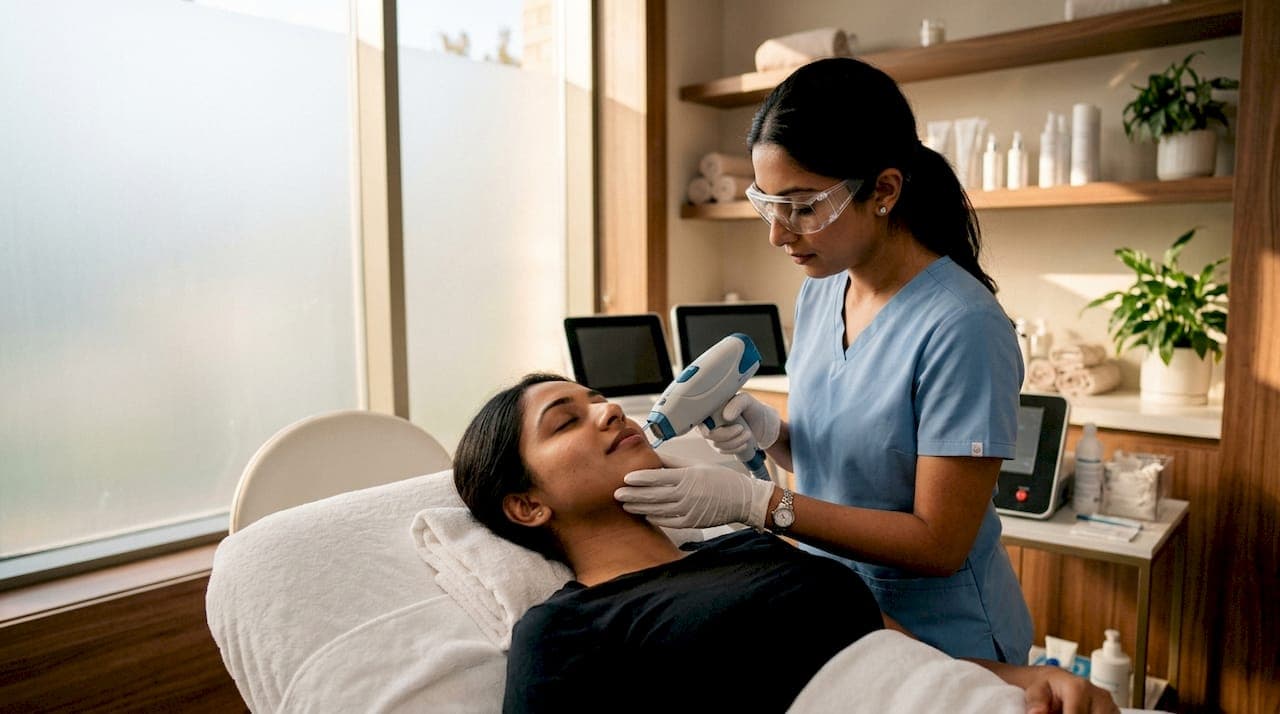
Facial laser hair removal is defined as a cosmetic procedure that uses concentrated laser light to target and disable hair follicles beneath the skin, producing long-term hair reduction. The FDA classifies this treatment as "permanent hair reduction," not complete removal, which sets realistic expectations from the start. This guide covers how the procedure works, which lasers suit different skin tones, what results you can expect, and how to prepare and recover. Whether you're managing hormonal facial hair or simply tired of daily shaving, understanding the full process puts you in control of your results.
How does facial laser hair removal work?
Facial laser hair removal operates on a principle called selective photothermolysis. The laser emits a specific wavelength of light that melanin in the hair follicle absorbs. That absorbed energy converts to heat, which damages the follicle and slows or stops future hair growth without harming the surrounding skin.

Laser types by skin tone
Choosing the right laser wavelength is the single most important technical decision in any treatment plan. Alexandrite 755 nm lasers work best for lighter skin tones (Fitzpatrick types I–III), while Nd:YAG 1064 nm lasers are the standard choice for darker skin tones (Fitzpatrick types IV–VI). The longer wavelength of the Nd:YAG penetrates deeper and bypasses surface melanin, reducing the risk of burns and pigmentation changes on darker complexions.
Precise Fitzpatrick phototyping before treatment is not optional. Adjusting laser output to match your skin type is what separates a safe, effective session from one that causes complications. A qualified provider will assess your skin tone and hair color before selecting settings.
Why multiple sessions are necessary
Hair grows in three cycles: anagen (active growth), catagen (transition), and telogen (resting). Lasers only affect follicles in the anagen phase, when the hair shaft is still connected to the bulb. Typical facial treatment requires 6 to 8 sessions spaced 4 to 6 weeks apart to catch enough follicles during active growth. Skipping sessions or spacing them incorrectly means missing entire cycles and reducing your overall results.
Cooling technology and comfort
Modern laser devices integrate cooling systems that protect the outer skin layer during treatment. Contact cooling tips, chilled air, and cooling gels all reduce surface heat and make facial sessions more tolerable. The face has thinner, more sensitive skin than the body, so cooling technology is especially valuable in this area.
Pro Tip: Ask your provider which cooling method their device uses before booking. Contact cooling built into the handpiece offers the most consistent protection for delicate facial skin.
What are the benefits of facial laser hair removal?
Long-term hair reduction is the primary benefit, and the results are substantial. Most patients achieve an 80–90% reduction in hair density after completing a full course of sessions. That figure reflects the FDA's own classification of the outcome as "permanent hair reduction," meaning regrowth can occur, particularly due to hormonal changes, but the overall volume of hair decreases significantly.
Skin texture and ingrown hair improvements
Laser hair removal reduces ingrown hairs and the skin irritation that comes with waxing and shaving. Because the laser targets the follicle directly, it prevents hairs from re-growing beneath the skin surface. That eliminates folliculitis and razor burn, two problems that are especially common on the chin and upper lip.
The skin texture improvements are a secondary benefit that many patients do not anticipate. Repeated shaving and waxing cause micro-trauma to the skin. Removing that cycle of irritation allows the skin to recover and stay smoother between sessions.
Comparison to other facial hair removal techniques
- Shaving removes hair at the surface and requires daily repetition. It causes razor burn and does nothing to slow regrowth.
- Waxing removes hair from the root but causes redness, irritation, and ingrown hairs. Results last 3–6 weeks.
- Threading is precise for shaping but does not reduce hair density over time and must be repeated every 2–4 weeks.
- Laser hair removal targets the follicle itself, reducing hair density with each session and delivering results that last months to years.
Hormonal facial hair and PCOS
Hormonal conditions like PCOS cause persistent facial hair that traditional methods cannot manage long-term. Laser hair removal reduces visible hair effectively, but maintenance sessions are often needed because the underlying hormonal stimulation continues. Patients with PCOS should discuss realistic timelines with their provider and plan for periodic touch-up sessions after the initial course.
Is laser hair removal safe for the face?
Laser hair removal is safe for facial skin when performed by a trained professional using the correct laser settings. The face requires more careful calibration than the body because the skin is thinner and more reactive. A proper skin assessment before each session is what keeps the procedure safe.
Common side effects
Most side effects are temporary and resolve within 24–48 hours:
- Redness and mild swelling at the treatment site
- A warm or sunburn-like sensation immediately after the session
- Mild soreness, particularly around the upper lip and chin
Rare but real risks
Rare side effects include hyperpigmentation, minor burns, and paradoxical hypertrichosis. Paradoxical hypertrichosis is a counterintuitive reaction where low-fluence laser energy actually stimulates new hair growth instead of destroying it. This affects a meaningful portion of high-risk populations and is more likely when a provider uses incorrect settings or treats the wrong skin type with the wrong laser. Choosing a qualified, experienced provider is the most effective way to avoid this outcome.
Sun exposure and skin sensitivity
Tanned skin raises the risk of pigmentation changes because the laser cannot easily distinguish between melanin in the hair follicle and melanin in the surrounding skin. Avoid sun exposure for at least two weeks before and after each session. Use SPF 30 or higher daily throughout your treatment course.
Pro Tip: Schedule your facial laser sessions during fall or winter when sun exposure is naturally lower. Starting treatments in colder months improves pigment contrast and reduces the risk of complications.
What does a facial laser hair removal session look like?
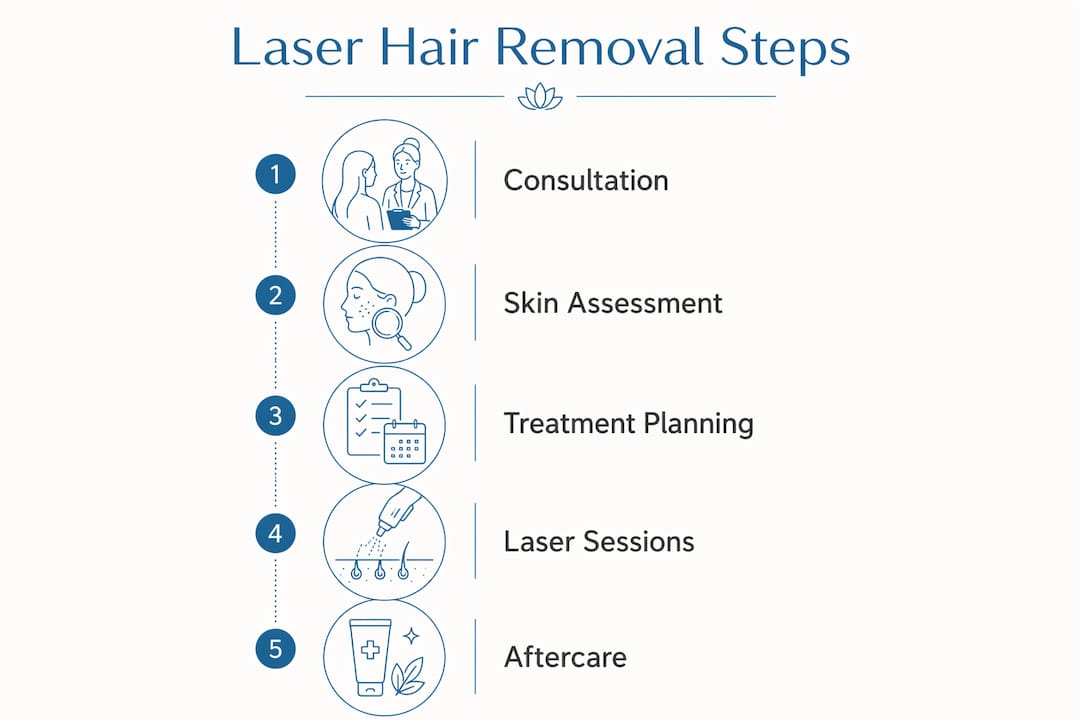
A typical facial session follows a clear sequence. Knowing what to expect removes the anxiety and helps you prepare correctly.
Before your appointment
- Shave the treatment area 24 hours before your session. The laser targets the hair bulb beneath the skin, not the hair shaft above it. Shaving ensures the energy reaches the right target.
- Avoid waxing, plucking, or threading for at least four weeks prior. Waxing or plucking removes the hair bulb, which is exactly what the laser needs to be present to work.
- Stay out of the sun for two weeks before treatment. Tanned skin increases the risk of burns and pigmentation changes.
- Skip retinoids and exfoliants for five to seven days before your session. These products sensitize the skin and increase the chance of irritation.
- Arrive with clean, product-free skin. No makeup, sunscreen, or moisturizer on the treatment area.
During the session
Your provider will give you protective eyewear before the laser activates. The handpiece moves across the treatment area in a grid pattern, delivering pulses of light. Each pulse feels like a quick snap or mild sting. Cooling technology activates simultaneously to protect the skin surface. A full facial session covering the upper lip, chin, and cheeks typically takes 15–30 minutes.
After your session
- Apply a cool compress or aloe vera gel to reduce redness immediately after.
- Moisturize the area twice daily with a gentle, fragrance-free product.
- Avoid direct sun exposure and apply SPF 30 or higher every morning.
- Skip exfoliants, retinoids, and active skincare ingredients for at least one week.
- Do not wax or pluck between sessions. Shaving is the only acceptable method for managing regrowth.
Sticking to your treatment schedule is as important as the sessions themselves. Missing appointments or waxing between visits resets your progress.
Key Takeaways
Facial laser hair removal delivers long-term hair reduction of 80–90% when the correct laser wavelength is matched to your skin tone and you complete the full course of 6 to 8 sessions.
| Point | Details |
|---|---|
| Laser selection matters | Alexandrite 755 nm suits lighter skin; Nd:YAG 1064 nm is safer for darker complexions. |
| Multiple sessions are required | Hair grows in cycles; 6 to 8 sessions spaced 4 to 6 weeks apart are needed to treat all active follicles. |
| Results are long-term, not permanent | The FDA classifies outcomes as "permanent hair reduction," meaning hormonal changes can trigger some regrowth. |
| Side effects are mostly temporary | Redness and swelling resolve within 48 hours; rare risks like hyperpigmentation are minimized by proper provider selection. |
| Timing and preparation drive results | Shave 24 hours before, avoid sun for two weeks, and never wax between sessions. |
What I've learned after years of watching patients go through this process
The biggest mistake I see is patients choosing a provider based on price alone. Laser hair removal on the face is not a commodity service. The difference between a provider who performs proper Fitzpatrick phototyping and one who uses a one-size-fits-all setting is the difference between great results and a hyperpigmentation problem that takes months to resolve.
The second thing I tell everyone: stop expecting "permanent removal." The FDA's language exists for a reason. Hormonal fluctuations, particularly in patients with PCOS or those going through menopause, can reactivate follicles that were previously treated. That does not mean the treatment failed. It means you may need a maintenance session every year or two. Planning for that reality from the beginning prevents disappointment.
Timing your treatment course is also underrated. Planning treatments during colder months gives you the best pigment contrast and the lowest risk of sun-related complications. Patients who start in october or november are typically done with their core sessions before summer, which is exactly when you want smooth, hair-free skin anyway.
The confidence improvement I see in patients after completing a full course is real and consistent. Facial hair, especially on the chin and upper lip, carries a social weight that shaving and waxing never fully address. Laser treatment removes the daily management burden. That shift in how patients carry themselves is, in my experience, the most underreported benefit of the entire procedure.
— Sharon
Professional facial laser hair removal at Elitelaserhair
Elitelaserhair at Elite Laser Center in Stony Brook, NY uses FDA-approved laser technology and provides every treatment under experienced medical supervision. The center customizes each plan to your skin tone, hair type, and facial treatment goals, and backs its laser hair removal packages with a three-year guarantee.
Patients across Suffolk County choose Elitelaserhair for its combination of clinical expertise and personalized care. If you want to discuss your facial hair concerns and find out which laser protocol fits your skin, scheduling a consultation is the straightforward next step. The team will assess your Fitzpatrick skin type, explain the recommended laser settings, and build a session schedule that fits your timeline. Visit Elitelaserhair to learn more or book your first appointment.
FAQ
What is facial laser hair removal?
Facial laser hair removal is a cosmetic procedure that uses targeted laser light to damage hair follicles and reduce hair growth on the face. The FDA classifies the outcome as "permanent hair reduction," meaning significant long-term reduction rather than complete elimination.
How many sessions does facial laser hair removal require?
Most patients need 6 to 8 sessions spaced 4 to 6 weeks apart. This schedule is necessary because lasers only affect hair follicles in the active growth (anagen) phase, and not all follicles are in that phase at the same time.
Is laser hair removal safe for darker skin tones?
Yes, when the correct laser is used. The Nd:YAG 1064 nm laser is the standard choice for darker skin tones (Fitzpatrick types IV–VI) because its longer wavelength reduces the risk of burns and pigmentation changes.
What side effects should I expect after a facial session?
Temporary redness, mild swelling, and a warm sensation are the most common side effects and typically resolve within 24–48 hours. Rare risks include hyperpigmentation and paradoxical hypertrichosis, both of which are minimized by choosing a qualified provider.
Can laser hair removal treat hormonal facial hair from PCOS?
Laser hair removal reduces visible facial hair in patients with PCOS, but maintenance sessions are often needed because the underlying hormonal stimulation can reactivate treated follicles over time.