

Yes, hyaluronidase can dissolve most hyaluronic acid lip fillers, including Juvederm, Restylane, and Belotero. Most patients notice change within 24 to 72 hours, with results settling over roughly two weeks. Non-HA fillers generally don't respond to this enzyme, and some patients need more than one session to get the result they want.
TL;DR:
- Hyaluronidase can dissolve most hyaluronic acid lip fillers, such as Juvederm, Restylane, and Belotero, often within 24 to 72 hours, but denser fillers may require multiple sessions.
- Emergency dissolving is necessary if vascular compromise occurs, indicated by pallor or pain, as this situation demands urgent treatment rather than routine procedures.
- The enzyme works best when injected directly into the filler, and dosing varies based on the filler type and crosslinking density, sometimes needing higher or repeated doses.
- Confirming the filler brand and injection details beforehand helps determine the appropriate dose and timing for effective dissolving.
- Side effects like swelling, bruising, or mild discomfort are common and typically resolve within days, but signs of allergic reactions or vascular occlusion require immediate medical attention.
Table of Contents
- What Dissolving Lip Filler Actually Means
- How Hyaluronidase Breaks Down Filler
- Who Should Consider Dissolving (and Who Needs to Wait)
- What Happens During Your Appointment
- How Fast Results Show Up
- Side Effects, Risks, and When to Get Urgent Care
- What to Expect Long-Term and When You Can Re-Inject
- Questions to Bring to Your Consultation
- A Straight Answer From Someone Who's Reviewed the Research
- Where This Information Comes From
- Sources
- FAQ
What Dissolving Lip Filler Actually Means
Dissolving lip filler is a clinical procedure where a licensed injector uses hyaluronidase, an enzyme, to break down hyaluronic acid filler that's already sitting in your lip tissue. It's not a product you apply at home, and it's not reversible with massage or time alone in most cases. People request it for a handful of reasons, and the reason usually shapes how urgently they need to be seen.
- Overfilled or duck-like appearance from too much product
- Lumps, bumps, or asymmetry that didn't resolve on its own
- Filler migration above the lip border (the "mustache" effect)
- Allergic or inflammatory reactions to the filler material
- Simply wanting a different look after a style change
Most of these are elective. One is not: if a lip looks unusually pale, mottled, or painful shortly after injection, that can signal vascular compromise, and dissolving becomes urgent rather than optional.
How Hyaluronidase Breaks Down Filler
Hyaluronidase works by cutting the chemical bonds that hold hyaluronic acid molecules together. Once those bonds break, your body clears the fragments through normal metabolic processes, and the filler volume shrinks or disappears. Direct injection into the filler mass works better than surface application, since the enzyme needs to reach the material itself rather than the skin above it.
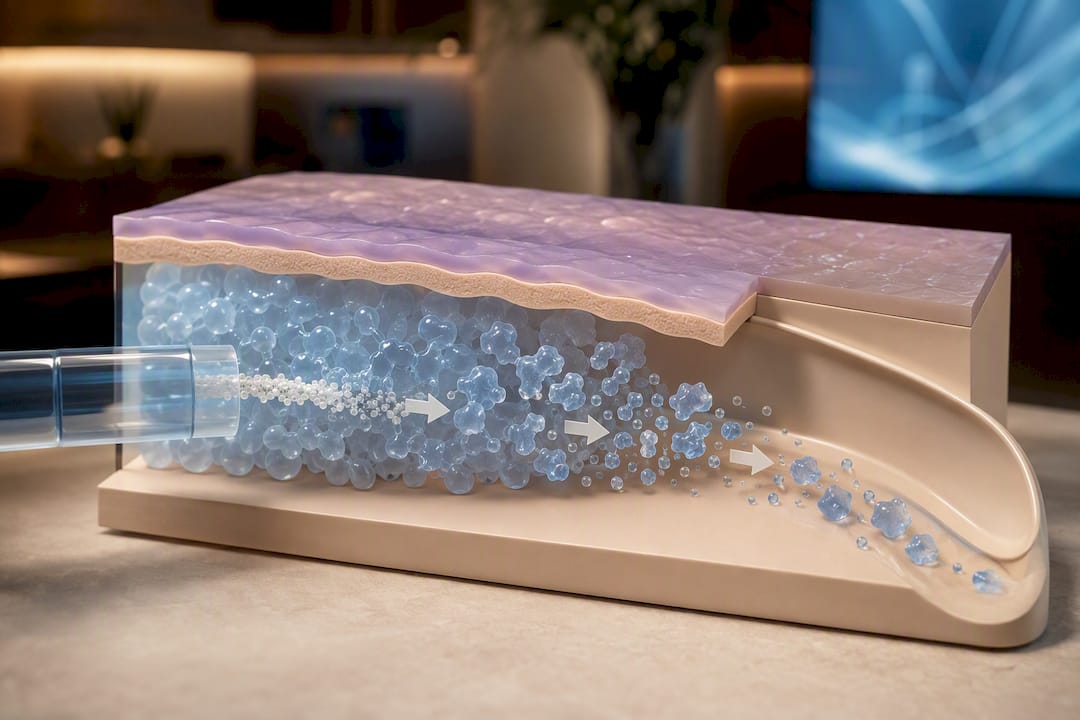
This is why brand matters. Juvederm, Restylane, and Belotero are all hyaluronic acid based, so hyaluronidase reaches and dissolves them reliably. Non-HA options, including silicone, polyalkylimide, injected fat, and collagen stimulators like Sculptra, don't break down this way. If you've had one of those, dissolving typically isn't an option, and correction may require a surgical approach instead.
Dosing isn't one-size-fits-all, either. Biphasic fillers tend to dissolve faster at lower enzyme doses, while more heavily crosslinked monophasic fillers often need higher doses and sometimes repeat injections to fully clear.
Who Should Consider Dissolving (and Who Needs to Wait)
You need hyaluronic acid filler actually present in your lips for this to work. If you're not sure what you had injected, that's the first thing to sort out, ideally before you show up for a consultation.
- Bring your filler brand, injection date, and provider records if you have them
- Flag any history of allergic reactions, since patch testing may be recommended
- Suspected vascular occlusion (pale, cold, or painful lip tissue) needs same-day care, not a scheduled appointment
- Everyone else falls into the elective category, where timing is flexible
Pro Tip: Even a photo of your filler's product box or an old receipt can help your injector confirm the brand, which affects dosing and expected timeline.
What Happens During Your Appointment
The visit itself is short, but there's real prep involved beforehand and a recovery window after.
- Before: Disclose all medications, especially blood thinners, and expect a possible patch test if you have allergy concerns.
- During: Your provider applies topical numbing, then injects hyaluronidase directly into the filler mass. Most sessions run 10 to 15 minutes.
- After: Ice the area for 24 to 48 hours, skip massage unless your provider specifically advises it, and expect some bruising or swelling to settle over the next few days.
Watch for anything beyond ordinary swelling, particularly spreading redness, worsening pain, or skin discoloration, and call your provider rather than waiting it out.
How Fast Results Show Up
Many patients see visible change within 24 to 72 hours, with the lips continuing to soften and settle over roughly two weeks as the enzyme finishes breaking down the material and your body clears the fragments. That two-week mark is when most people can judge the actual result, not day two or three.
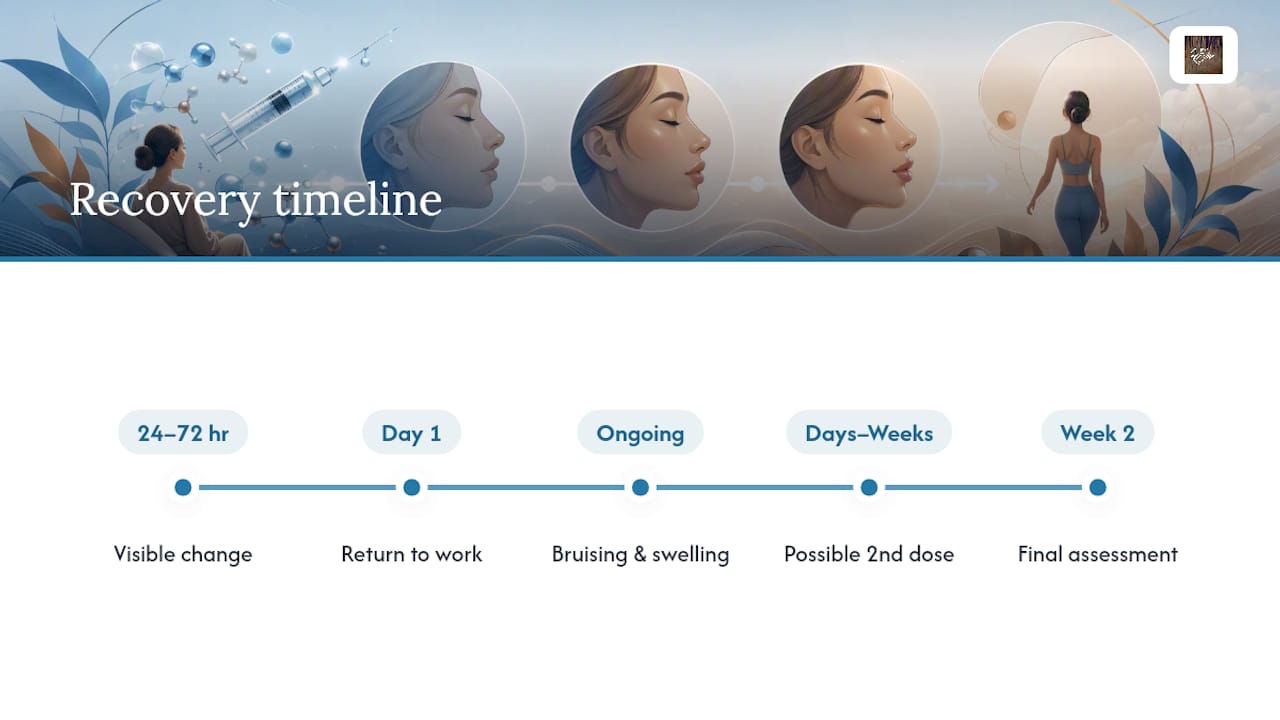
Denser or more heavily crosslinked fillers sometimes need a second round, spaced days to weeks after the first, since a single dose may not fully clear them. Bruising and mild swelling are the main things that affect your return-to-normal-activities timeline. Most people are comfortable going back to work the next day, though visible bruising can linger longer if you bruise easily. For a closer look at what swelling typically looks like day by day, Elite Laser Center's recovery guide walks through it.
Side Effects, Risks, and When to Get Urgent Care
Swelling, bruising, tenderness, and redness are common and typically resolve within a few days. That's the expected experience for most patients, not a complication.
Allergic reactions are rarer but real. Patch testing lowers the risk without eliminating it, which is part of why disclosing prior reactions matters before treatment starts.
- Hives, facial swelling beyond the injection site, or difficulty breathing are signs of a serious allergic reaction and need emergency care
- Increasing pain, skin that turns dusky or mottled, or a lip that feels unusually cool can indicate vascular occlusion
- Over-dissolving can temporarily thin your natural hyaluronic acid, since the enzyme doesn't distinguish perfectly between injected filler and your own tissue
When vascular occlusion is suspected, dissolving with hyaluronidase is the recognized emergency intervention to restore blood flow, and it needs to happen fast rather than at a routine follow-up visit.
What to Expect Long-Term and When You Can Re-Inject
Some temporary hollowing or fine-line appearance is normal after dissolving, since your natural hyaluronic acid gets broken down along with the filler. It typically rebuilds on its own over the following weeks.
Most clinicians recommend waiting at least two weeks after your final dissolving session before getting new filler, and several weeks is common practice to let tissue fully settle and swelling resolve. Jumping back in too soon makes it harder to judge how much filler you actually need. If you're weighing a different look next time, a consultation that reviews your prior filler brand and volume, similar to what's covered on Elite Laser Center's filler longevity page, gives your injector a much better starting point than guessing.
Questions to Bring to Your Consultation
Walking in prepared makes the whole process smoother, both for you and the provider handling your case.
- Ask which filler brand and how much product they believe is present
- Ask about their approach to hyaluronidase dosing for that specific filler type
- Confirm whether allergy testing is standard practice at that clinic
- Ask what their emergency protocol looks like if a reaction occurs
Pro Tip: Confirm that whoever administers the injection works under active medical supervision. This matters as much for dissolving as it does for the original filler placement.
Elite Laser Center's injectables page outlines how consultations work and what patients can expect from clinically supervised care, which is worth a look before you book anything.
A Straight Answer From Someone Who's Reviewed the Research
The core fact holds up across every clinical source on this topic: hyaluronidase dissolves hyaluronic acid filler, and it does so reliably when the right brand and dose are matched to the right provider. What gets glossed over is the "all or nothing" reality. If you're hoping to shave down one lump while leaving the rest untouched, be honest with yourself about how likely that is, because the enzyme doesn't stay put. Bring your records, ask the pointed questions, and let a licensed provider make the call rather than trying to manage this at home.
— Sharon
Where This Information Comes From
The clinical facts in this article draw from the Cleveland Clinic's overview of dissolving lip filler, the American Society of Plastic Surgeons' guidance on filler removal risks, and a PubMed-published study on hyaluronidase dosing strategies. Each source addresses a different piece of the picture, from mechanism to real-world risk to dosing science.
This article is general information, not a substitute for advice from a qualified doctor. Consult a qualified healthcare professional about your own circumstances before acting on anything here.
Sources
- Dissolving Lip Filler: How It Works & What To Expect
- Risks and rewards: What to know about dissolving filler
- How Should We Use Hyaluronidase for Dissolving Hyaluronic Acid Fillers?
- Dissolving Filler: What to Know About Removing Lip Fillers
FAQ
Does Dissolving Lip Filler Actually Get Rid of It?
Yes, hyaluronidase reliably breaks down hyaluronic acid filler in most cases, though denser fillers sometimes need a second session to fully clear.
Do Lips Go Back to Normal After Dissolving?
Lips typically return close to their pre-filler shape once swelling resolves, though some temporary thinning can occur since the enzyme also breaks down some of your natural hyaluronic acid, which usually rebuilds over the following weeks.
How Painful Is It to Dissolve Lip Fillers?
Most patients describe mild discomfort similar to the original filler injection, and topical numbing is used to keep it tolerable during the short procedure.
How Much Does Lip Dissolving Cost?
Cost varies widely based on how many units of hyaluronidase are needed, provider experience, and location, so getting a specific quote requires an in-person consultation rather than a general estimate.
Recommended
- Lip Filler Swelling: Your Day-by-Day Recovery Guide
- Detectable 15 Years, Visible 6 to 18 Months: Filler Longevity
- Botox Aftercare: Your Timeline for the First Two Weeks
This article was produced with AI assistance and reviewed for accuracy. It is provided for general information, and it is not professional advice.