
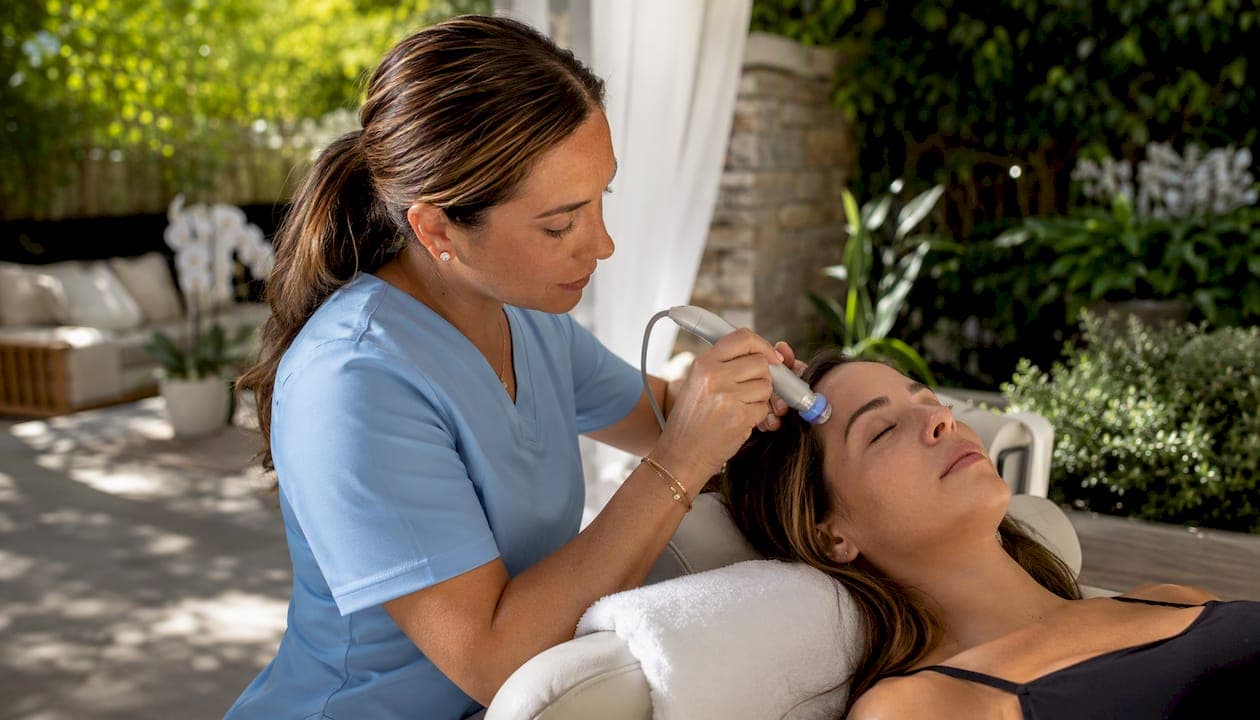
Pick HydraFacial for sensitive, congested, or event-ready skin. Pick DiamondGlow when your goals are texture, sun damage, hyperpigmentation, or deeper corrective resurfacing. That single sentence covers most decisions, but the details matter when your skin has specific needs.
Here is the quick mapping:
- Dryness and dehydration: HydraFacial — immediate plumping, no irritation risk
- Congestion and mild acne: HydraFacial — vortex extraction plus GlySal peel clears pores without aggravating inflammation
- Uneven texture and shallow scarring: DiamondGlow — mechanical resurfacing goes deeper than surface-level chemical exfoliation
- Hyperpigmentation and sun damage: DiamondGlow — brightening Pro-Infusion serums (vitamin C, kojic acid) penetrate at the moment of exfoliation
- Rosacea or reactive skin: HydraFacial — fluid-based exfoliation is gentler on compromised barriers
- Pre-event glow (within 24–48 hours): HydraFacial — zero downtime, instant radiance
Individual factors, including your skin barrier status, current medications, and any recent procedures, can shift this calculus. A licensed provider should confirm the right call for your skin.
Table of Contents
- How do DiamondGlow and HydraFacial compare side by side?
- How do DiamondGlow and HydraFacial actually work?
- Which skin concerns does each treatment actually address?
- What does a treatment appointment actually feel like?
- Who should avoid these treatments, and what are the risks?
- How much do these treatments cost, and how often do you need them?
- How do you decide between DiamondGlow and HydraFacial?
- Key Takeaways
- The treatment that actually fits your skin
- What Elite Laser Center offers for your skin goals
- Useful sources and further reading
How do DiamondGlow and HydraFacial compare side by side?
Both treatments are medical-grade facials, but they solve different problems through different mechanisms. Provider technique and add-ons can shift outcomes, so use this table as a starting framework, not a final verdict.
| Dimension | DiamondGlow | HydraFacial |
|---|---|---|
| How it works | Diamond-tip mechanical exfoliation + simultaneous SkinMedica Pro-Infusion serum delivery via suction | Vortex-Fusion: chemical exfoliation (glycolic/salicylic), vortex-suction extraction, hydrating serum infusion |
| Best-for skin concerns | Texture, shallow scarring, hyperpigmentation, sun damage, fine lines | Congestion, acne, dryness, sensitivity, event-ready hydration |
| Sensations during treatment | Gritty, mild warmth, firm suction — more tactile | Smooth, cool, gentle suction — most clients describe it as relaxing |
| Downtime and side effects | Mild redness 12–24 hours; light flaking possible over 2–3 days | Minimal to none; slight flushing resolves within hours |
| Results timeline | Visible texture improvement after 1–2 sessions; cumulative tone correction over a series | Immediate plumping and glow; hydration benefits taper after 4–6 weeks |
| Typical cost (national avg.) | ~$215 per session | ~$247 per session |
| Recommended frequency | Monthly corrective series; quarterly maintenance | Monthly maintenance; series of 3–6 for acne goals |
| Treatment areas | Face, neck, lips, under-eyes, décolleté, hands | Face standard; other areas as add-ons |
| Who should avoid it | Active infections, open sores, inflammatory flares, recent laser/filler | Active sunburn, open wounds, certain skin infections |
Both treatments pair well with add-ons. LED light therapy is a common enhancement for either, and chemical peels can be layered into a HydraFacial protocol. Provider skill and device maintenance matter as much as the brand name on the machine.
How do DiamondGlow and HydraFacial actually work?
The core difference comes down to one word: how each treatment exfoliates. DiamondGlow is physical; HydraFacial is fluid-based and chemical. That distinction drives everything else.
DiamondGlow step by step
- Simultaneous serum infusion: At the exact moment of exfoliation, SkinMedica Pro-Infusion serums are delivered through the same closed-loop system. Because the skin surface is freshly opened, serum penetration is deeper than topical application alone.
Which skin concerns does each treatment actually address?
Congestion and acne
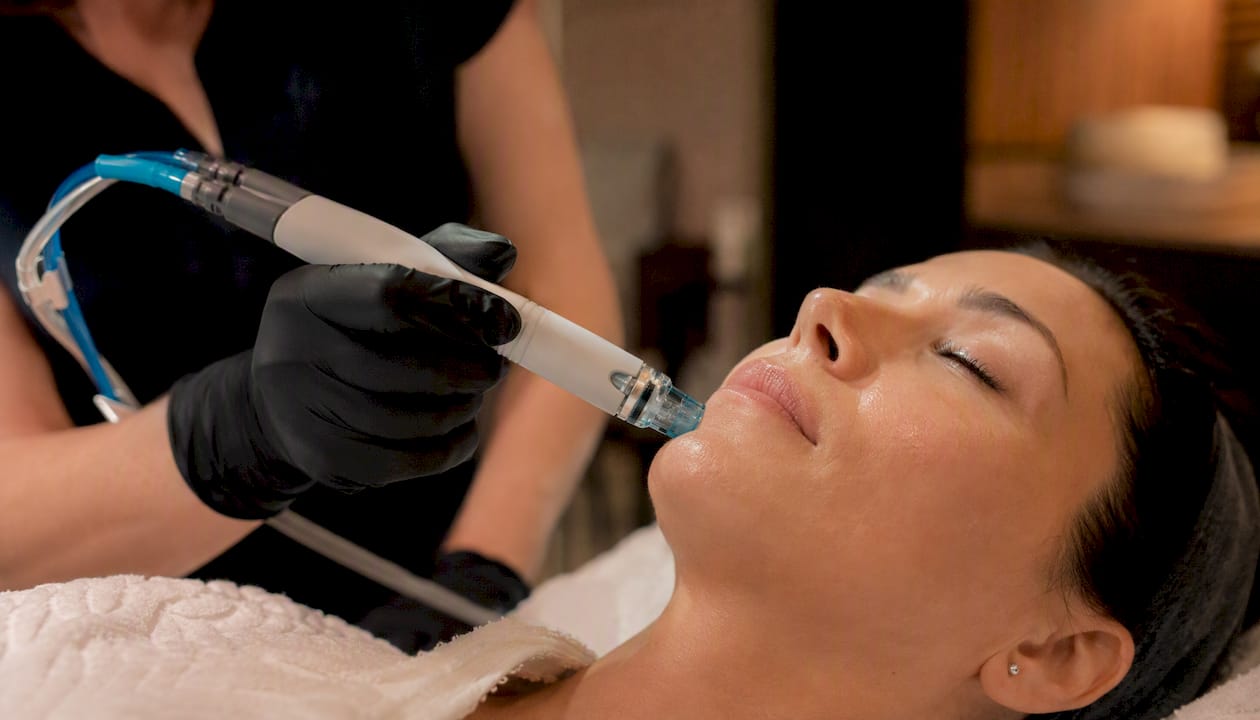
HydraFacial has the stronger clinical record here. Its vortex extraction physically clears pores, and the GlySal peel targets the keratin plugs that cause blackheads and whiteheads. A 2024 Journal of Cosmetic Dermatology study reported a six-session HydraFacial series reduced inflammatory acne lesions by 41% in mild-to-moderate acne. DiamondGlow is generally avoided on active breakouts because mechanical abrasion over inflamed papules can worsen irritation.
Texture and shallow scarring
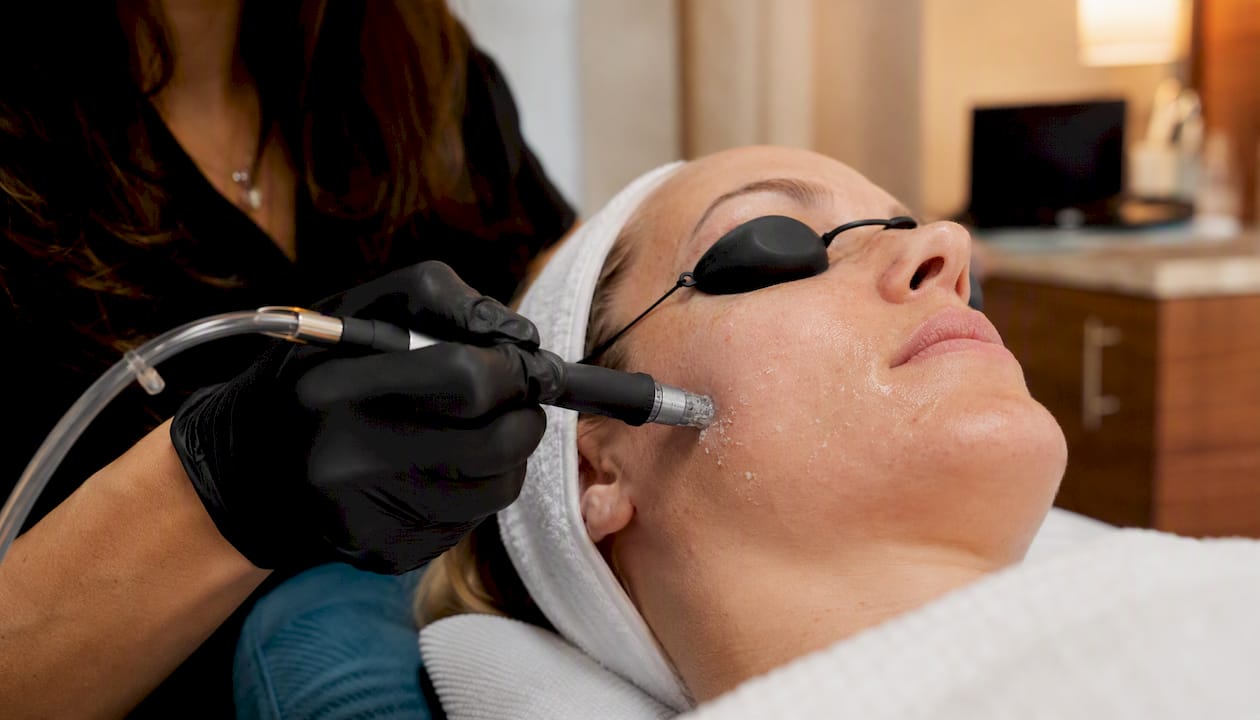
DiamondGlow wins. The diamond tip physically resurfaces the skin's outer layers, and the simultaneous serum delivery means corrective ingredients reach the skin at its most receptive point. Repeated sessions produce cumulative smoothing that surface-level chemical exfoliation alone rarely matches.
Hyperpigmentation and sun damage
Again, DiamondGlow has the edge. Brightening Pro-Infusion serums containing vitamin C and kojic acid are delivered directly into freshly exfoliated skin, where they can act on melanin production more effectively. For moderate-to-severe pigmentation, though, neither facial replaces a fractional laser or a series of medical-grade peels. Escalate to a dermatologist when pigmentation is deep or resistant.
Dryness and dehydration
HydraFacial's hyaluronic acid infusion produces immediate, visible plumping. Clients with dry or dehydrated skin often see results the same day. DiamondGlow can also address dryness through its serum system, but the mechanical exfoliation step requires an intact skin barrier. If your barrier is already compromised, HydraFacial is the safer starting point.
Sensitivity and rosacea
HydraFacial's fluid-based exfoliation is gentler on reactive skin. The absence of physical abrasion means less risk of triggering a rosacea flare. DiamondGlow can be performed on sensitive skin with a fine-grit tip and appropriate serums, but it requires an experienced provider who can adjust pressure and tip selection in real time. When in doubt, start with HydraFacial and graduate to DiamondGlow once the barrier is stable.
Pre-event hydration
HydraFacial is the standard recommendation here. Zero downtime, immediate glow, and no risk of redness or flaking the next morning. Book it 24–48 hours before the event. DiamondGlow's potential for mild redness makes it a poor choice within 72 hours of a big occasion.
What does a treatment appointment actually feel like?
Timeline and sensations
Before your appointment:
- Arrive with clean skin; skip retinoids and active exfoliants for 48–72 hours beforehand
- Disclose any recent injectables, laser procedures, or prescription topicals at check-in
During the session (30–45 minutes):
- DiamondGlow: expect a gritty, textured sensation as the diamond tip moves across the skin, followed by mild warmth and firm suction. Most clients find it tolerable; it is more tactile than HydraFacial but not painful.
- HydraFacial: smooth, cool, and almost spa-like. The vortex tip feels like gentle suction. The GlySal peel may produce a brief tingle, but most clients describe the overall experience as relaxing.
Immediately after:
- DiamondGlow: skin looks polished and slightly flushed. Redness typically fades within 12–24 hours.
- HydraFacial: skin looks dewy and plump, with minimal to no redness. Most clients walk out ready for a photo.
The 24–72 hour window:
- DiamondGlow: avoid active skincare ingredients (retinoids, AHAs, BHAs) for at least 48 hours. Light flaking is normal over days 2–3.
- HydraFacial: resume normal skincare the next day. Wear SPF 30+ regardless of which treatment you had.
Pro Tip: Book HydraFacial 24–48 hours before a wedding, event, or photo shoot. For DiamondGlow, give yourself at least 5–7 days so any redness or light flaking has fully resolved.
Who should avoid these treatments, and what are the risks?
Most adults with healthy skin tolerate both treatments well. Side effects are usually mild and short-lived. The risks worth knowing about are the ones tied to specific skin conditions and medications.
Typical side effects
DiamondGlow produces mild redness and occasional light flaking, both of which resolve within a few days. HydraFacial's most common side effect is brief flushing that clears within hours. Neither treatment carries significant downtime for most people.
Contraindications
Before booking either treatment, postpone if you have: active skin infections, open sores, hives, cysts, or inflammatory flares. Allergan's manufacturer guidance for DiamondGlow specifically advises postponing treatment when pimples, rashes, or infections are present, as mechanical exfoliation over compromised skin can delay healing or worsen existing problems. The same caution applies to HydraFacial when the skin barrier is actively broken.
DiamondGlow is not appropriate for anyone with active rosacea flares, eczema outbreaks, or psoriasis plaques on the treatment area. HydraFacial is generally better tolerated in these cases, though providers should still assess barrier integrity before proceeding.
What to disclose at your consult
Bring up the following at your appointment:
- Recent injectables or laser procedures: manufacturer guidance and clinic protocols recommend disclosing recent filler, Botox, or laser treatments to avoid adverse interactions
How much do these treatments cost, and how often do you need them?
Single-session pricing
- DiamondGlow: national average is about $215 per session, though prices in major metro markets run higher
- HydraFacial: national average is about $247 per session, with premium boosters adding $50–$150 per visit
Pricing note: These are national averages from 2026 med-spa industry reporting. Your actual price depends on your market, the provider's credentials, and which add-ons are included. Add-ons, not the base treatment, are typically where checkout prices climb.
Packages and memberships
Clinics frequently offer three- or six-session packages at a per-session discount. Monthly membership plans, like the Skincare Club at Elite Laser Center, can bring per-session costs down significantly for clients who maintain regular appointments.
How long do results last?
HydraFacial's immediate glow typically lasts 4–6 weeks before hydration tapers. DiamondGlow's textural improvements are more durable because they reflect actual skin resurfacing, but maintenance sessions are still needed to sustain results. Neither treatment is a one-and-done solution.
How do you decide between DiamondGlow and HydraFacial?
Decision checklist
- If your primary concern is texture, pigment, or shallow scarring: choose DiamondGlow, provided your skin barrier is intact and you have no active breakouts
- If your skin is sensitive, reactive, or prone to rosacea: start with HydraFacial and reassess after your barrier stabilizes
- If you have a big event within the next week: HydraFacial only
- If you want to treat your face, neck, and décolleté in one session: DiamondGlow covers more treatment areas in a standard session
- If you are new to medical-grade facials: HydraFacial is the lower-risk entry point with a gentler profile
- If budget is the deciding factor: DiamondGlow's lower national average may tip the balance, but compare local prices before assuming
Questions to ask your provider
- What device model are you using, and when was it last serviced?
- Which serum or booster will you use for my specific concern?
- How will you adjust the protocol if my skin reacts during the session?
- What is your pre- and post-treatment protocol for someone on retinoids?
- Do you have experience treating [your specific concern] with this device?
Red flags to watch for
- No medical oversight or licensed clinician on-site
- A single protocol offered to every client regardless of skin type
- Pressure to add multiple boosters without explaining why each one addresses your concern
- No intake form or skin assessment before treatment
Key Takeaways
DiamondGlow is the corrective choice for texture and pigment; HydraFacial is the gentler, maintenance-first option for sensitive, congested, or event-ready skin.
| Point | Details |
|---|---|
| Exfoliation type drives suitability | DiamondGlow uses mechanical abrasion; HydraFacial uses fluid-chemical exfoliation, making it gentler for reactive skin. |
| National pricing averages | DiamondGlow averages ~$215 per session; HydraFacial averages ~$247, with add-ons raising both significantly. |
| Frequency for results | Monthly maintenance works for both; corrective DiamondGlow series runs 3–6 sessions spaced 2–4 weeks apart. |
| Contraindications apply to both | Active infections, open sores, or inflammatory flares are reasons to postpone either treatment per manufacturer guidance. |
| Elitelaserhair's approach | Elite Laser Center assesses barrier integrity and skin goals before recommending DiamondGlow or HydraFacial, with all sessions under medical supervision. |
The treatment that actually fits your skin
The comparison articles that rank well for this topic tend to present DiamondGlow and HydraFacial as rough equals, each with a tidy list of pros and cons. That framing undersells a real clinical distinction: these are not interchangeable treatments at different price points. They are different tools for different jobs.
HydraFacial became the dominant facial treatment in the U.S. partly because it is forgiving. A provider with moderate skill can deliver a pleasant, low-risk result on almost any skin type. That is genuinely useful, but it also means HydraFacial is often the default recommendation when a more targeted approach would serve the client better.
DiamondGlow requires more clinical judgment. Tip selection, pressure, serum choice, and pass count all affect the outcome. On the right skin, with the right protocol, it produces results that HydraFacial simply cannot match for texture and pigmentation. On the wrong skin, or in the wrong hands, it can aggravate the very problems the client came in to fix.
The question most people should actually be asking is not "which treatment is better?" but "which provider has the clinical skill to customize either treatment for my specific skin?" A well-executed HydraFacial from a skilled clinician beats a poorly calibrated DiamondGlow every time. Provider expertise is the variable that matters most, and it is the one most comparison articles never mention.
What Elite Laser Center offers for your skin goals
Elitelaserhair provides both DiamondGlow facials and HydraFacial treatments at its medical spa in Stony Brook, NY, with every session performed under experienced medical supervision. The clinic's facials and peels menu also includes LED light therapy add-ons, VIPeel chemical peels, and customized protocols for acne, pigmentation, and anti-aging goals.
What sets Elitelaserhair apart from a standard spa is the clinical intake process. Before any facial, a licensed provider assesses your skin barrier, reviews your treatment history, and selects the protocol that fits your actual goals, not just the one that is easiest to deliver. If DiamondGlow is right for you, you get DiamondGlow. If your skin needs HydraFacial first, that is what the clinician recommends.
Ready to find out which treatment fits your skin? Book a consultation at Elite Laser Center and get a personalized treatment plan from a licensed clinician in Suffolk County.
This article is for general informational purposes only and is not a substitute for professional medical or aesthetic advice. Consult a licensed provider to confirm which treatment is appropriate for your skin.
Useful sources and further reading
- Hydrafacial vs Diamond Glow at Med Spas: 2026 Treatment Comparison | SpaLens
- HydraFacial vs DiamondGlow The Woodlands: Which Medical-Grade Facial Is Right for You?
- DiamondGlow vs HydraFacial: Which Facial Is Best? | Reviv Beauty Sanford
- DiamondGlow vs HydraFacial: Which Is Better?
- Hydrafacial vs Diamond Glow Explained | TheBeautyFoodie