
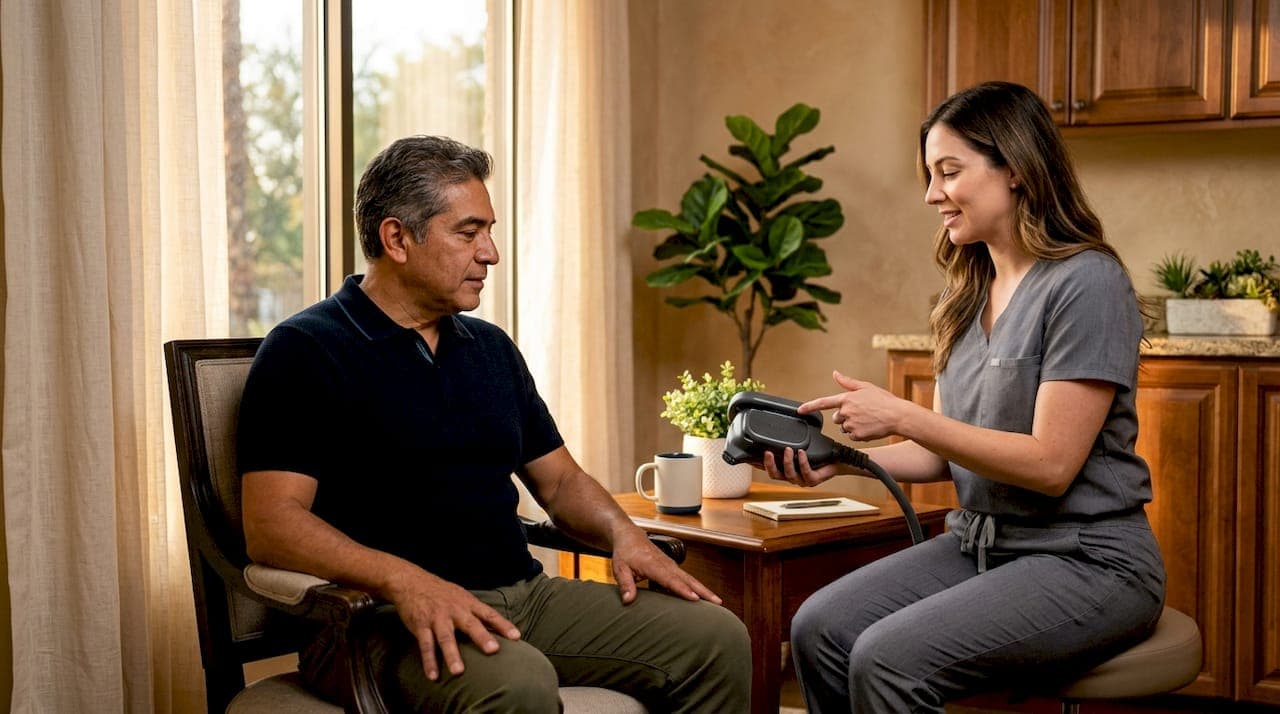
Paradoxical adipose hyperplasia (PAH) is a rare CoolSculpting complication where treated fat tissue grows larger instead of shrinking. Clinically known as paradoxical hyperplasia, this condition is the opposite of the intended outcome. It appears weeks to months after a fat freezing session and produces a firm, visible mass at the treatment site. Understanding PAH is critical for anyone weighing CoolSculpting risks before committing to a procedure. This article covers what PAH is, who gets it, what causes it, how to recognize it, and what corrective options exist.
What is CoolSculpting paradoxical adipose hyperplasia?
Paradoxical adipose hyperplasia is defined as an unexpected enlargement of adipose tissue at a CoolSculpting treatment site rather than the expected fat reduction. The term "paradoxical" is precise here. The cold energy that normally triggers fat cell death instead stimulates fat cell growth in a small subset of patients. The result is a new, enlarged mass of adipose tissue that was not present before treatment.
PAH differs from typical post-coolsculpting concerns like bruising, numbness, or swelling. Those common minor side effects resolve on their own within days to weeks. PAH does not. It persists and often worsens over time without medical intervention. That distinction makes it the most clinically significant of all CoolSculpting side effects.
The condition was first described in medical literature after widespread adoption of cryolipolysis technology. Since then, it has become a recognized entry in informed consent discussions for any reputable provider. Patients who understand PAH before treatment are better equipped to monitor for it and act quickly if it appears.
How common is PAH and who is at risk?
PAH incidence is reported below 1% in published clinical data, but emerging discussions suggest the condition may be underreported in practice. That low figure can be misleading. Patients who develop PAH often do not return to the original provider, which means cases go uncounted. The true rate may be higher than official estimates reflect.
Demographic factors play a measurable role in risk. Men and individuals of Hispanic ethnicity show higher rates of PAH in case reports and observational studies. The reason for this pattern is not fully understood, but it points to a genetic or hormonal component that affects how certain fat cells respond to cold exposure.
Additional risk factors include:
- Treatment area. The abdomen is the most commonly reported site for PAH, likely because of the larger applicator size and greater fat volume involved.
- Device generation. Older applicator models carry a higher association with PAH than newer generation devices.
- Individual fat cell biology. Some patients appear to have fat cells that respond atypically to controlled cooling regardless of other factors.
- Practitioner technique. Improper applicator placement or inadequate patient screening increases exposure to avoidable risk.
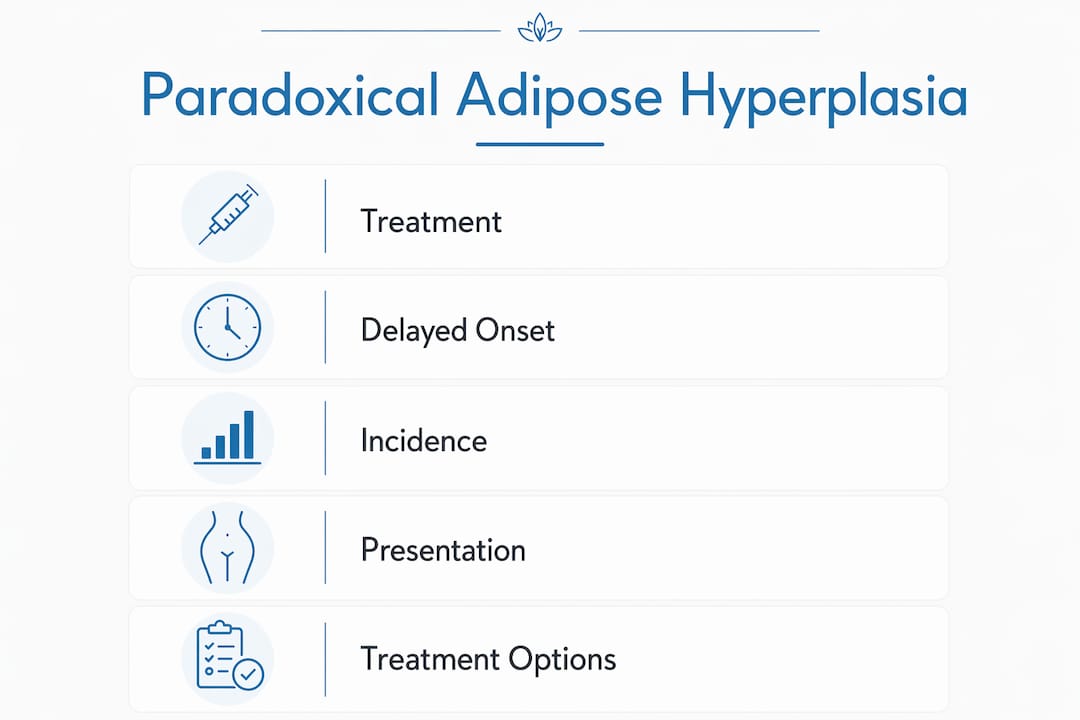
PAH typically appears 8 to 24 weeks after treatment. That delayed onset is one reason it gets missed. Patients and providers may not connect a growing mass to a procedure performed months earlier.
What causes paradoxical adipose hyperplasia during CoolSculpting?
The exact cause of PAH remains poorly understood. The leading hypothesis involves a paradoxical cellular response to cryolipolysis. Instead of undergoing apoptosis (programmed cell death), a subset of fat cells react to cold by increasing in size and number. This is fat cell hypertrophy and hyperplasia working in the wrong direction.
Several contributing factors have been identified:
- Genetic predisposition. Certain individuals may carry genetic variants that make their fat cells resistant to cold-induced apoptosis.
- Hormonal environment. Hormonal factors, particularly those that differ between men and women, may influence how adipose tissue responds to thermal stress.
- Inflammatory response. An exaggerated local inflammatory reaction after treatment may stimulate rather than suppress fat cell activity.
- Device and technique variables. Safety of fat freezing depends heavily on patient selection, the device used, and practitioner training. Risks like PAH correlate with these factors more than with the procedure itself.
Pro Tip: Ask your provider specifically which generation of CoolSculpting device they use. Improved device technology has demonstrably reduced PAH incidence by refining cooling patterns and treatment parameters.
The interaction between these factors is complex. No single cause has been isolated, which is why prevention relies on controlling the variables that are controllable: device quality, patient screening, and provider expertise.
How does PAH present and how can it be recognized?
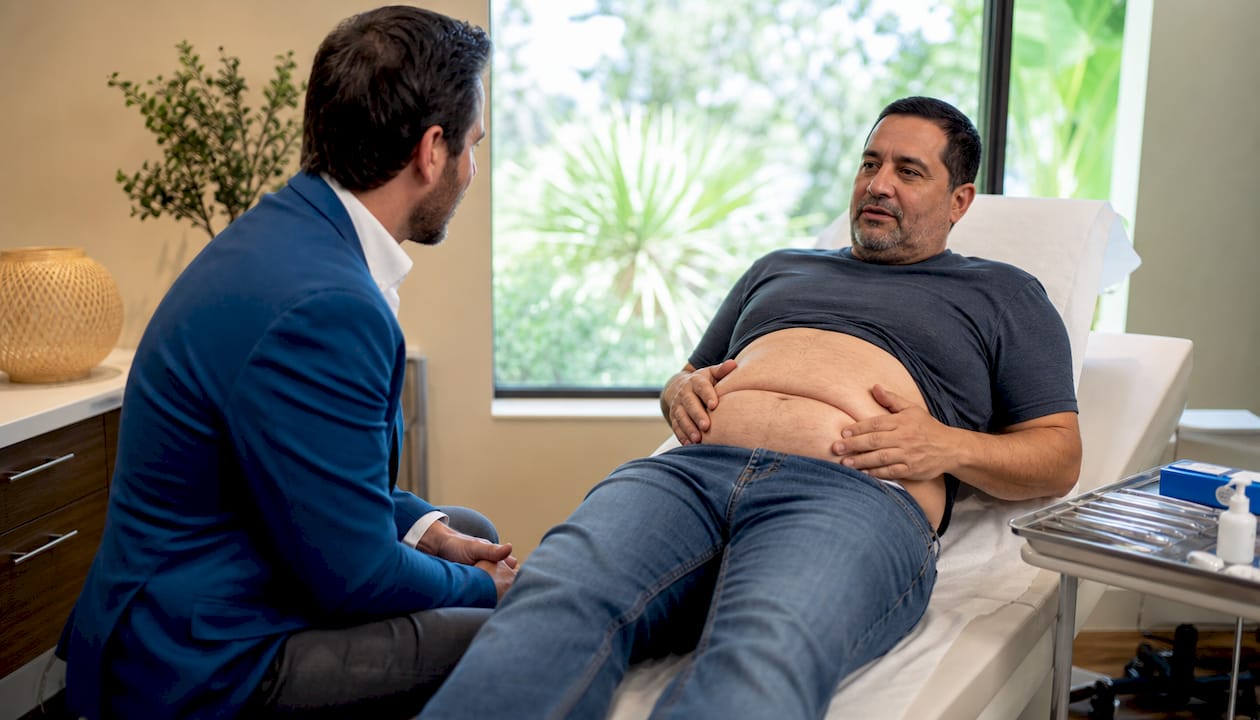
PAH presents as a firm, well-demarcated enlarged mass at the treated site. The shape is a key diagnostic clue. Because the growth mirrors the applicator used during treatment, it often appears rectangular or geometrically defined. That shape is not natural fat distribution, and it makes PAH visually distinct from ordinary weight gain.
Key signs to watch for after a CoolSculpting session:
- A new, firm lump or bulge at the treatment site
- A mass that feels harder than surrounding fat tissue
- A shape that corresponds to the applicator footprint
- Gradual growth over weeks rather than sudden appearance
- Minimal pain, though some patients report tenderness or a heavy sensation
Onset is typically delayed by 2 to 5 months, and in some cases up to 6 months post-procedure. This delay is clinically important. Patients who notice a new mass months after treatment should report it to a provider immediately rather than assuming it will resolve.
| Feature | PAH Characteristics |
|---|---|
| Shape | Rectangular, mirrors applicator design |
| Texture | Firm, well-demarcated |
| Pain level | Usually painless; occasional tenderness |
| Onset timing | 2–6 months post-procedure |
| Resolution | Does not resolve without intervention |
What treatment options are available for PAH?
PAH does not resolve spontaneously and requires surgical correction in virtually all cases. Waiting for it to shrink on its own is not a viable strategy. The fat tissue involved is structurally different from normal adipose tissue, and no non-surgical approach has demonstrated reliable effectiveness against it.
The standard correction pathway follows these steps:
- Clinical assessment. A qualified provider evaluates the mass size, skin laxity, and tissue texture to determine severity.
- Grading the deformity. The High-Definition Liposuction Body Scale allows providers to grade PAH severity and design a customized surgical plan based on fat volume, skin condition, and patient goals.
- Tumescent liposuction. This is the primary corrective procedure. It removes the enlarged fat mass with precision and minimal recovery time.
- Adjunct procedures. Severe cases may require abdominoplasty or staged procedures. Ultrasound-assisted liposuction and plasma radiofrequency skin tightening are used when skin laxity is a concern alongside the fat volume.
- Follow-up evaluation. Outcomes depend on severity, skin quality, and the provider's experience with body contouring corrections.
Pro Tip: Effective PAH management requires grading not just fat volume but also skin laxity and texture. A single liposuction session may not be sufficient. Ask your surgeon whether a staged approach is appropriate for your case.
Outcomes after surgical correction are generally positive when the procedure is performed by an experienced body contouring specialist. The earlier PAH is identified and treated, the less complex the correction tends to be.
How to minimize CoolSculpting risks and prevent PAH
Prevention starts before the first treatment session. Patient safety in fat freezing is maximized by combining device advances, careful candidate screening, and physician expertise. No single factor alone is sufficient.
Practical steps that reduce PAH risk:
- Screen candidates carefully. Patients with cold sensitivity disorders, cryoglobulinemia, or certain nerve conditions are not appropriate candidates for cryolipolysis.
- Use current generation devices. Newer applicator technology delivers more controlled cooling patterns, which reduces the likelihood of triggering a paradoxical fat response.
- Choose an experienced provider. Providers with formal training in body contouring and a high volume of CoolSculpting cases are better positioned to identify risk factors and apply correct technique.
- Monitor post-treatment. Patients should schedule follow-up appointments at 8 and 16 weeks to catch early signs of PAH before the mass becomes well established.
- Report changes promptly. Any new firmness, bulge, or shape change at a treated site warrants immediate evaluation, not a wait-and-see approach.
The most preventable PAH cases are those that result from poor candidate selection or outdated equipment. Choosing a provider who uses FDA-approved technology and performs thorough pre-treatment evaluations is the single most effective risk reduction strategy available.
Key Takeaways
PAH is a rare but surgically correctable CoolSculpting complication that requires early detection, proper grading, and experienced surgical intervention to resolve effectively.
| Point | Details |
|---|---|
| PAH definition | Fat tissue grows instead of shrinking after CoolSculpting, producing a firm, shaped mass. |
| Incidence and risk | Reported below 1%, but men and those of Hispanic ethnicity face higher documented risk. |
| Onset timing | PAH typically appears 2–6 months post-procedure, making delayed reporting common. |
| Treatment required | Surgical correction, usually tumescent liposuction, is necessary since PAH does not self-resolve. |
| Prevention priority | Experienced providers, current devices, and thorough screening reduce PAH risk significantly. |
What I've learned from years of watching PAH cases unfold
The most frustrating thing about PAH is not its rarity. It is the gap between when it appears and when patients seek help. I have seen patients wait three or four months after noticing a new lump, assuming it was just swelling or a normal healing response. By the time they consult a specialist, the mass is well established and the correction is more involved than it needed to be.
The second thing I have noticed is how much provider selection matters. PAH does not happen at the same rate across all practices. Facilities that use current generation devices, screen patients properly, and schedule follow-ups at the right intervals catch problems early. Facilities that skip those steps see worse outcomes. That is not a coincidence.
Patients sometimes ask whether they should avoid CoolSculpting entirely because of PAH. My honest answer is no, provided they choose the right provider. The procedure has a strong safety record when performed correctly. PAH is real, but so is the fact that most patients never experience it. The goal is to be informed, not frightened.
What I would tell anyone researching this: ask your provider directly about their PAH rate, what device generation they use, and what their protocol is if a complication occurs. A provider who answers those questions clearly and without defensiveness is a provider worth trusting.
— Sharon
Elitelaserhair's approach to safe CoolSculpting and PAH management
Elitelaserhair has been recognized as the top CoolSculpting facility in New York, and that reputation is built on exactly the kind of careful practice that reduces PAH risk. Every patient at the center receives a thorough pre-treatment evaluation to confirm candidacy and identify any factors that could increase complication risk.
The center uses the latest generation FDA-approved CoolSculpting technology and performs all treatments under experienced medical supervision. For patients who have post-coolsculpting concerns or need corrective care, Elitelaserhair also offers non-surgical skin tightening and body contouring options to address texture and laxity changes. Schedule a consultation at Elitelaserhair's CoolSculpting center to get a personalized treatment plan from a team that takes complications seriously.
FAQ
What is paradoxical adipose hyperplasia after CoolSculpting?
Paradoxical adipose hyperplasia is a rare CoolSculpting complication where treated fat tissue enlarges instead of reducing. It produces a firm, shaped mass at the treatment site that does not resolve without surgical intervention.
How long after CoolSculpting does PAH appear?
PAH typically appears between 8 and 24 weeks after treatment, with some cases presenting up to 6 months post-procedure. The delayed onset is why patients often do not immediately connect the mass to their CoolSculpting session.
Can PAH go away on its own?
PAH does not resolve spontaneously. Surgical correction, most commonly tumescent liposuction, is required to remove the enlarged fat tissue and restore the treated area.
Who is most at risk for developing PAH?
Men and individuals of Hispanic ethnicity show higher rates of PAH in clinical observations. Treatment area, device generation, and practitioner technique also influence individual risk.
How is PAH treated surgically?
The primary treatment is tumescent liposuction, sometimes combined with abdominoplasty or plasma radiofrequency skin tightening for cases involving skin laxity. Providers may use the High-Definition Liposuction Body Scale to grade severity and plan a staged correction when needed.