
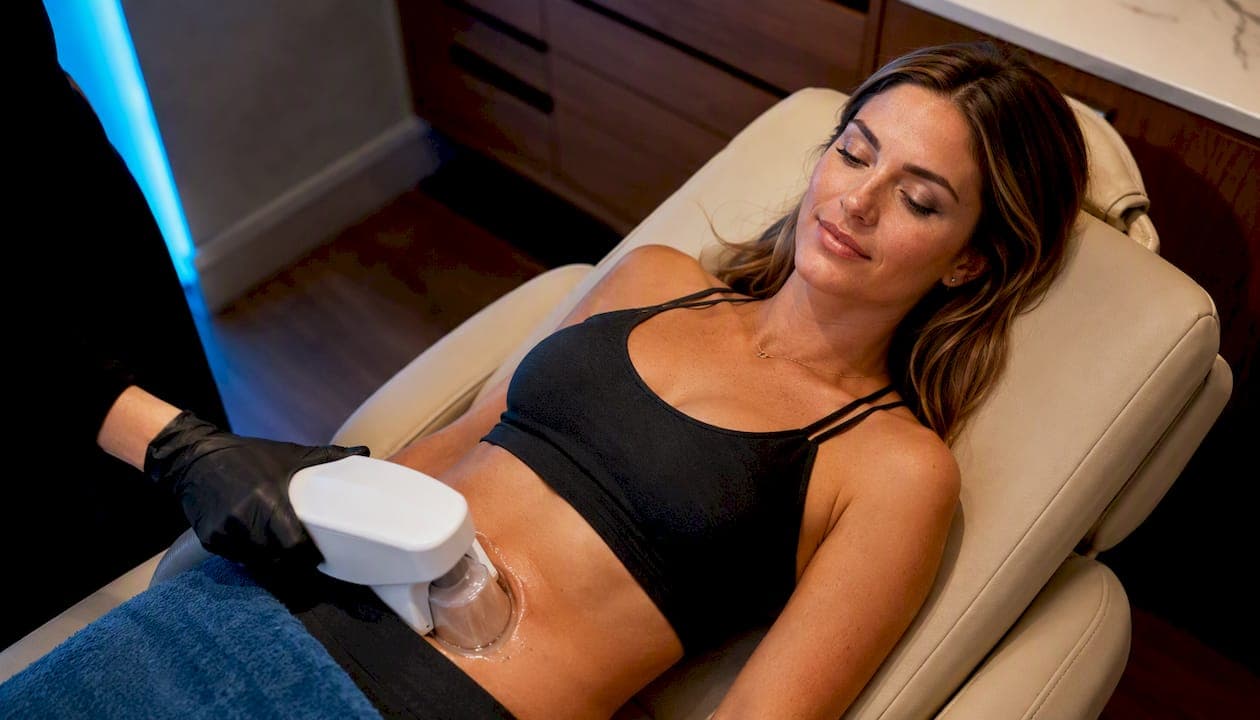
Most patients tolerate CoolSculpting well: 78% describe treatment-related pain as none or light, with 40% giving it the lowest possible score on a 1 to 5 scale. A smaller group feels real discomfort, sometimes delayed by a few days, and sensation depends heavily on which body area gets treated and how sensitive you personally are to cold and pressure. This is a cold, suction-based fat reduction procedure called cryolipolysis, and its pain profile is well documented and predictable.
TL;DR:
- Most patients experience minimal to no pain during CoolSculpting, with 78% rating their discomfort as none or light, but sensitivity varies by body area.
- Pain typically lasts only a few days to a week, while sensations like tingling or numbness can persist for up to six weeks as nerves recover.
- Proper aftercare, including gentle massage and over-the-counter pain relief, can significantly improve comfort and support fat cell elimination.
- Serious side effects are rare but can include paradoxical adipose hyperplasia and signs of infection, which require prompt medical attention.
- The overall discomfort depends heavily on provider experience, applicator fit, and patient preparation, emphasizing the importance of choosing a qualified clinic.
Table of Contents
- What Does CoolSculpting Feel Like During the Procedure?
- How Long Does Recovery Take, and When Do Sensations Fade?
- How Long Does CoolSculpting Pain Actually Last?
- What Do the Side Effect Rates Actually Show?
- Practical Ways to Manage CoolSculpting Discomfort
- What Should You Ask at Your CoolSculpting Consult?
- A Realistic Take on CoolSculpting Discomfort
- How Elite Laser Center Approaches CoolSculpting Comfort
- Sources
- FAQ
What Does CoolSculpting Feel Like During the Procedure?
The applicator clamps onto the treatment area with vacuum suction, and that pulling sensation is usually the most noticeable part for the first several minutes. Right after, the intense cold sets in, which most patients describe as sharp and uncomfortable rather than agonizing. It fades fast. Within 5 to 10 minutes, the treated area typically goes numb as the nerves respond to the cold, and the rest of the cycle passes with far less sensation.
During a session, expect some combination of:
- Pulling, tugging, or pinching from the applicator's suction
- Intense cold that peaks early and dulls quickly
- Tingling or mild stinging as numbness sets in
- Occasional aching or cramping in denser fat pockets
Sensitivity varies by location. The abdomen and flanks tend to register more discomfort than the chin or upper arms, simply because there's more tissue for the applicator to grip. Many clinics encourage patients to read, use a phone, or nap through the cold phase since distraction genuinely helps.
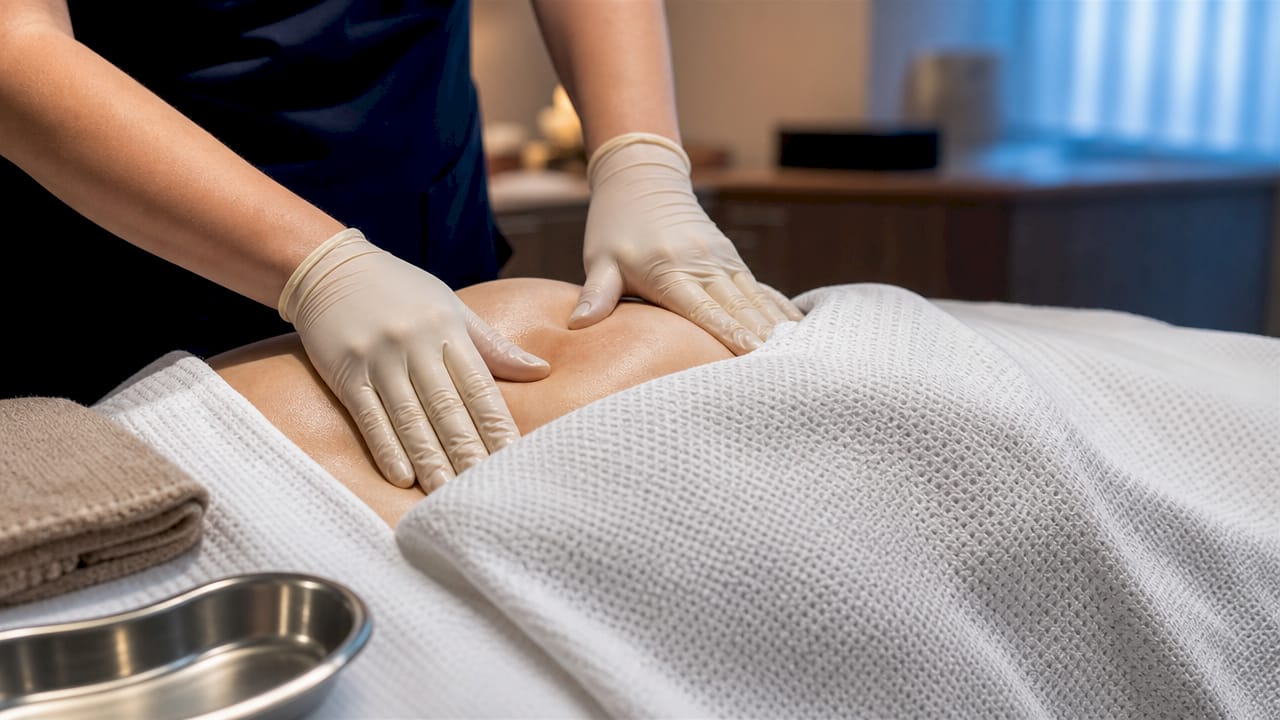
The part patients are least prepared for comes after each cycle: a manual massage of the treated tissue lasting a few minutes. It breaks up the frozen fat cells and can feel more uncomfortable than the freezing itself, mostly because sensation is only partially numbed by then.
How Long Does Recovery Take, and When Do Sensations Fade?
Redness, swelling, and numbness are normal immediately after treatment, and none of them signal a problem; effective aftercare and bruise management can significantly improve comfort. Your provider will do the same brisk massage used between cycles, and most clinics send you home with instructions to repeat a gentler version yourself over the following days. That guidance mirrors what's outlined in detailed massage protocols built specifically for post-CoolSculpting care.
Here's roughly how sensation evolves over time:
- 0 to 48 hours: Numbness, mild swelling, and redness dominate. Some people feel nothing unusual beyond a tight or "just worked out" sensation in the area.
- Around day 3: Numbness starts thawing, and this is often when tingling, itching, or a brief spike in tenderness shows up as nerves reactivate.
- First week: Swelling recedes, and any soreness typically feels more like muscle fatigue than sharp pain.
- 2 to 6 weeks: Most residual tingling, itching, or numbness resolves during this stretch, consistent with clinical reports on sensory changes after cryolipolysis, though a minority of patients report lingering sensory changes for a few weeks longer.
- 1 to 3 months and beyond: This is when visible fat reduction becomes apparent, since your body needs time to clear the treated cells.
Nearly everyone returns to normal activity the same day. Strenuous exercise or tight waistbands over a freshly treated abdomen are worth avoiding for a day or two, mostly for comfort rather than any real risk.
How Long Does CoolSculpting Pain Actually Last?
Pain itself, as opposed to numbness or tingling, is usually short-lived. Most of what patients call "pain after CoolSculpting" resolves in a few days to a week, while sensory oddities like tingling may persist for a number of weeks as nerves recalibrate.
By the numbers: In a retrospective study of 91 patients, 78% rated their pain as none or light, and 40% scored it at the very bottom of a 1 to 5 scale during the procedure itself.
A smaller subset experiences delayed-onset pain, sometimes starting two or three days after treatment rather than during it. This usually responds to standard over-the-counter medication, but a few symptoms warrant a call to your provider:
- Pain that worsens or spreads instead of gradually easing
- Fever, warmth, or discharge suggesting infection
- Numbness that persists well beyond six weeks
- A firm, enlarging lump in the treated area weeks or months later, which can indicate paradoxical adipose hyperplasia
If you notice any of these, document when symptoms started and how they've changed, then call your clinic. Severe swelling paired with fever or spreading redness deserves urgent medical attention rather than a wait-and-see approach.
What Do the Side Effect Rates Actually Show?
CoolSculpting's side effect profile is well studied, and the numbers are higher than people expect for effects that are mild and temporary. A systematic review and meta-analysis pooled data across multiple studies to estimate how often specific reactions occur.
Those four effects account for the overwhelming majority of what patients report, and none of them are dangerous on their own.
Paradoxical adipose hyperplasia, or PAH, is a rare complication where treated fat tissue grows larger instead of shrinking, usually noticed months after treatment as a firm, painless mass. Incidence estimates vary considerably across studies, reflecting inconsistent reporting rather than a single settled number. The FDA's MAUDE database also logs adverse events tied to cryolipolysis devices, and most serious cases trace back to improper applicator fit, non-medical settings, or untrained operators rather than the technology itself.
Practical Ways to Manage CoolSculpting Discomfort
Preparation starts before you ever lie down for treatment. Wear loose, comfortable clothing to your appointment, and use your consult to ask direct questions about pain management rather than assuming every clinic handles it the same way. If you take blood thinners or other medications, mention them; your provider needs that information regardless of how minor the procedure seems.
During treatment, speak up. Staff can adjust the applicator or pause if something feels wrong, and most patients find that podcasts, shows, or conversation make the cold phase pass faster. Brace yourself mentally for the post-cycle massage. Knowing it's coming makes it noticeably easier to tolerate.
Afterward:
- Acetaminophen or ibuprofen typically handles residual soreness, though check with your provider if you're on other medications, since some may advise against NSAIDs specifically
- Gentle at-home massage following your clinic's recommended schedule speeds recovery and may support better results
- Light walking helps move swelling along faster than sitting still
- Compression garments can add comfort for some patients, though they're optional rather than required
Pro Tip: Stick to the exact home massage schedule your provider gives you, even after the soreness fades. Consistency in those first two weeks does more for comfort and results than any single technique.
What Should You Ask at Your CoolSculpting Consult?
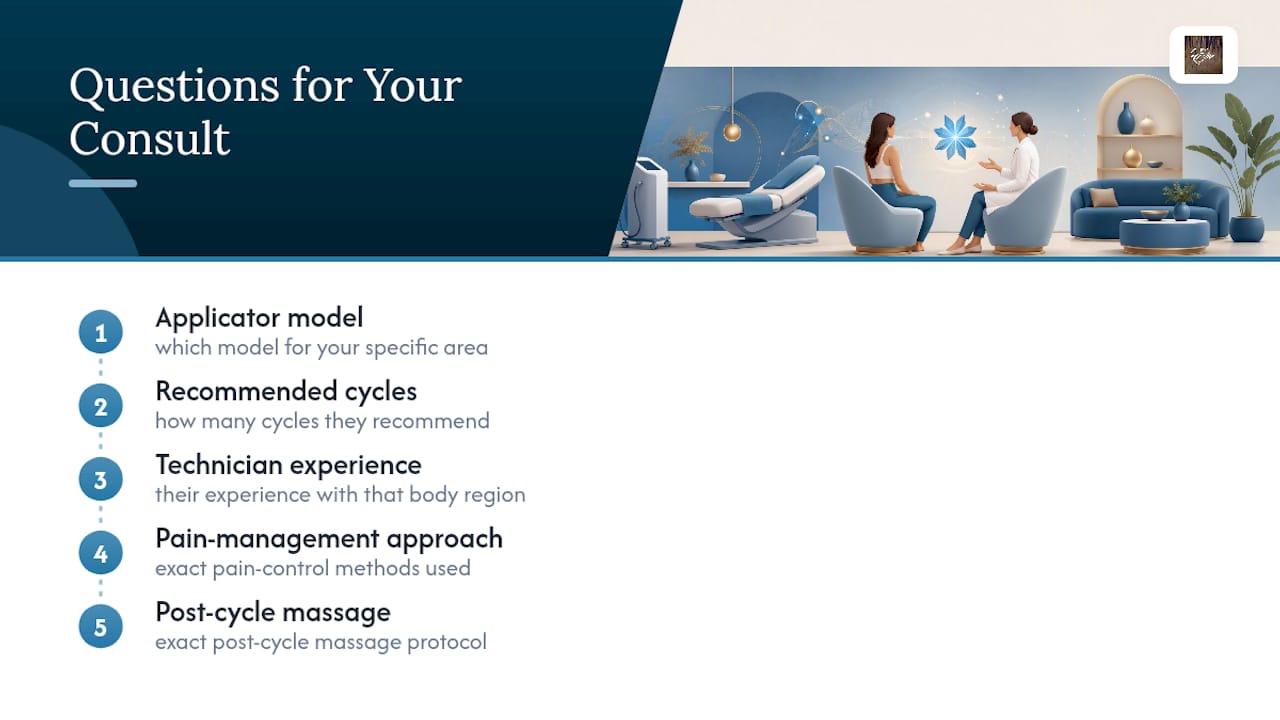
A good consult tells you more about your likely comfort level than any general statistic can. Ask which applicator model your provider uses for your specific area, how many cycles they recommend, and how experienced the technician is with that body region specifically. Ask directly about their pain-management approach and exactly what the post-cycle massage protocol looks like.
Clinics that train technicians thoroughly, supervise treatments medically, and give clear written aftercare instructions tend to produce more predictable, more comfortable outcomes. Accessible follow-up matters too. If a lump, unusual pain, or prolonged numbness shows up weeks later, you want a provider who picks up the phone. An eligibility checklist before your visit helps you walk into that consult with better questions already in hand.
A Realistic Take on CoolSculpting Discomfort
Most people underestimate how tolerable this procedure actually is, largely because horror stories travel further online than the boring truth: for most patients, it's uncomfortable for twenty minutes and forgettable after that. The real variable isn't the technology. It's who's operating it and how well they prepare you.
— Sharon
How Elite Laser Center Approaches CoolSculpting Comfort
Some clinics treat comfort as part of the protocol rather than an afterthought. CoolSculpting sessions are often performed under medical supervision by technicians trained specifically on applicator fit and massage technique, two factors that most influence how a session actually feels. Clinics often walk patients through the pulling, cold, and post-cycle massage before the session begins, so nothing catches them off guard, and provide specific home care plans rather than generic handouts.
If you're comparing clinics, ask us the same questions we'd recommend asking anyone: applicator experience, cycle count, massage protocol, and follow-up access. You can review our full CoolSculpting service details or schedule a consultation directly to get expectations specific to your body and goals, not just averages from a study.
Sources
- Patient Satisfaction, Recommendation Rate, and Patient Comfort With an FDA-Cleared Cryolipolysis System
- Clinical reports on sensory changes after cryolipolysis
- Cryolipolysis and associated health outcomes, adverse events, and satisfaction: A systematic review and meta‐analysis
This article is general information, not a substitute for advice from a qualified doctor. Consult a qualified healthcare professional about your own circumstances before acting on anything here.
FAQ
How long does the pain from CoolSculpting last?
Actual pain typically fades within the first week, while tingling or numbness can linger for two to six weeks as nerve sensation normalizes.
Why does my stomach hurt after CoolSculpting?
Soreness usually comes from the manual massage performed during and after each cycle, along with normal tissue response to the intense cold; it typically resembles muscle fatigue rather than sharp pain.
Why is my stomach bigger after CoolSculpting?
Temporary swelling in the first one to two weeks is normal and often mistaken for a bigger belly; actual fat reduction isn't visible until one to three months later once your body clears the treated cells.
Is one session of CoolSculpting worth it?
A single session can produce noticeable fat reduction in the treated area, though many providers recommend multiple cycles depending on the area and your goals, which is worth discussing directly with your provider at consult.
Recommended
- CoolSculpting Results Timeline: When You'll See Changes
- CoolSculpting Explained: Science, Results, and Safety
- CoolSculpting Eligibility: The Quick Candidate Checklist
- Expect About 3 Sessions: CoolSculpting for Stomach
This article was produced with AI assistance and reviewed for accuracy. It is provided for general information, and it is not professional advice.