

Chest laser hair removal reduces the amount of hair that grows back on your chest by using light to damage the hair follicle. It is a series of sessions, not a single visit, and the results depend on your hair color, skin tone and the care of the person running the laser. At Elite Laser Center & Med Spa in Stony Brook, every treatment is customized and performed under medical supervision, which matters most on a large area like the chest, where settings have to match your skin and hair.
This guide covers what a men’s chest treatment involves, who tends to respond best, how many sessions to plan for, how to prepare, what recovery looks like and what “permanent” really means.
Key Takeaways
-
Laser targets the pigment in the hair, so the best contrast is dark, coarse hair on lighter skin. Darker skin tones can be treated with the right laser and settings.
-
Plan for a series. Mayo Clinic says most people need 4 to 8 treatments spaced several weeks apart.
-
The goal is long-term reduction, not guaranteed hair-free skin. Regrowth, when it comes, is often finer and lighter.
-
Redness, mild swelling and discomfort are common and usually pass within hours. Sun protection afterward is a must.
-
Our laser hair removal packages come with three-year treatment coverage. That describes coverage of treatments, not a guarantee of results.
How chest laser hair removal works
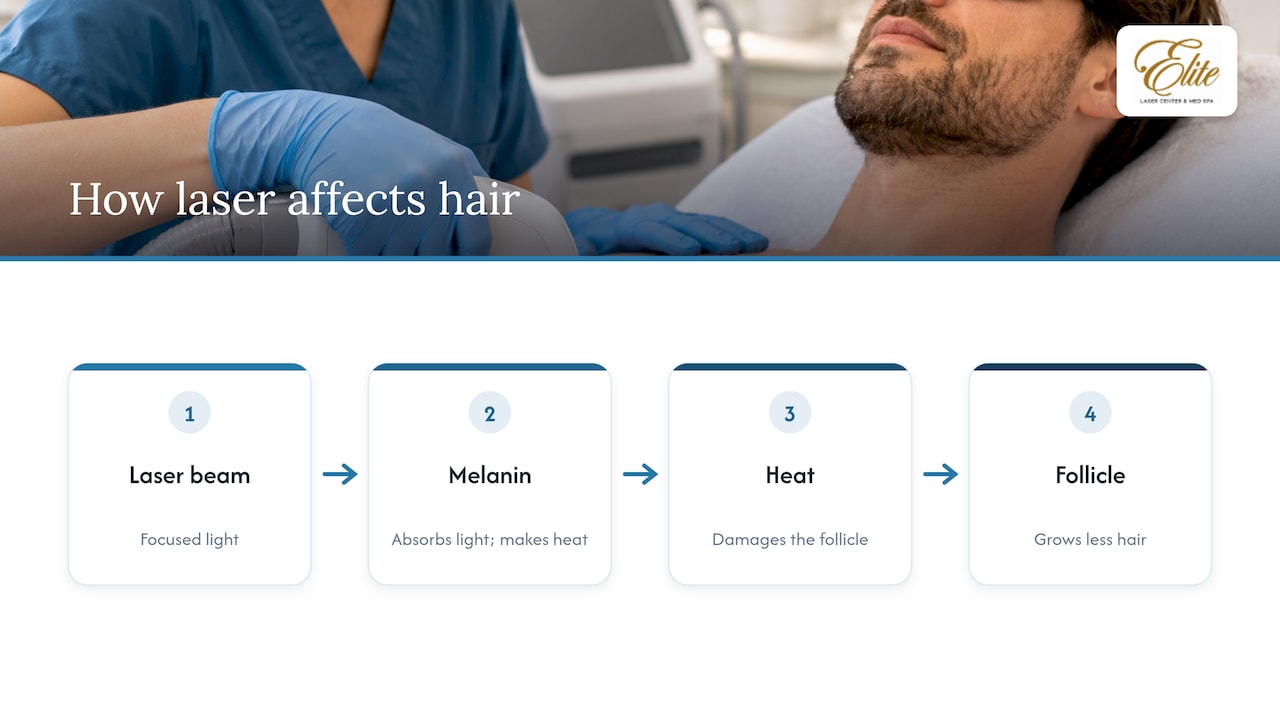
A laser delivers a focused beam of light. The pigment (melanin) in each hair absorbs that light and turns it into heat, and the heat damages the follicle so it grows less hair. Mayo Clinic explains that this is why the treatment works best when there is a clear contrast between hair color and skin color.
Hair grows in cycles, and only hairs in the right phase respond to a given session. That is the practical reason one visit is never enough: each appointment catches a portion of the hairs, and the rest are caught on later visits.
The chest is a popular area for men. Clinical Gate’s review of laser hair reduction lists the chest, back, shoulders, neck and ears as the body areas men most often seek. Many of our male clients come in for the same reasons: they are tired of daily or weekly shaving, irritation, ingrown hairs, or they want a cleaner look for athletics, swimming or a wedding.
Who is a good candidate for chest treatment
Suitability comes down to three things: the hair, the skin and your overall health.
Hair color and thickness
The ideal candidate, according to Clinical Gate, has dark, coarse hair. White, grey, blonde and light-colored hair, along with fine vellus hair (the soft, nearly invisible “peach fuzz”), respond poorly. A literature review in the Skin Therapy Letter likewise reports that lasers are ineffective for thin vellus hairs and for white, grey or red hairs.
If your chest hair is a mix of dark and light, a consultation is the place to find out which hairs are likely to respond and which are not.
Skin tone
A provider experienced with your skin tone can select appropriate equipment and settings. Tell your provider about any recent tan before the visit. Extra pigment from tanning raises the risk of side effects, and your provider may advise postponing treatment until the tan fades.
A 2020 peer-reviewed update in PMC describes the ideal patient as having thick, dark hairs and light skin (Fitzpatrick types I to IV, a scale that classifies skin by how it reacts to sun), and identifies the long-pulsed Nd:YAG laser as an option for very dark skin. We treat all skin types, and we explain how we approach deeper skin tones in our guide to 1064 nm Nd:YAG laser hair removal for Fitzpatrick IV, V and VI. If your skin is fair, our page on laser hair removal for light skin covers what to expect.
Health history
Before treatment we go over your medical history, any medications you take and what you want from the treatment. That conversation is part of Mayo Clinic’s description of a typical consultation, and it is where we talk through risks, benefits and realistic expectations. Questions about specific medications or conditions belong with your own doctor, and we ask you to bring them to the consult.
If you have a hormonal or medical reason for heavy chest hair, mention it. Hair that is unusually dense or has changed recently is worth discussing with your physician. The VA’s clinical guidance on medically necessary hair reduction recognizes that laser or electrolysis can be medically necessary for chest hirsutism or hypertrichosis (excess hair growth) in defined circumstances, which shows this is a legitimate medical concern and not only a cosmetic one.
How many sessions to expect
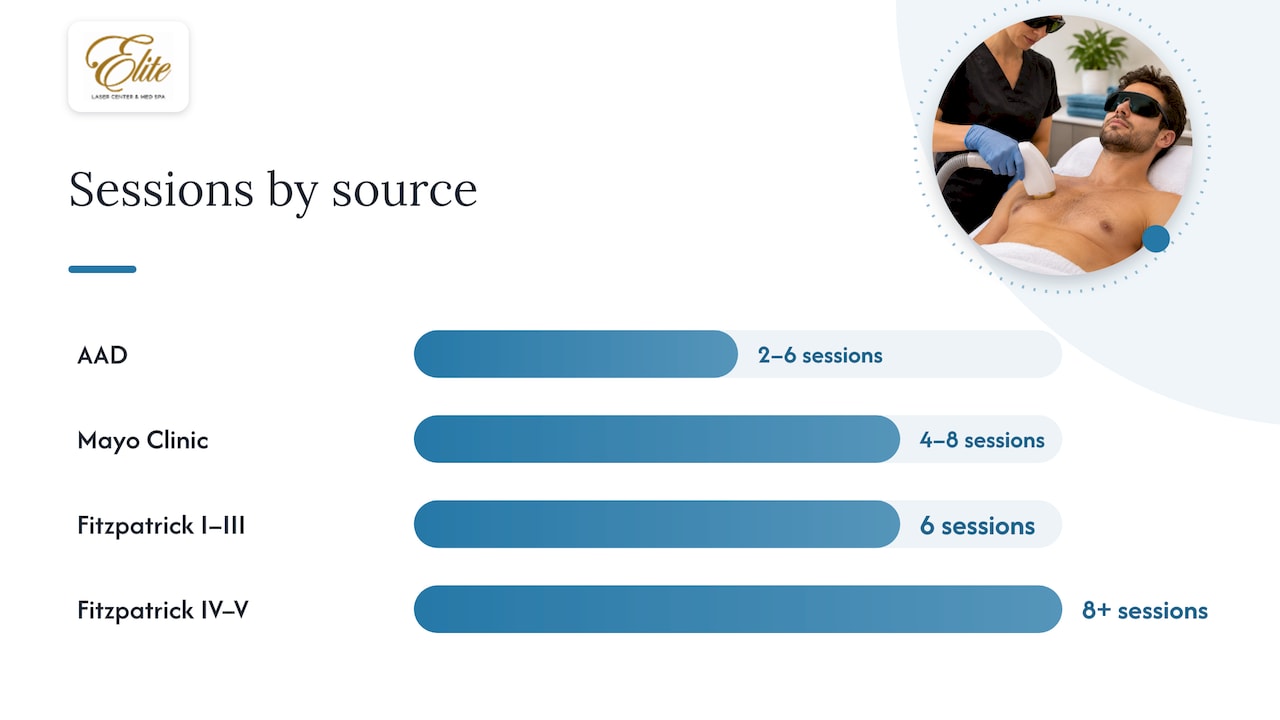
The honest answer is a range. Sources differ because they are describing different lasers, skin tones and hair types:
| Source | What it says |
|---|---|
| American Academy of Dermatology | A 10% to 25% reduction after the first treatment; most patients need 2 to 6 treatments |
| Mayo Clinic | Most people need 4 to 8 treatments, several weeks apart |
| Clinical Gate | Fitzpatrick types I to III typically need six sessions; types IV and V need eight or more |
Treatment plans are individualized. Skin tone, hair color and thickness, treatment area, equipment and response all affect how many sessions a person may need. A consultation gives you a more useful estimate.
The chest is also a larger area with variable density, and PMC’s review notes that some areas respond better than others, with the underarms and belt area responding better than the legs, arms and chest. In practice, that means setting expectations early and tracking progress visit by visit.
Spacing between sessions
The AAD says most patients can be treated once every 4 to 6 weeks. We walk through timing in more detail in our article on how many laser hair removal sessions you need and how often. Because shed hairs and regrowth follow the hair cycle, keeping to the schedule you are given usually does more for your results than rushing the gaps.
Three-year coverage on packages
Elite’s three-year laser hair removal package covers one selected area. It includes nine initial treatments and up to nine follow-up treatments when needed within the three-year term, for a maximum of 18 visits. Coverage specifies the treatments included. The amount of hair reduction varies by person.
Preparing for your chest appointment
Good preparation protects your skin and helps the laser reach the hair. Mayo Clinic’s guidance, which we follow in spirit, includes:
-
Limit sun exposure and avoid tanning beds. Tanned skin raises the risk of side effects. Use broad-spectrum sunscreen of SPF 30 or higher, and avoid sunless tanning products, which also darken skin.
-
Stop waxing, plucking and electrolysis at least four weeks before. Lasers need the pigmented hair shaft in place. The Skin Therapy Letter review makes the same point: plucking and waxing are discouraged before treatment, while shaving is recommended.
-
Shave the area the day before. Shaving leaves the root in place for the laser to target and avoids singeing long hair on the surface.
-
Arrive with clean, product-free skin. Skip lotions and heavy products on the chest that day.
If shaving leaves your chest feeling tight or dry, dry skin after shaving is common, and a gentle routine in the days around your visit helps. Just avoid putting anything on the area right before your appointment.
We also keep a local checklist: how to prepare for laser hair removal in Stony Brook. Questions about medications before treatment should go to your doctor, not to a general guide.
What happens during treatment
A chest session is usually straightforward. You and the technician wear protective eyewear. The area may be shaved again if needed. Some clinics use numbing cream or cooling gel, and the laser is then passed over the chest in sections.
Mayo Clinic describes the sensation of the heat damaging the follicles as a quick snapping feeling. Comfort varies from person to person and by area, and no one can promise a treatment will be painless. Tell your technician if something feels too intense, since settings can often be adjusted.
The chest is a larger area, but sessions are typically manageable in length. One local clinic page lists chest sessions as taking under an hour; your own time will depend on how much area is treated. At your consultation we can give you a better estimate.
Recovery and side effects
Most men go back to normal activity right away, though recovery varies and we never promise there will be no downtime for everyone. What you notice depends on your skin and the settings used.
Common reactions
Mayo Clinic lists skin irritation, temporary color changes, swelling and discomfort as the common side effects, usually settling within hours. Less common effects include blistering, crusting, scarring and changes in skin texture, and in rare cases thicker hair growth. Our article on laser hair removal side effects goes through what to expect and when to call us.
The AAD cautions that treatment in inexperienced hands can cause burns, permanent skin color changes and scars. This is the main reason to choose a provider who works under medical supervision and who adjusts settings to your skin.
Aftercare
-
Use ice packs if the area feels uncomfortable.
-
Protect the treated area from the sun for six weeks or as your provider directs, and wear broad-spectrum SPF 30 or higher daily.
-
Expect treated hairs to shed over several days to a few weeks, rather than falling out immediately. This can look like new growth at first, but it is the treated hair working its way out.
-
Follow your provider’s advice on plucking and waxing. Because lasers rely on the hair shaft, the same rule that applied before treatment applies between sessions, so ask us before removing hair any way other than shaving.
If you notice blistering, crusting or anything that worries you, call us, and see a physician for anything urgent.
Is chest hair removal permanent?
The word “permanent” is used carefully in this field. The FDA’s term is “permanent hair reduction,” which Clinical Gate describes as a long-term, stable reduction in the number of hairs regrowing after a course of treatment. It does not mean every hair is gone forever. Lasers are cleared by the FDA for this purpose, which is different from the FDA approving a product, and an FDA clearance letter from October 31, 2025 for one diode laser shows how the agency words it, including that the reduction is measured at 6, 9 and 12 months.
What can you realistically expect? Clinical Gate reports 20% to 30% reduction after one treatment and up to 60% to 90% after a full series. The AAD says most patients stay hair-free for months or even years, and that regrown hair tends to be less dense, finer and lighter. Some people return for occasional maintenance sessions.
Small and Chen, the authors of that Clinical Gate chapter, point out that fewer, thinner, slower or lighter regrowth are all clinically meaningful outcomes. We find that framing helps: most men are happy when the chest no longer needs constant shaving, even if a few stray hairs remain.
Chest laser or shaving: how to decide
Shaving works, but it means regular upkeep and can bring razor irritation and ingrown hairs. Laser aims to cut that routine down over time. If you are weighing laser against other methods, our comparison of epilator vs laser lays out how sessions and results differ. We also outline the technology differences in our guide to types of laser hair removal treatments.
Men who treat the chest often add the shoulders, neck or back, and some treat the abdomen or other areas for a more even look. Your technician can map this out so that the transition between treated and untreated areas looks natural, which is a common concern for men who want a tidy result and not a stripped one.
Our perspective
Chest hair is personal. Some men want it gone, some want it thinner, and some want a clean line at the collarbone. A good plan starts with that goal, not with a standard package.
What we care about is the match between your skin, your hair and the laser settings. That is why every treatment at our center is customized and performed under medical supervision, and why we begin with a consultation that explains suitability, benefits, risks and recovery in plain terms.
We also think a series of treatments deserves follow-up and continuity, not a one-off visit. Our three-year coverage on laser hair removal packages is built around that idea: a course of treatments takes time, and you should not feel rushed or left on your own partway through.
Sharon
Book a chest consultation in Stony Brook
If you are ready to talk specifics, our laser hair removal page explains how treatment works at Elite Laser Center & Med Spa. We serve men and women in Stony Brook and across Suffolk County, treat all skin types, and perform every treatment under medical supervision.

A consultation is where we assess your hair and skin, explain what you can reasonably expect and map out a plan. Many clients pair chest treatment with other areas, and if skin care is also on your list, our Skin Care Club memberships start from $99 per month.
Frequently asked questions
Can I remove chest hair permanently?
Laser hair removal is designed for permanent hair reduction, meaning a long-term, stable drop in the number of hairs that regrow. It is not a promise that every hair disappears. Most patients stay hair-free for months or years, according to the AAD, and some return for maintenance.
Is it safe to pluck hair after laser hair removal?
It is best to ask your provider before plucking anything. Lasers work on the hair shaft, and plucking or waxing removes it, which is why those methods are discouraged around treatment. Shaving is the usual approach between sessions.
Should men laser their chest?
It depends on your goals and your hair. Men with dark, coarse hair who are tired of shaving or irritation tend to be good candidates, and the chest is among the areas men most often treat. A consultation will tell you whether your hair and skin are likely to respond.
How long does a chest session take, and how often do I go?
Session length depends on how much of the chest is treated. Most patients are treated every 4 to 6 weeks, according to the AAD, and the total number of visits depends on your skin tone, hair and the laser used.
Do I need to avoid the sun?
Yes. Mayo Clinic advises limiting sun and tanning before treatment and protecting treated skin for six weeks or as directed afterward, with daily broad-spectrum SPF 30 or higher. Sun on treated skin raises the chance of side effects.
Sources
-
Hair Removal Practices: A Literature Review, Skin Therapy Letter
-
Medically Necessary Hair Reduction, U.S. Department of Veterans Affairs
This article was prepared with AI assistance and reviewed by Elite Laser Center & Med Spa for accuracy and consistency with our services. It is intended for general education and does not replace personalized medical advice. Treatment suitability, results, and recovery vary. Consult a qualified healthcare professional and follow your treating provider’s instructions.